
Battle of Rodonas
Short Description:
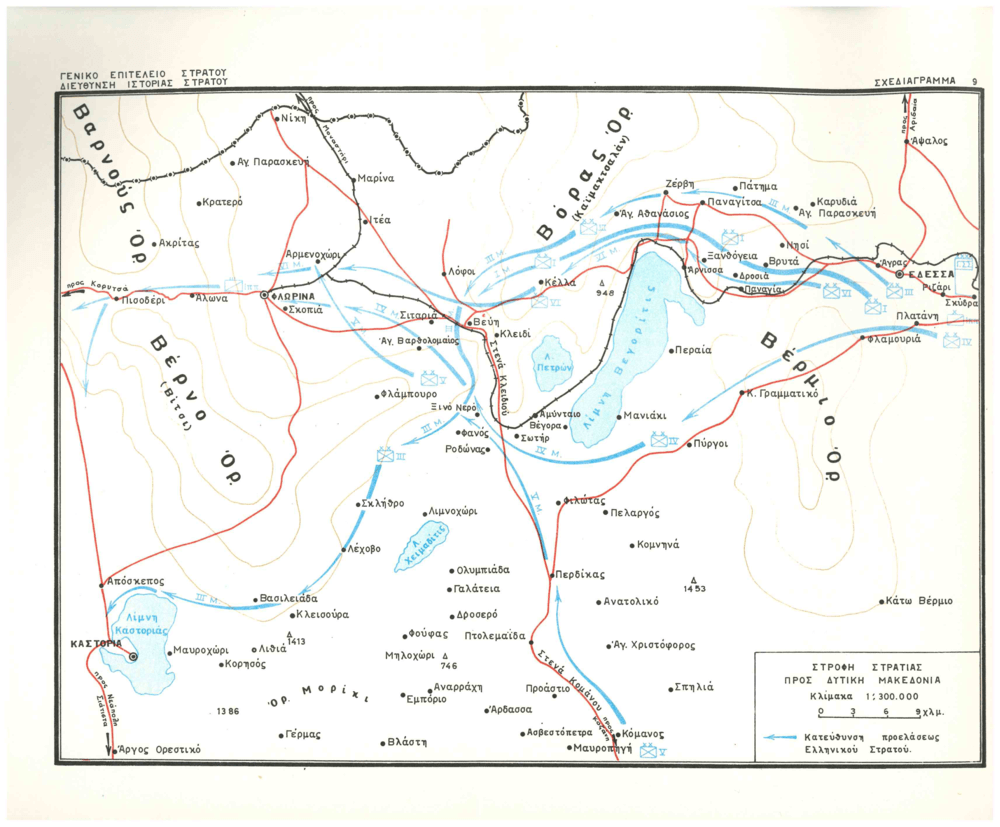
In the early morning hours of October 24, 1912, a small Ottoman force, with the assistance of local guides, advanced south of Rodonas. The sudden appearance of Ot-toman forces on the left flank of the Greek defensive position caused considerable distress among the personnel of the military engineering company stationed in the village, who fled in a disorderly manner. The Ottoman forces exploited the chaos to launch an assault on an artillery battery stationed at Rodonas, killing the majority of the military personnel stationed there and capturing the remainder. This was fol-lowed by further attacks to the east and north of Sorovitz (now Amyntaio), compel-ling the Greek V Division to retreat in a disorderly fashion southward, abandoning the Sorovitz – Eksi Sou (now Xino Nero) line, which it had been defending since October 21.
Photo gallery:
Detailed Description:
On October 13, 1912, the Greek Army of Thessaly redirected its strategic focus to-ward the occupation of Central Macedonia. Of the divisions engaged in the First Balkan War, the V Infantry Division was ordered to remain in the territories of Western Macedonia, assuming responsibility for the protection of the left flank of the army and the conservative advance towards the northwestern regions of the Ot-toman Empire. By October 19, the forces of the V Division had advanced as far east as the village of Lofoi, situated to the east of Florina. However, on the 21st of the month, they were confronted by a significant Ottoman military force that had gath-ered in the area. Despite efforts to maintain their position, the Division was com-pelled to retreat towards the line Sorovits (now Amyntaio) - Eksi Sou (now Xino Ne-ro).
On the morning of October 22, parts of the Ottoman army attempted to occupy Eksi Sou, but fled after the successful intervention of the Greek artillery. Despite the ini-tial failure, the Ottomans regrouped and in the afternoon attacked Sorovitz. In the ensuing battle, the Greek forces resisted effectively, managing to hold their positions until nightfall. The battle continued into the following day, October 23, with the Ot-tomans launching successive attacks on Sorovitz. Despite the enemy's numerical su-periority, the Greeks defended themselves vigorously and maintained control of the Amyntaio - Xino Nero line for the second consecutive day.
On the morning of October 22, units of the Ottoman army initiated an offensive to occupy Eksi Sou. However, they were compelled to withdraw following the decisive intervention of the Greek artillery. Despite the initial failure, the Ottomans re-grouped and, in the afternoon, attacked Sorovitz. In the ensuing battle, the Greek forces resisted effectively, managing to hold their positions until nightfall. The battle continued into the following day, October 23, with the Ottomans launching succes-sive attacks on Sorovitz. Despite the enemy's numerical superiority, the Greeks de-fended themselves vigorously and maintained control of the Amyntaio – Xino Nero line for the second consecutive day.
Following the capture of Rodona, the Ottoman forces proceeded to advance in a northeast direction, targeting the left flank of the V Division. Simultaneously, from the early morning hours, a portion of the Ottoman army, emerging from the Kirli Derven Pass (now Klidi Pass), initiated an assault upon the vanguard of the V Divi-sion. This double attack placed the Greek forces in a challenging position, as they were confronted with fire from two fronts. The simultaneous onslaught of fire caused a state of general panic within the V Division, resulting in a disorderly retreat to the south and the abandonment of the Sorovitz – Eksi Sou line, which they had been defending since October 21. During the afternoon hours of October 24, the initial contingent of the V Division was concentrated in Kozani, while the Com-mander, Colonel Dimitrios Mattheopoulos, was stationed at Koila.
The Greek forces in Western Macedonia commenced a rapid retreat on October 21, 1912, which was concluded on the 24th of that month with the arrival of the V Divi-sion in Kozani. Subsequently, the troops were regrouped. In accordance with the orders issued by the General Headquarters, the Kozani Army Department was estab-lished under the command of Colonel Stephanos Gennadis. This newly constituted Army Department comprised the V Division, the Gennadis' Evzones Detachment, and a division of the 20th Regiment. Acting expeditiously, the Kozani Army De-partment succeeded in stabilizing the front and formulating plans for new offensive operations in Western Macedonia by October 27.

Indicative Literature:
ΓΕΣ, Επίτομη Ιστορία των Βαλκανικών Πολέμων 1912-1913, Αθήνα 1987.
Ισίδωρος Φραγκίσκος, Πολεμικόν Ημερολόγιον οπλίτου της Vης Μεραρχίας κατά τον Ελληνο-Τουρκικόν Πόλεμον 1912-13, Εν Αλεξάνδρεια 1914.
Related locations
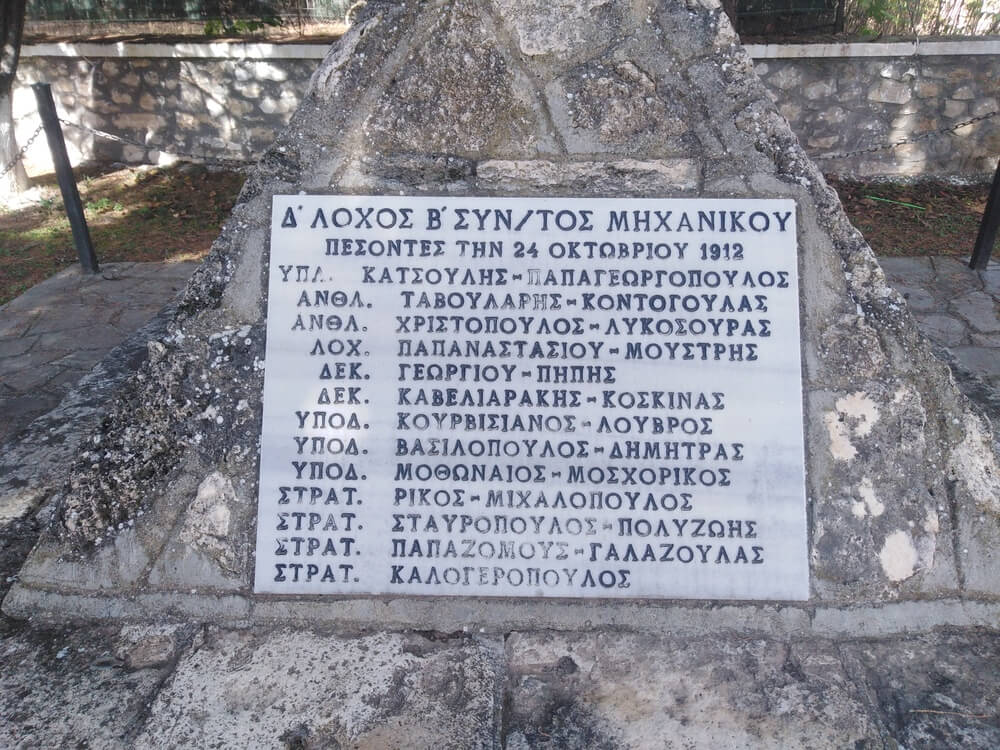
Monument to the fallen at the Battle of Rodonas.
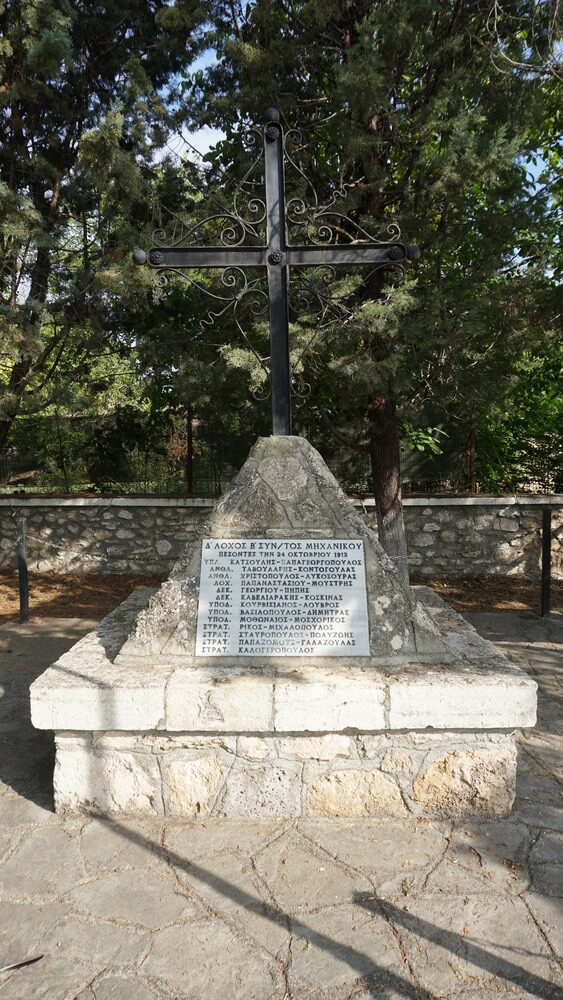
Monument to the fallen at the Battle of Rodonas.