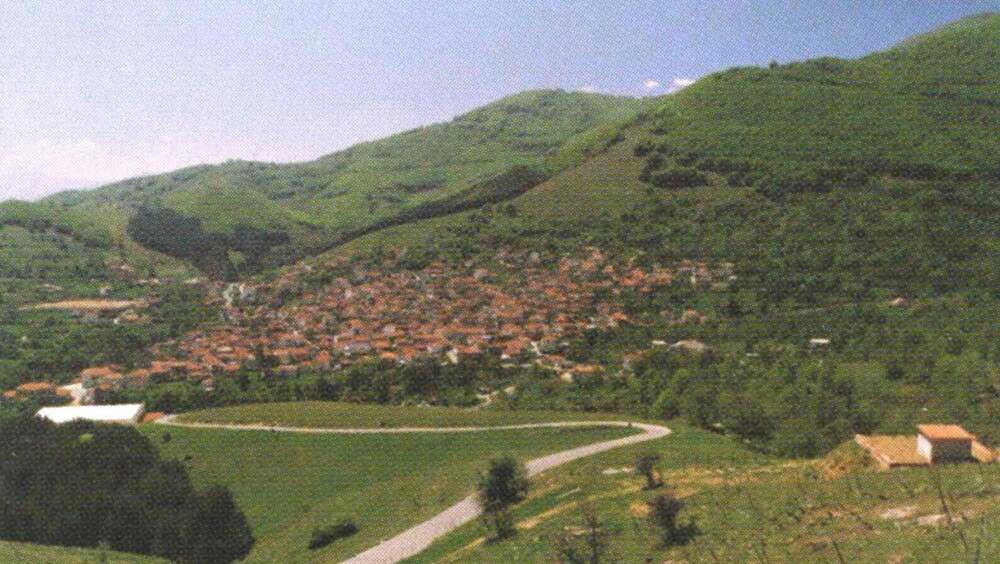
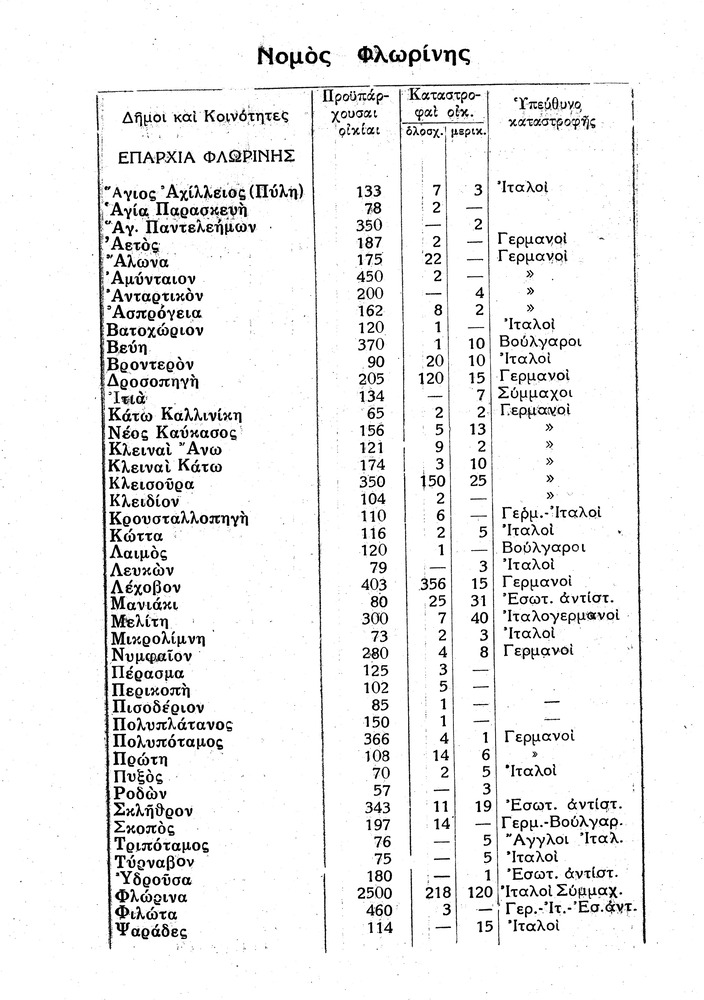
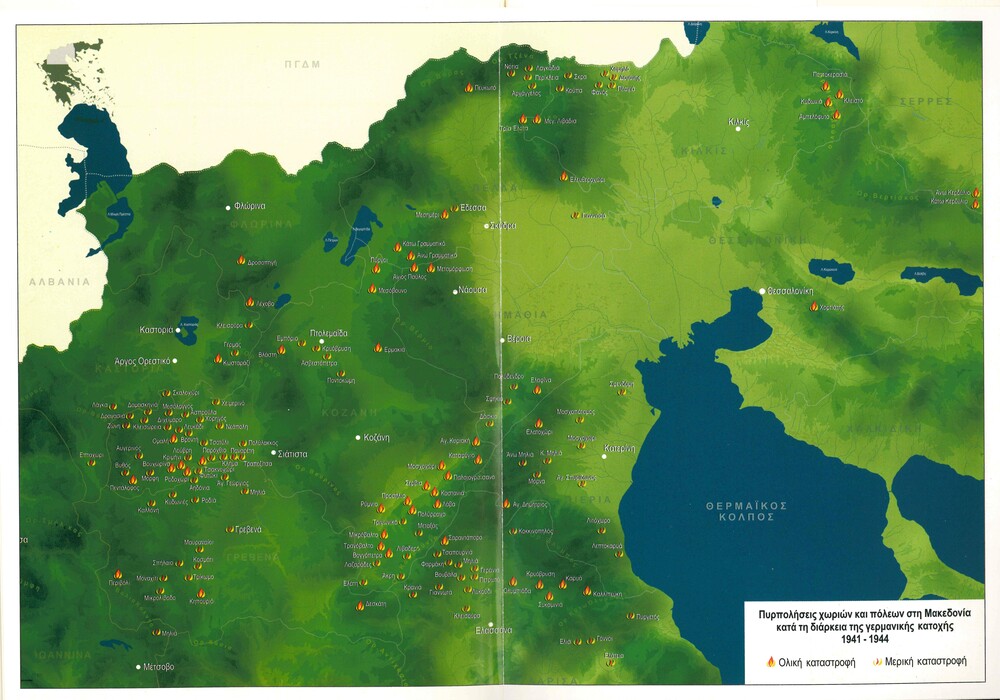
In late July 1943, German troops from the 2nd Brandenburg Regiment, reinforced by the battalion of the collaborationist retired Lieutenant Colonel George Poulos, launched an attack on the village of Lechovo. The operation was aimed at eliminating guerrilla activity in the area, which had already been marked as "dangerous" and a "guerrilla base" by the occupying forces. On the morning of July 23, after cutting off the exits, the occupying forces entered Lehovo and engaged in looting and destruction. During the attack, more than three hundred and fifty (350) houses were set on fire, and one resident lost his life.
At the same time, the occupation forces carried out mass arrests of the male population, while women and children were forcibly expelled to the surrounding areas. Among those arrested were officers of the Greek army, who were imprisoned. This decision caused unrest within the Poulos Battalion and the departure of several members. The arrested, about 50 men, were taken first to Klisoura and then to Ptolemaida, where they were held in a concentration camp for ten days.
During their imprisonment in Ptolemaida, the prisoners of Lehovo formed a committee of three, headed by Ilias Tzoumakis, the head of the village. Its purpose was to go to the forest of Lehovo to negotiate with the guerrilla group of Kosmas Spanos to hand over weapons to the Germans in exchange for the release of the prisoners. The guerrillas of the Greek People's Liberation Army (Ellinikos Laikos Apeleutherotikos Stratos / ELAS) agreed and handed over eighteen old weapons. In return, the Germans released the Lehovos prisoners in the following days, thus fulfilling their agreement.
The devastation of Lechovo lasted until July 26, 1943. During these four days the village was almost completely destroyed by massive fires. Only a few houses and the two churches in the village were saved from the aggression of the occupying forces.
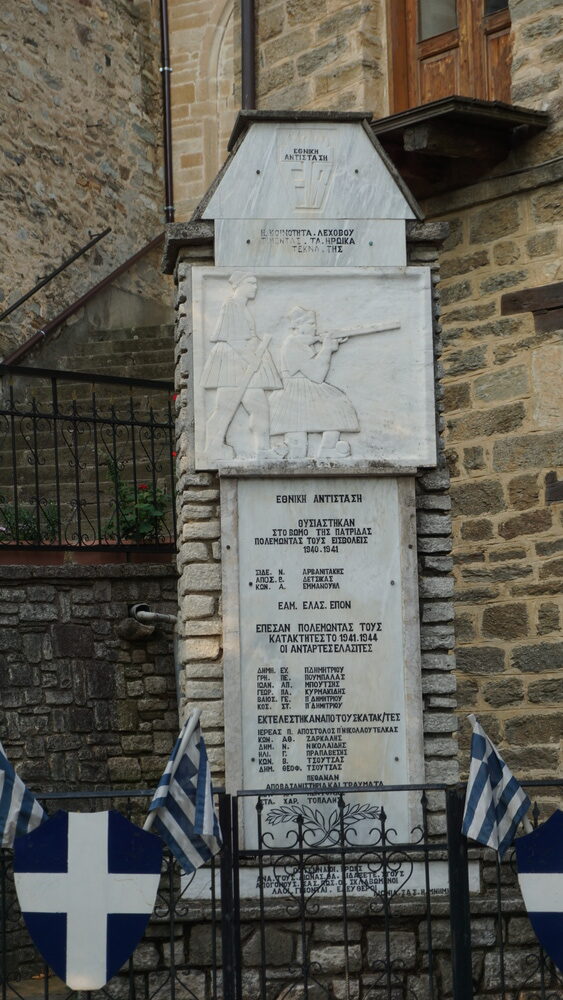
In December 1998, the Greek State, in honor of the memory of the victims of the massacre, declared Lechovo a Martyred Village by Presidential Decree No. 399/07.12.1998.