
Battle of Lake Kastoria (Argos Orestiko)
Short Description:
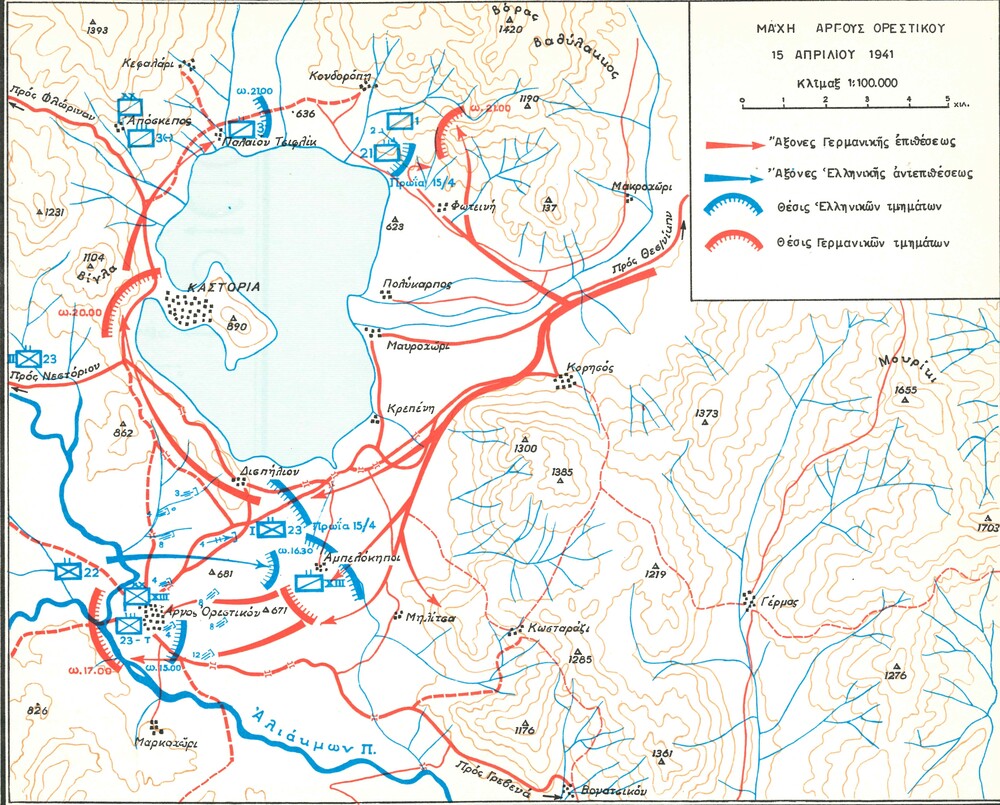
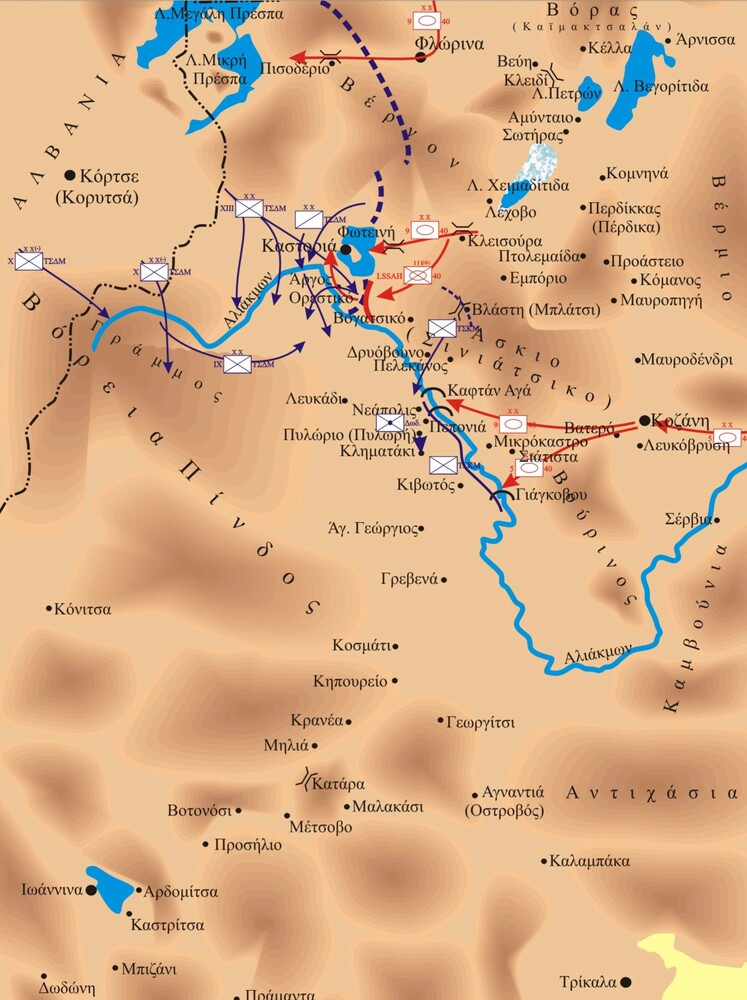
On April 15, strong German forces advanced south of Lake Kastoria, but their rapid advance ran into the Greek defensive line that had been set up from Dispilio to the southeast of Ampelokipoi. During the battle, which lasted several hours, the Germans, after breaking through the defenses in the area of Abelokipoi, attacked Argos Orestiko and captured it around 19:00. This was followed by heavy attacks by the German air force, which spread panic in the area with flares, machine-gun fire and bombs, as well as the characteristic ram-air sirens of the bombers. After the battle, the head of the German offensive congratulated the Greek troops who, despite their meager forces, managed to defend themselves for 14 hours against the thunderous German attack.
Photo gallery:
Detailed Description:
On April 6, 1941, at 5:15 a.m., the German army invaded southern Yugoslavia and Greece without warning as part of Operation Marita. Contrary to the usual procedure of sending a ultimatum and attacking after its expiration, the attack began immediately. The bulk of the German forces concentrated on Fort Istibey and Rupel, while smaller attacks were made on the Nevrokopi plateau and in Western Thrace. The German advance was rapid, and by the 9th, despite the heroic resistance of the Greeks at the forts of the Metaxas Line, they managed to overrun the Greek defenses and enter Thessaloniki. At the same time, on the evening of April 8, the Eastern Macedonia Army Section had already sent a letter to the German forces proposing to surrender.
On April 8, in view of the rapid development of the war, the forces of Group "W" –a coalition of Greek, British and Australian troops– withdrew from their positions in southern Albania and returned to Western Macedonia. In the territories of Western Macedonia, Group "W" took up defensive positions from the Klidi Pass to the area of Nymfaio, preparing to face the strong German forces that were expected to advance towards the area in the coming days.
On April 10, German forces began to advance into the Klidi Pass. British and Australian "W" Group units attempted to repel them. However, despite fierce Allied resistance, the Germans captured the Klidi Pass area on April 12 after three days of continuous fighting. The fall of the pass opened the way for further German advances into the areas of Western Macedonia and more broadly into Central and Southern Greece.
On April 13, 1941, SS troops attacked the Klisoura Pass and after long battles captured the Sargonitsa Heights. The Greeks fought back fiercely and managed to hold the remaining defensive positions throughout the night. However, on the morning of April 14, the Germans launched an even stronger attack with infantry, armor, artillery and air power. Under the pressure of the more numerous and better equipped forces, the Greeks gradually retreated, ceding control of the Klidi Pass to the Germans. Despite the defeat, delaying the German advance by about a day proved crucial, allowing the Greek and Allied forces to retreat safely to the south and providing the necessary escape routes.
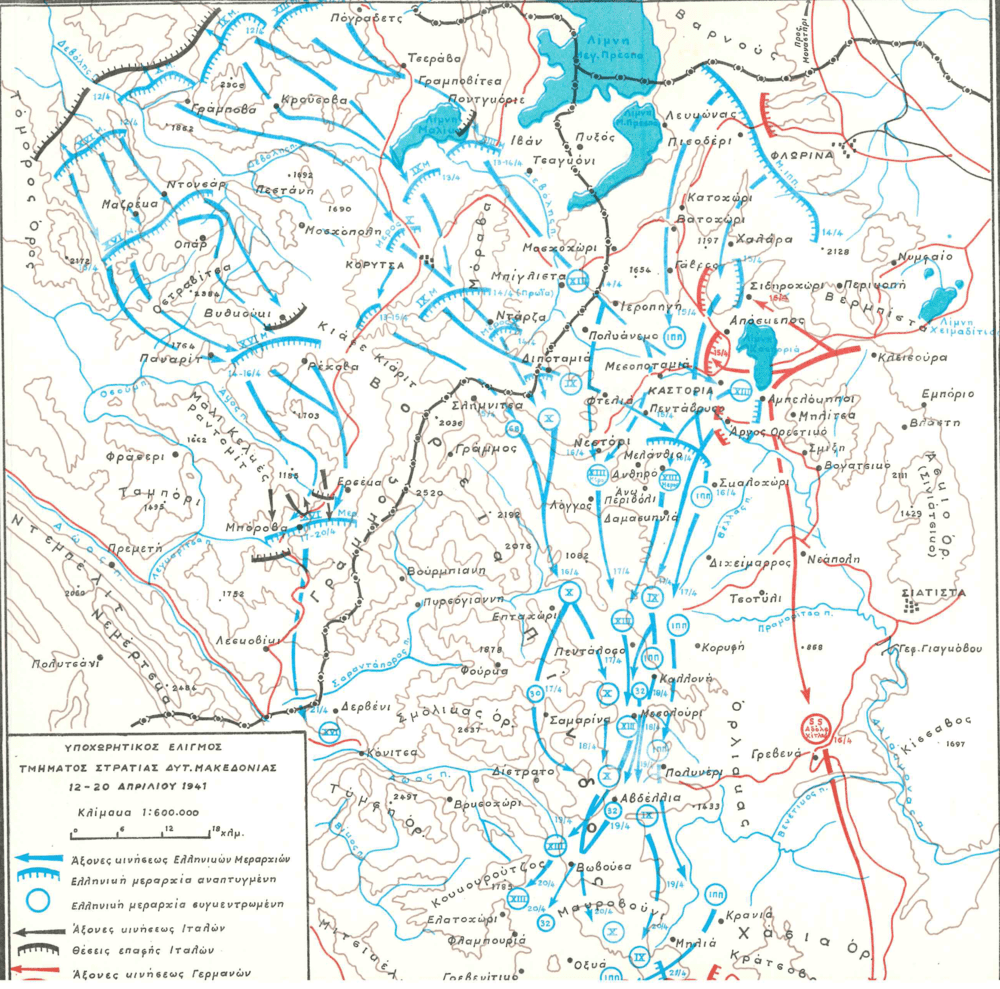
The existence of escape routes was crucial for the conduct of the retreat maneuvers of the Western Macedonia Army Section (Tmima Stratias Dytikis Makedonias, TSDM), the bulk of whose forces were in Albania. On April 11, 1941, the TSDM began preparations for the withdrawal and concentration of its units in the south. According to the plan, its forces should have been concentrated at the Klisoura crossing by April 15. However, the German capture of the Klidi Pass on April 12 and their advance towards the Klisoura Pass put the TSDM forces under immediate threat. If the Germans also captured the Klisoura Pass, they would advance further toward Argos Orestiko, cutting off the TSDM units from their escape routes to southern Greece and possibly capturing all of the army's forces.
In order to maintain the escape route of the TSDM troops to Argos Orestiko and Grevena, the troops of the XII Greek Division of the TSDM, after crossing the iron bridge at the village of Maniakoi, set up alert units on the Dispilio - Abelokipi line at midnight on April 14 and 15. In particular, a company of heavy artillery and a company of light artillery were deployed, while the 1st Battalion of the 23rd Infantry Regiment was sent to the defense lines of Dispilio and the reconnaissance group of the XII Division took over the defense between Abelokipoi and Militsa. Immediately a reconnaissance group was sent to the Maniakoi - Argos Orestiko river road. Around 03:00 on April 15th, the first movements of the TSDM and the Central Macedonian Army Section (Tmima Stratias Kentrikis Makedonias, TSKM) started along the road towards Argos Orestiko.
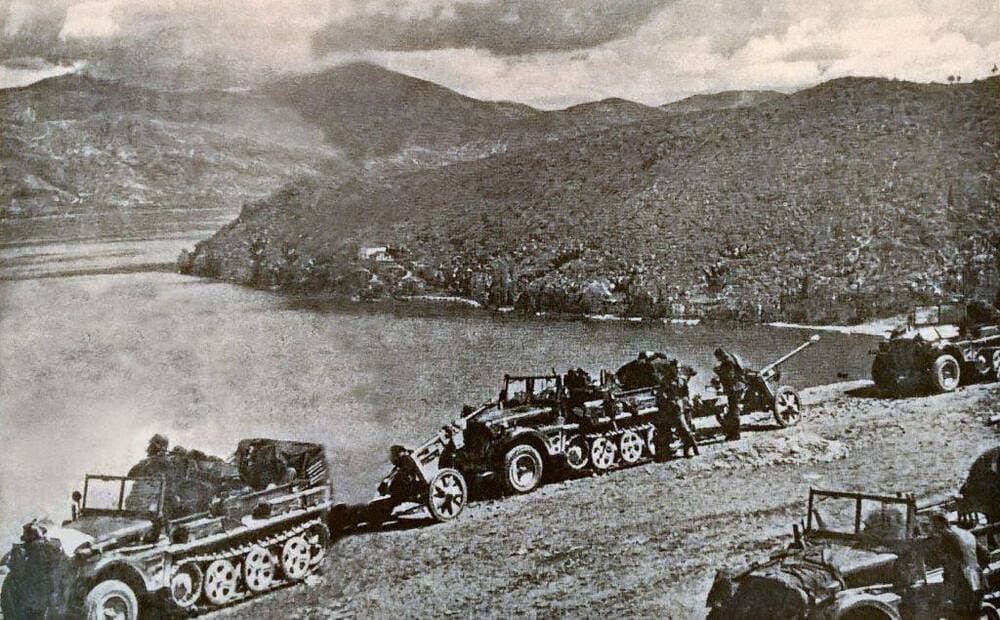
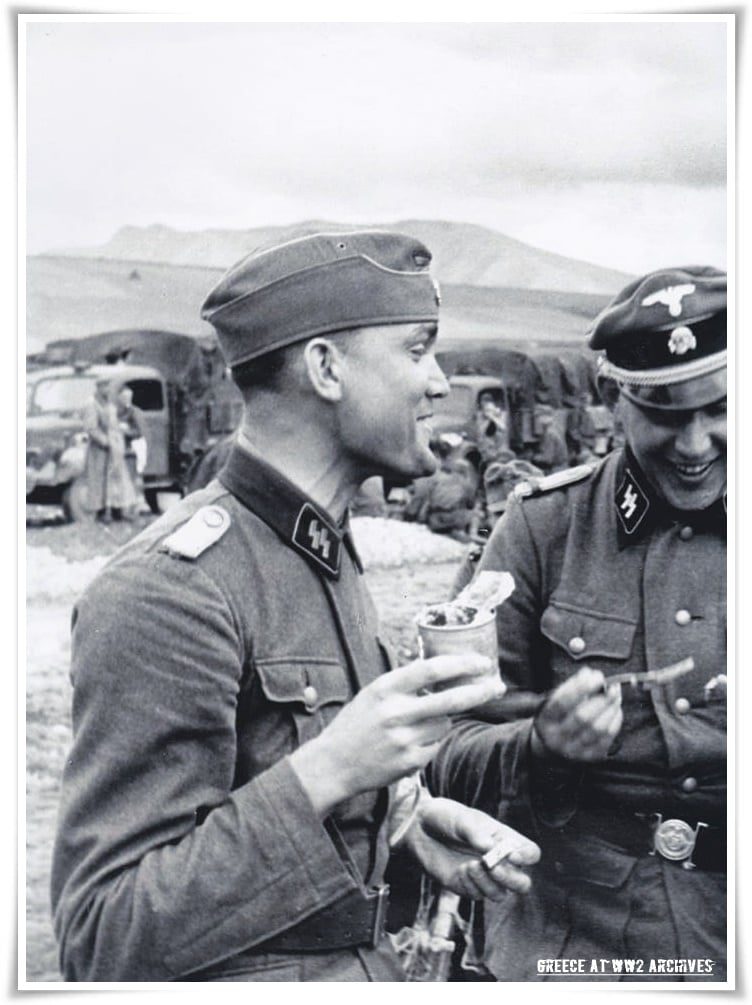
From the morning of April 15, the forces of the SS Panzer Division "Adolf Hitler", led by Major General Josef "Sepp" Dietrich, turned in two directions around Lake Kastoria. One to the south and southeast of the lake, which aimed to capture Argos Orestiko, and the other to the northeast, which tried to break the defensive positions west of the village of Fotini.
On the northern front, the defense of the Fotini Pass was taken over by the Cavalry Division and the troops of the XXI Brigade, with the command post transferred to Aposkepos. With all available forces, the Aposkepos Detachment was formed under the command of Infantry Colonel Christos Dedes. On the evening of April 14, a squadron of heavy artillery, a squadron of field artillery with anti-tank mission, a mortar company, a company of the 1st Cavalry Regiment and an anti-tank squadron were sent to the Fotini Pass, northwest of the village of the same name. The objective of the Aposkepos Detachment was to defend the Fotini Pass and to protect the road to Kastoria until the night of April 15-16, in order to ensure the protection of the escape routes of the TSDM troops to the south, through the line Koromilia - Mesopotamia - Neapolis.
As far as the southern front was concerned, from 04:30 the defense was organized under the command of the infantry commander of the division, Colonel Efstathios Liosis. Around 05:30 the first contact with the German forces was made, who had entered the area with light motorized units, infantry and about fifteen tanks. At about 06:00 the battle began with 17 German light tanks and 10 cars, supported by infantry and heavy artillery, attacking the Greek defenses positioned between Dispilio and Ampelokipoi. At 09:30 this first German attack was successfully intercepted by the Greek forces. With the accurate fire of the Greek artillery and infantry, the Greeks destroyed about 25-30 cars and tanks and inflicted considerable losses on the enemy.
Despite the significant temporary interception, the German forces, with plenty of war material and manpower, intensified the firing of heavy artillery shells towards the Greek defense lines. At 10:30 a.m., after a barrage of fire, the right flank of the defense suffered significant losses, with 10 wounded and 3 dead Greeks. At the same time, the morale of the Greek 1/23rd Infantry Battalion defending the area was shaken by the disorderly retreat of the units of the Greek XII Reconnaissance Group, which had been set up west of Abelokipoi. During the afternoon hours, the defensive line at Dispilio came under intensified attack with repeated bombardments by German artillery and the advance of three tanks supported by infantry, which approached the outskirts of the village despite accurate Greek artillery fire.
At the same time, both sides were reinforced by the arrival of new units since the early hours of the afternoon. On the Greek lines, west of Abelokipoi, a mountain artillery squadron under Major John Paparrodou arrived, as well as four other artillery divisions, three mountain and one field artillery. The Germans, on the other hand, were reinforced with new infantry divisions that moved against the Greek positions to Ampelokipoi and Militsa.
With these reinforcements, the second strong German attack took place in the section between Ampelokipoi and Militsa. The German infantry units moved against the Greek positions, supported by heavy fire from 10 heavy artillery batteries consisting of 40 artillery guns. Despite the range of the German forces, the Greeks were able to intercept this attack as well, as the accurate artillery fire forced the German vehicles to retreat and pinned down the infantry units. In addition, Greek heavy artillery shells were able to hit the German artillery batteries, forcing them to be silenced and constantly on the move.
Despite the second failure, the German forces again attempted to penetrate the Greek defensive positions. At 13:30 a coordinated fire of German infantry, tanks and artillery moved against Ampelokipoi. During this operation, heavy fire from German heavy artillery hit the position of the Greek XIIth Mountain Artillery Squadron. The attack caused significant losses to the Greek forces, the most tragic being the sacrifice of Major John Paparrodou.
At 14:00, despite the strong resistance of the Greeks, the powerful German forces managed to break through the defense in the southeastern part of the defensive line and occupied Ambelokipoi as well as the southernmost positions. The offensive was marked by the loss of Captain Kleitos Hatziliadis, the commander of the cavalry company defending the area. After the death of their commander, the rest of the column was forced to retreat, while part of it was captured.
At the same time, on the northern front, from the early hours of the morning, the Germans made repeated attacks with infantry and tanks, trying to break through the Greek defenses at the Fotini Pass. Despite the constant pressure, the Greek forces repelled each attack thanks to the effective fire of the heavy artillery squadron, which caused the enemy significant losses in men and equipment. In this way, the Aposkepos Detachment maintained control of the crossing until the early afternoon hours. Since then, the pressure on the defensive line intensified as the Germans occupied the mountainous area north of the village of Fotini and attacked the road leading from Fotini to Kastoria with machine guns and automatic weapons.
Returning to the southern front, the right part of the Greek defensive line, already lacking manpower from the beginning of the day, was left undefended after the Germans captured Ambelokipoi. This development put the divisional troops between the villages of Maniakoi and Dispilio in immediate danger of being cut off from the escape routes. The situation worsened when at 15:00 the Greek XII Reconnaissance Group, responsible for defending the Spailikia Height northeast of Ampelokipoi, retreated to the northwest, abandoning its position and leaving the area without the presence of any Greek force. The Division Commander, in desperation, rushed into the wider area of Lake Kastoria with a motorcycle in search of available forces to fill the gap. Eventually his pressure was successful and the Greek 3rd Battalion of the 22nd Regiment was persuaded to move to the Spailikia Height, reinforcing the right side of the defense around 16:30.
Meanwhile, on the left part of the defense, east of Dispilio, the battle escalated with the attack of German infantry, tanks, artillery and air forces around 17:00. Despite the clear superiority of the Germans in numbers and equipment, the Greeks initially managed to repel the attacks.
A decisive factor in the development of the battle on both fronts was the massive air attack by a swarm of about 40 German planes, which in the early afternoon hours carried out heavy bombing in the areas of Aposkepos, Fotini Pass and Dispilio, destroying all the Greek artillery batteries on the southern front. In the absence of anti-tank guns, the German tanks advanced freely towards Dispilio, occupying one by one the positions of the defending Greek companies and capturing almost all the soldiers. Faced with the critical situation, the Greeks blew up the bridge at Maniakoi in order to delay the German advance towards Kastoria. The remaining troops were hastily moved to Argos Orestiko, where German infantry and armored troops had begun to arrive. By 19:00, German tanks had surrounded Argos Orestiko, which was eventually taken despite the valiant efforts of the Greek forces.
The fierce battle south of Lake Kastoria ended with the decisive participation of the German Air Force. Numerous German aircraft carried out flare, gun and bombing attacks in the area of Argos Orestiko and the road to Vogatsiko. The invaders spread fear and panic among the Greek soldiers and civilians with the widespread use of war material and the characteristic ram-air sirens of the German Junkers Ju87 (Stuka) aircraft. Those units of the Greek army that had not been captured were hastily moved through the mountains towards Skalochori.
On the northern front, hostilities continued until late in the evening of April 15. Around 20:00, the Germans managed to advance west of the lake and capture the town of Kastoria. A further advance to the north followed, reaching the area of Paleo Tsifliki. With this development, the Aposkepos Detachment, which was at the Fotini Pass, was in danger of being surrounded and began a hasty retreat to the northwest. Between 21:00 and 23:00, parts of the detachment managed to reach the escape routes to the south, while others were captured. Colonel Dedes, head of the detachment, managed to escape the battlefield and narrowly escaped capture.
In general, the battle fought on April 15, 1941, south of Lake Kastoria is the only recorded "open field" battle, i.e., where troops were able to move freely and deploy battle formations. It is also the only "encounter" battle, where the enemy troops met each other unannounced, without prior preparation or strategic planning. In total, according to German sources, about 12,000 Greek soldiers and significant combat equipment, including 32 artillery guns, were captured in the Battle of Lake Kastoria.
An important event that underlines the heroic resistance of the Greeks in this battle is the meeting that took place between Major General Zep Dietrich and Colonel Efstathios Liosis at the German garrison in Athens in May 1941. During this meeting, Dietrich asked Liosis to describe the disposition of the Greek forces during the long battle. When Liosis revealed the small size of the forces that had resisted, Dietrich was outraged and initially believed the Greek officer was lying, since the Germans believed they were facing forces of three divisions, IX, X, and XII, rather than three battalions as Liosis had informed him. Finally, the two men concluded their discussion with Dietrich congratulating the Greeks on their effective resistance.

Indicative Literature:
ΓΕΣ, Το τέλος μιας Εποποιίας – Απρίλιος 1941, Αθήνα 1959.
ΓΕΣ, Εφοδιασμοί στρατού εις υλικά οπλισμού πυρομ/κων πυρ/κου πεζικού 1940-1941, Αθήνα 1982.
ΓΕΣ, η Υγειονομική Υπηρεσία του στρατού κατά τον πόλεμο 1940-1941, Αθήνα 1983.
ΓΕΣ, Επίτομη Ιστορία του Ελληνοϊταλικού και Ελληνογερμανικού πολέμου 1940-1941. Επιχειρήσεις Στρατού Ξηράς, Αθήνα 1985.
Α. Εδιπίδης (επιμ.), Μεγάλη Εικονογραφημένη Ιστορία του Ελληνοϊταλικού και Ελληνογερμανικού Πολέμου 1940-1941, Επιμέλεια της Στρατιωτικής Ύλης Αλεξ. Εδιπίδου Αντίστράτηγου Ε. Α., Τόμος Β’, Αθήνα 1954.
Θ.Φ. Παπακωνσταντίνου, Η μάχη της Ελλάδος 1940-1941, Αθήνα 1971.
R. Higham, Το ημερολόγιο μιας καταστροφής. Η Βρετανική βοήθεια στην Ελλάδα 1940-1941, Αθήνα 2008.
J. Plowman, Images of War in the Balkans. The battle for Greece and Crete 1940-1941. Rare photographs from wartime archives, South Yorkshire 2013.
A.S. Walker, Middle East and Far East. Australia in the war of 1939-1945, Canberra 1953.
Related locations
Bust of Major General Ioannis Paparrodou
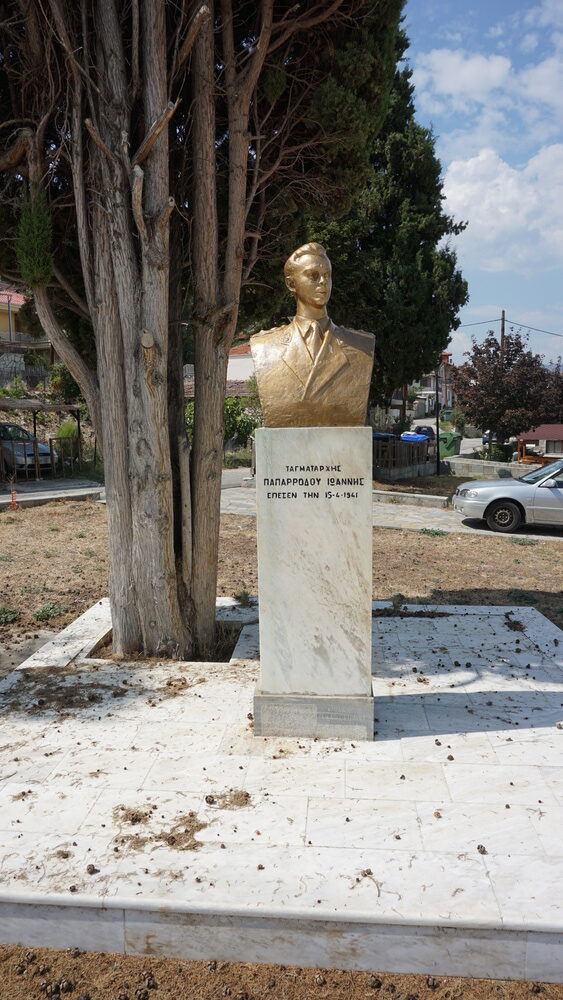
Bust of Major General Ioannis Paparrodou
Monument to Major General Ioannis Paparrodou
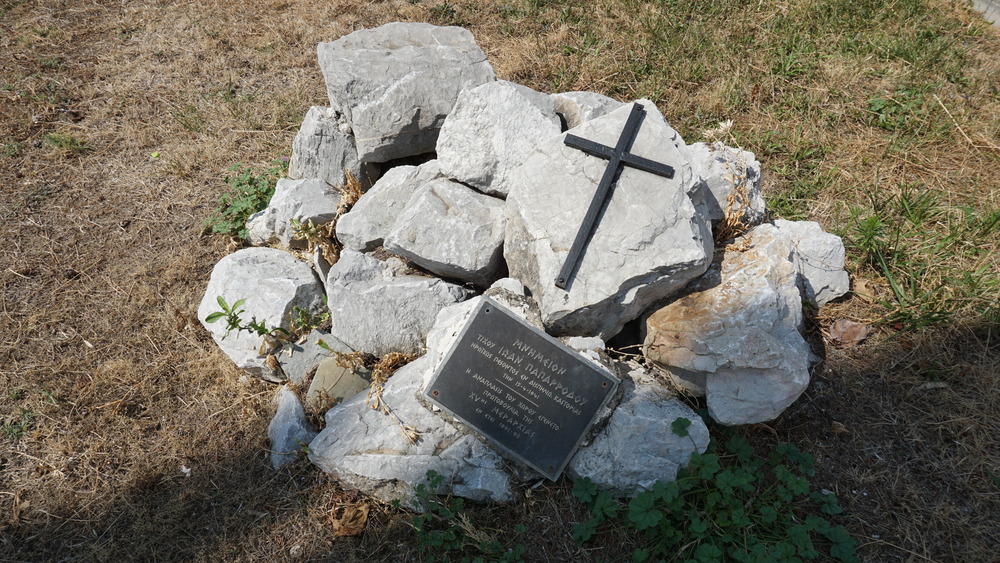
Monument to Major General Ioannis Paparrodou
Monument to the Fallen. Maniakoi, Kastoria
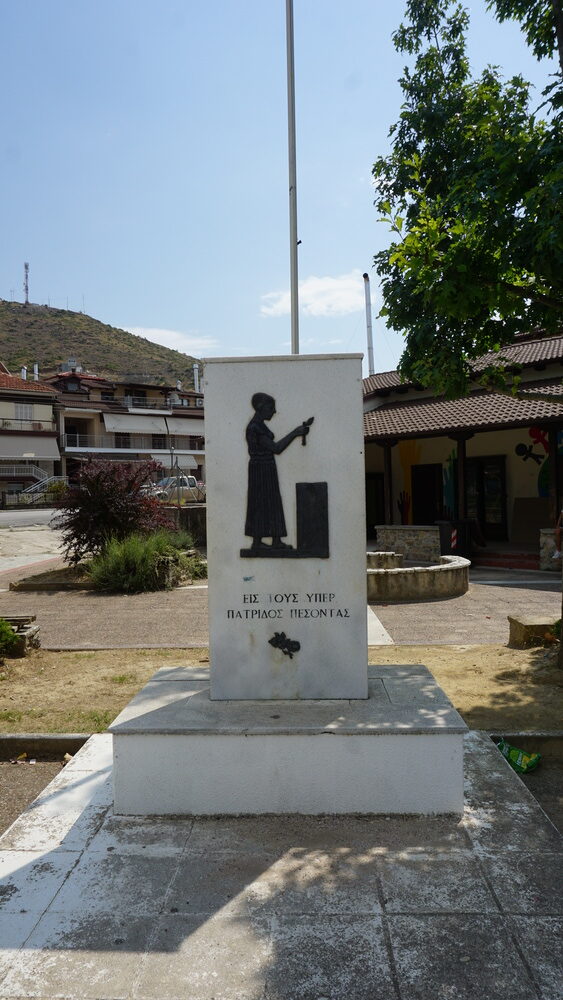
Monument to the Fallen. Maniakoi, Kastoria
Monument to the Fallen. Ampelokipoi, Kastoria
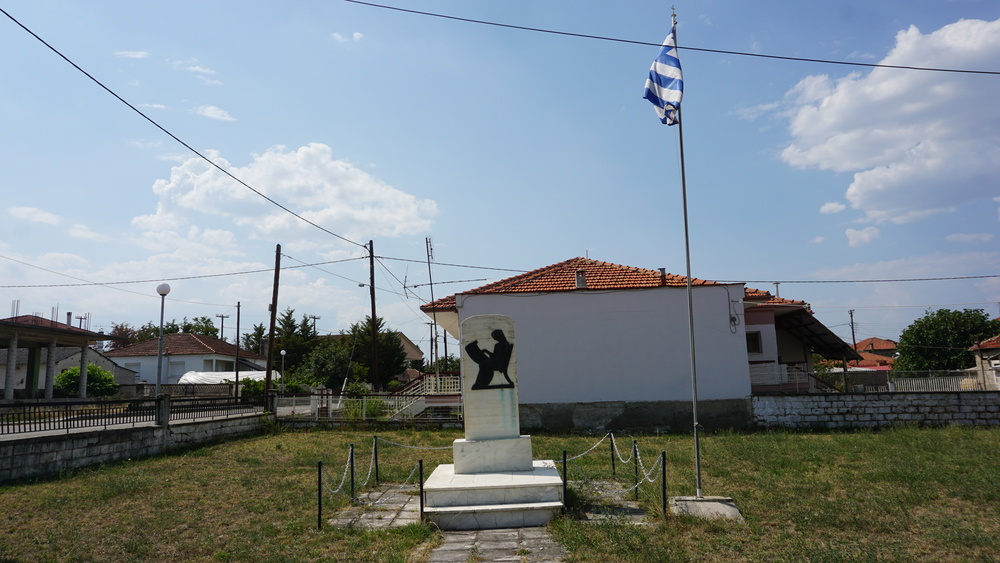
Monument to the Fallen. Ampelokipoi, Kastoria