Battle of Zagoritsani
Short Description:
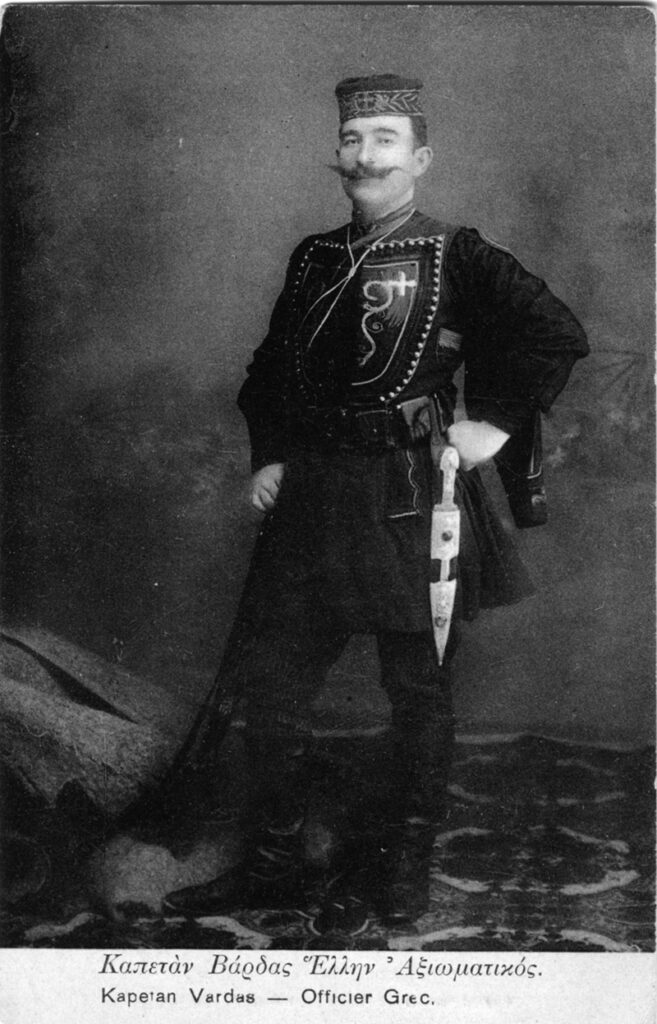
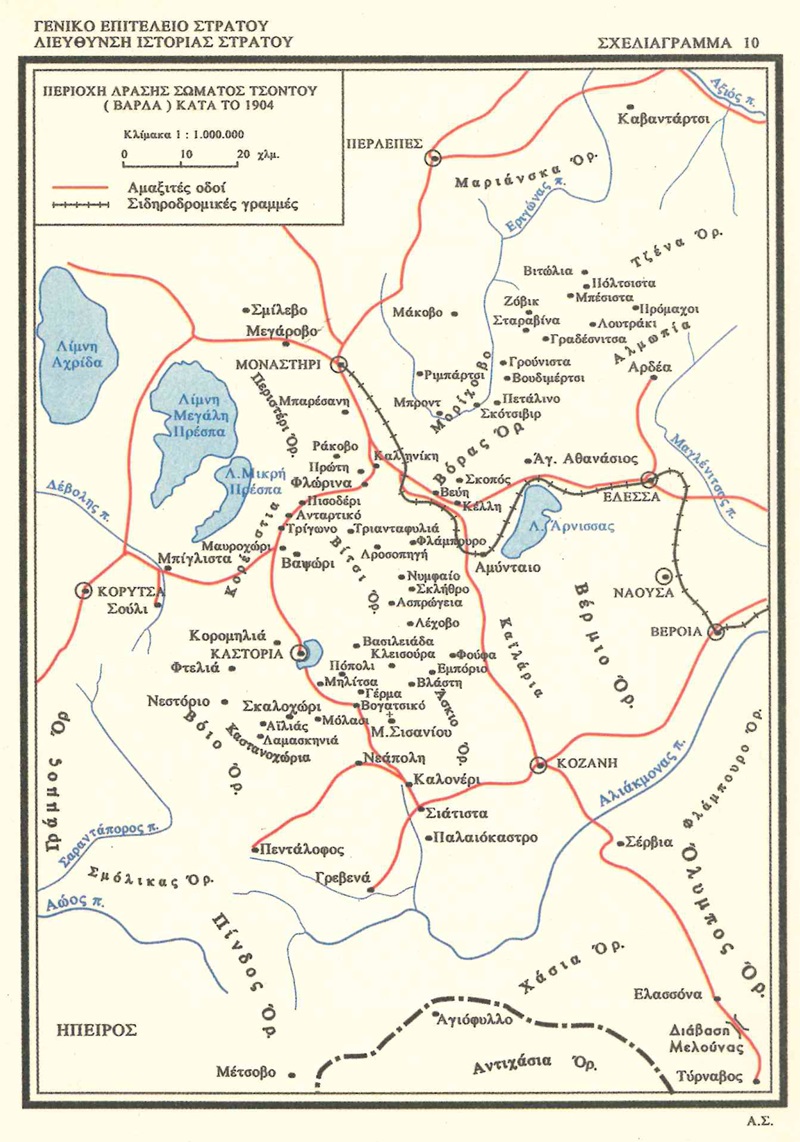
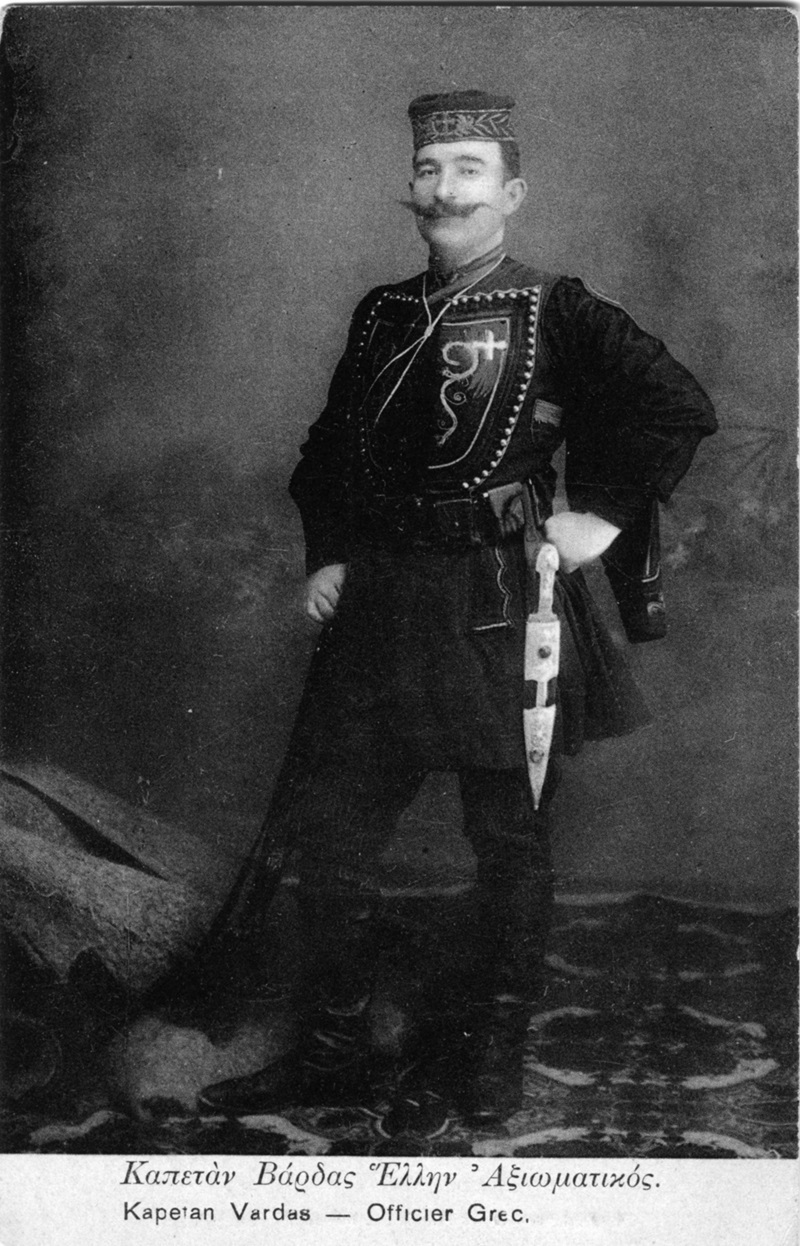
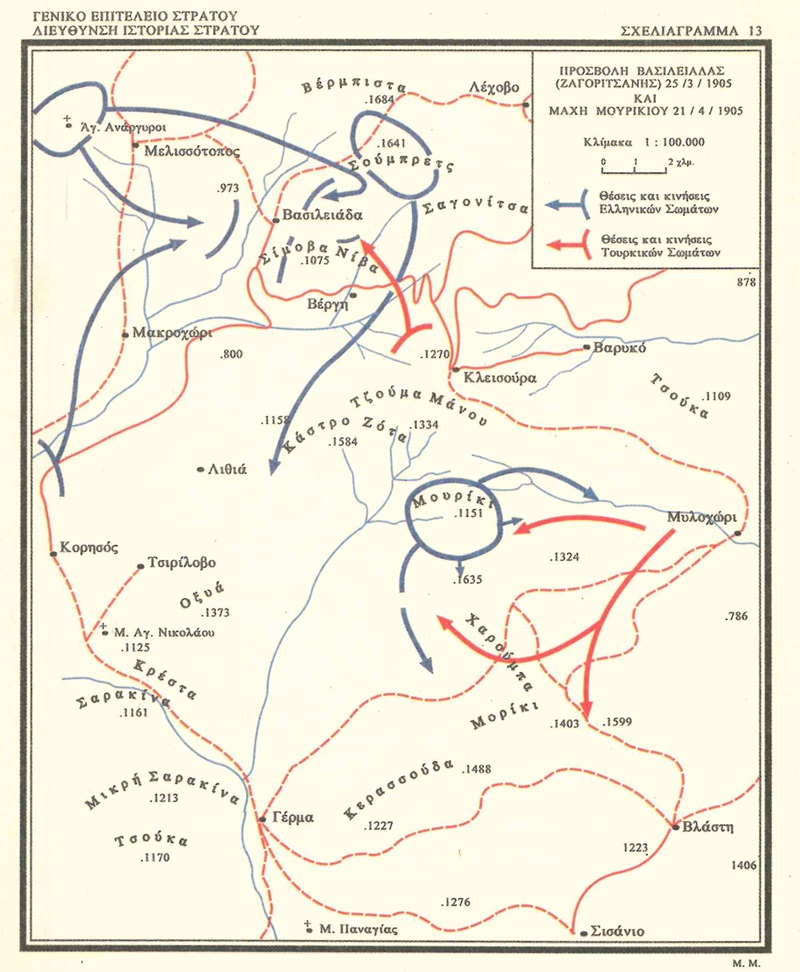
In the first quarter of 1905, the Bulgarian Komitadjis carried out a series of hostilities, killing Greek Orthodox inhabitants of the wider area of Kastoria and setting fire to three monasteries. In retaliation, Greek Macedonian fighters led by Lieutenant Georgios Tsontos (Captain Vardas) attacked Zagoritsani (now Vasiliada), a major center of Komitadji activity. On March 25, 1905, coordinated armed groups of Greek Macedonians entered the village of Zagoritsani, executed more than 60 Exarchist inhabitants and burned several houses. The battle highlighted the courage of the Macedonian fighters, but the ferocity of the attack provoked reactions from the Greek state and the international community.
Photo gallery:
Detailed Description:
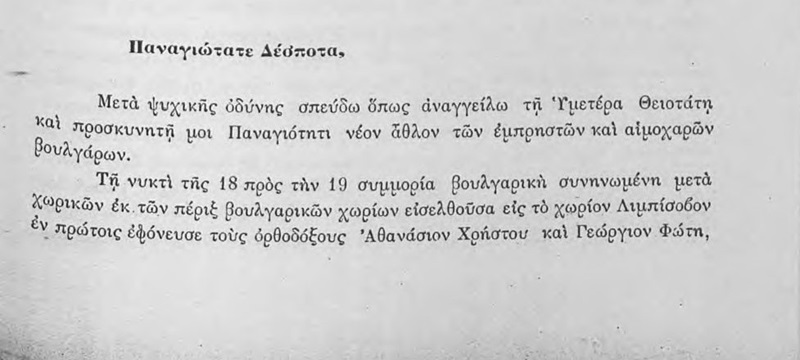
Between February and March 1905, the Bulgarian Komitadjis, organized by the voevoda Kole Andreev, carried out a series of hostilities aimed at strategically important targets around the area of Kastoria.
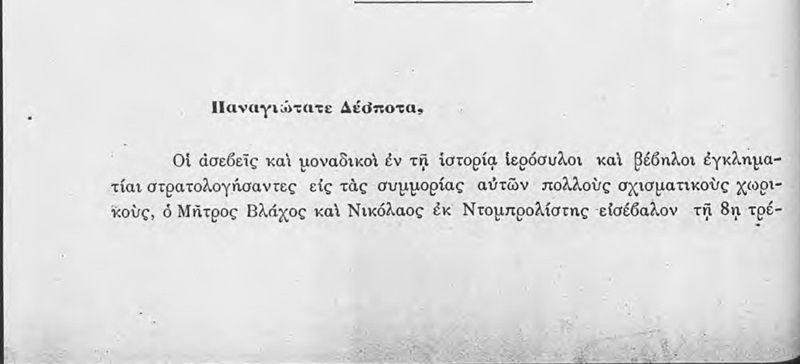
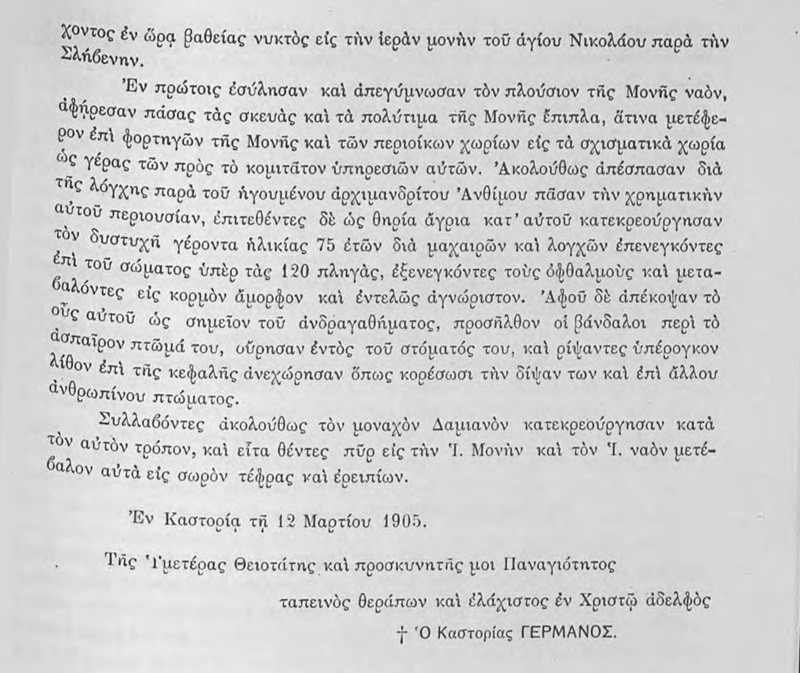
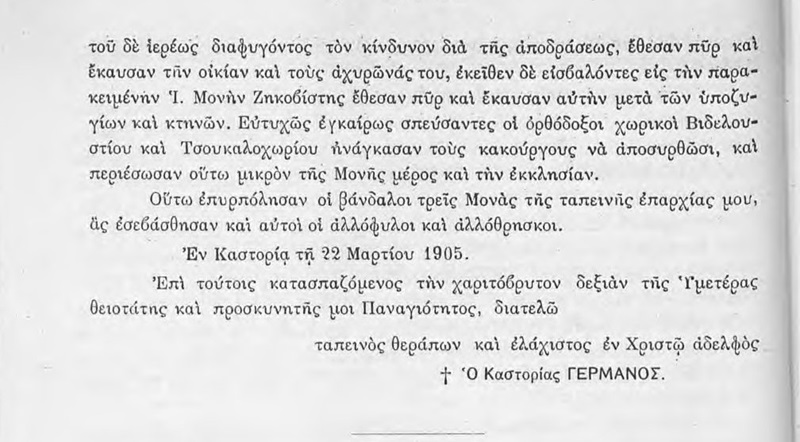
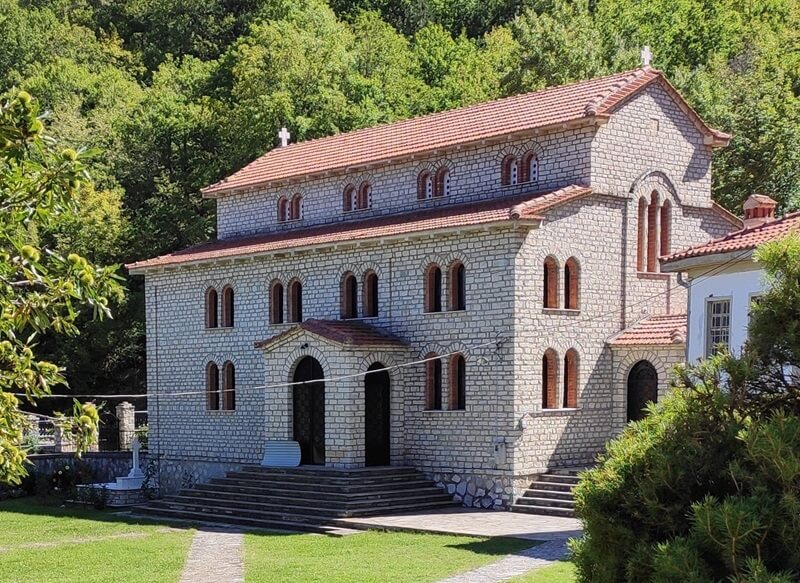
- On February 21, Kole's men attacked the monastery of St. Nicholas of Sliveni (now Koromilia), setting fire to the church and killing the abbot and a monk.
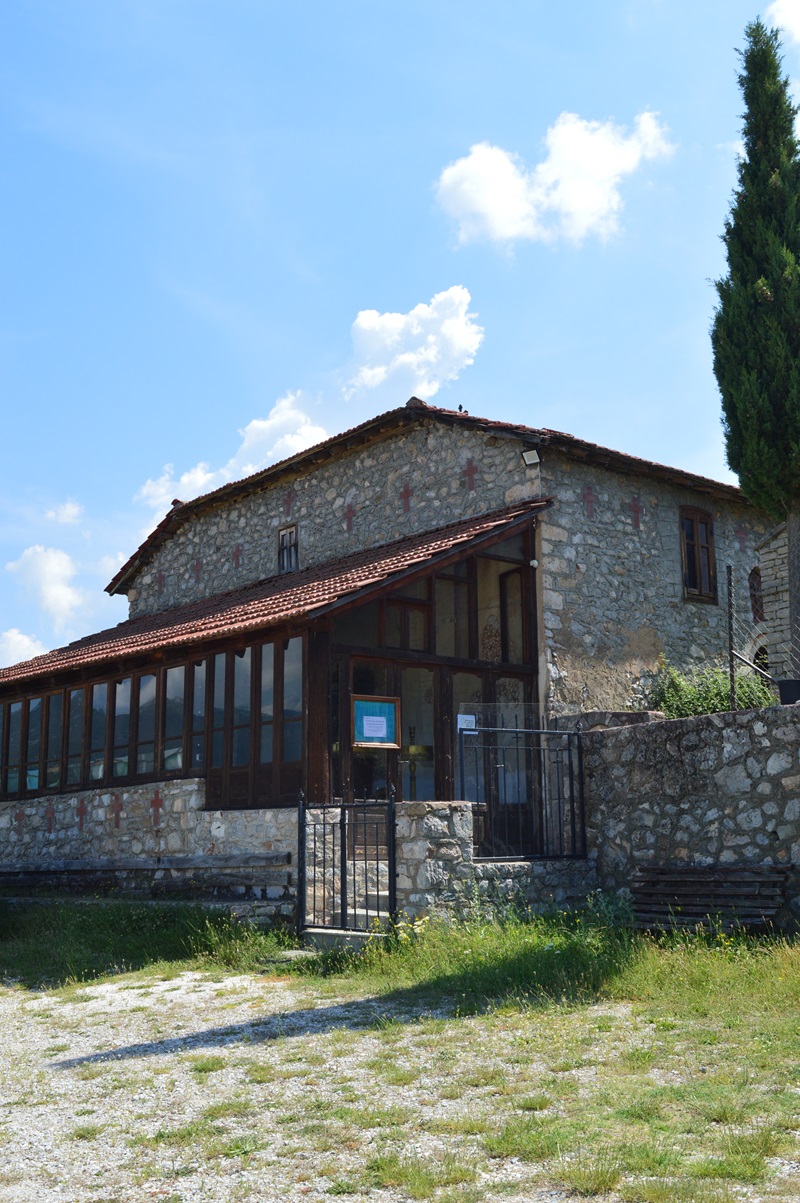
- Two days later, on February 24, the Komitadjis chief Kole, accompanied by about eighty armed men from Zagoritsani, invaded the monastery of St. Nicholas of Tsirilovo. There, after destroying the interior of the Catholic church, the Bulgarian Komitadjis set it on fire and then murdered an old monk who was staying in the monastery.
- On March 15, a group of Bulgarian Komitadjis from Zagoritsani executed Vasilios Meleganos (1877-1905), a Castorian teacher appointed by Stefanos Dragoumis (1842-1923) in the village of Setoma (now Kefalari). The murder of Meleganos was brutal and related to the national antagonisms in the region, as the teacher was a collaborator of the Greek Macedonian Committee and was responsible for organizing the struggle in the area.
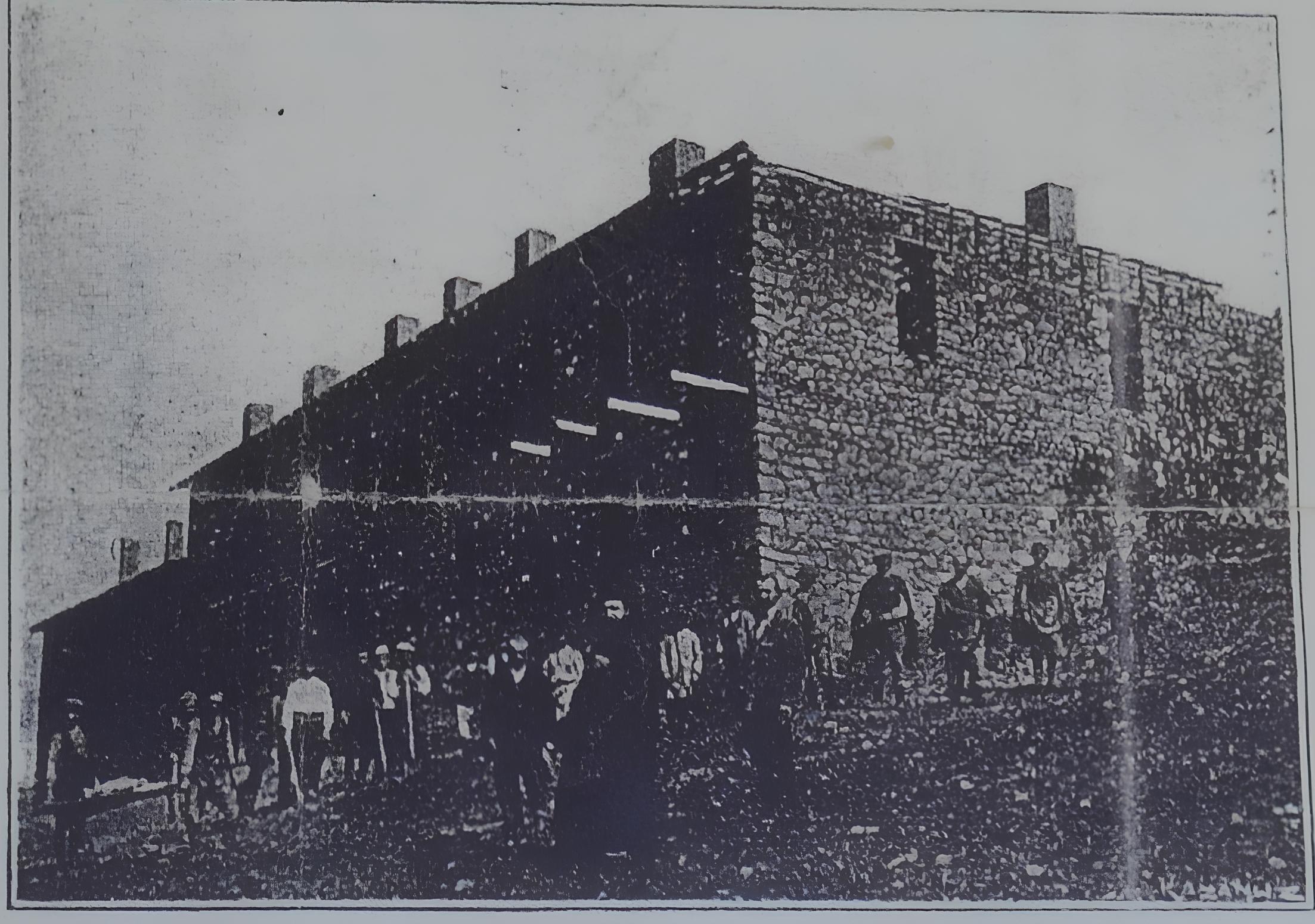
- After another three days, on March 18, the Komitadjis of Kole set fire to another monastery, that of St. Athanasius of Zikovista.
In general, the monasteries were associated with the organization of the resistance against the Bulgarian Komitadjis, as they often hosted chieftains and members of the armed groups of the Greek Macedonian fighters. It was also in the monasteries that the Bishop of Kastoria, Germanos Karavangelis (1866-1935), met, cooperated and initiated chieftains and members of armed groups into the Macedonian Struggle.
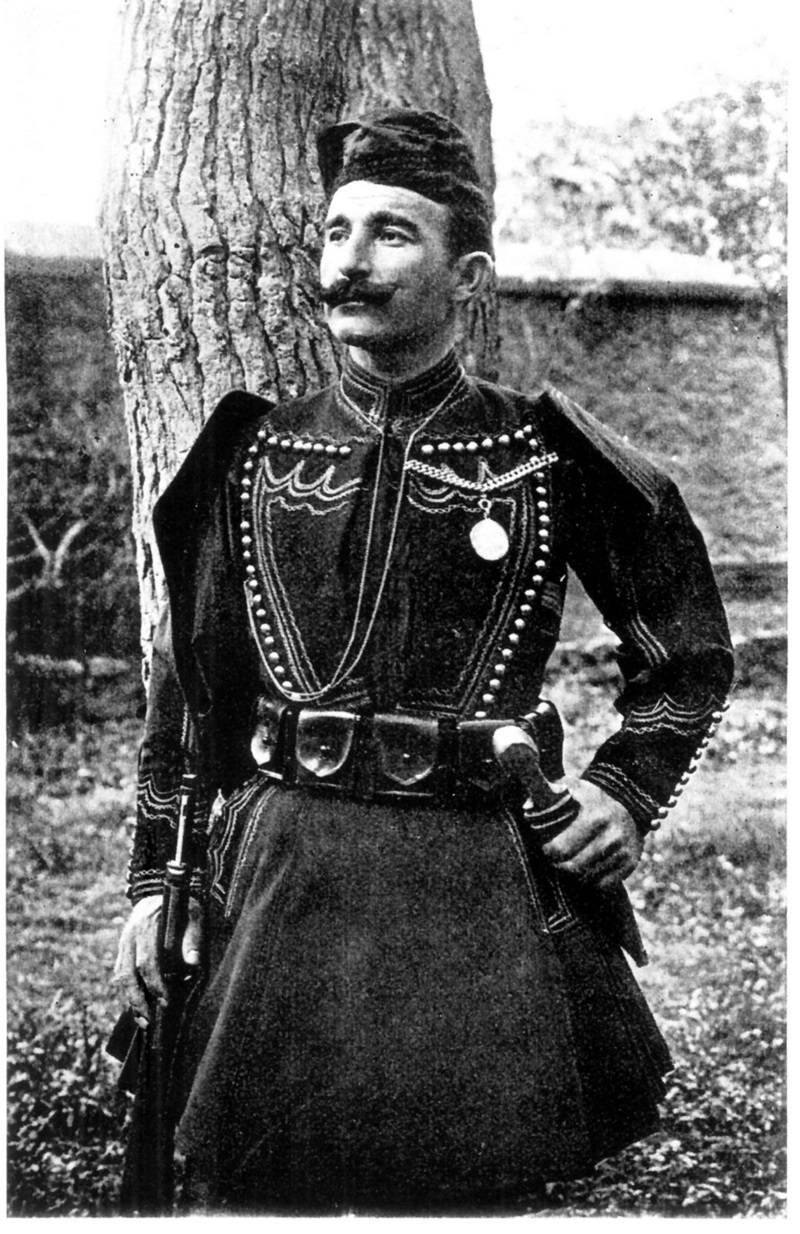
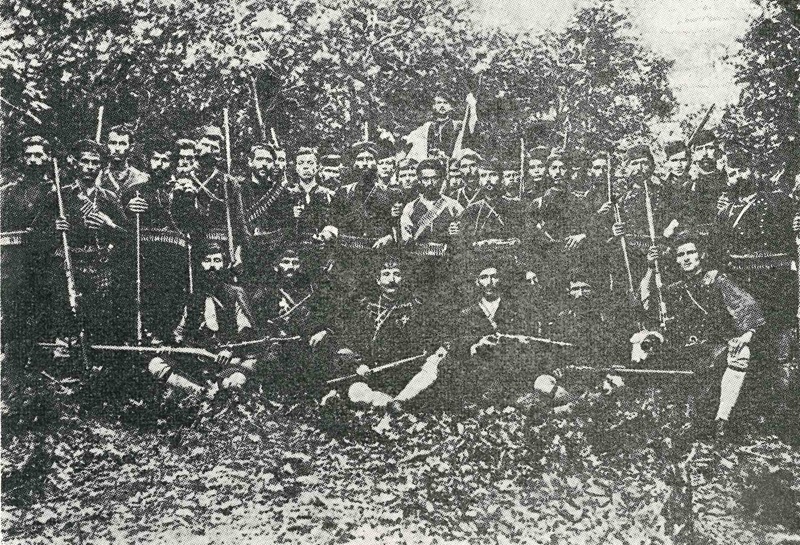
The intense presence and aggression of the Komitadjis of chieftain Kole Andreev in the wider area of Kastoria, as well as the strategic targets affected by them, caused concern among the Greek Orthodox inhabitants of the region, as well as the armed forces of the Greek Macedonian fighters. For this reason, the chieftains, led by Georgios Tsontos (Captain Vardas), deliberated on the future of the Macedonian struggle and set their sights on Zagoritsani, which had been an important center for the organization of the Exarchists since the period of the Ilinden Uprising (July 20 1903).
At the same time, the Greek Macedonian Committee sent Captain Stefanos Doukas to West Macedonia to reinforce the forces of the Greeks-Macedonians.
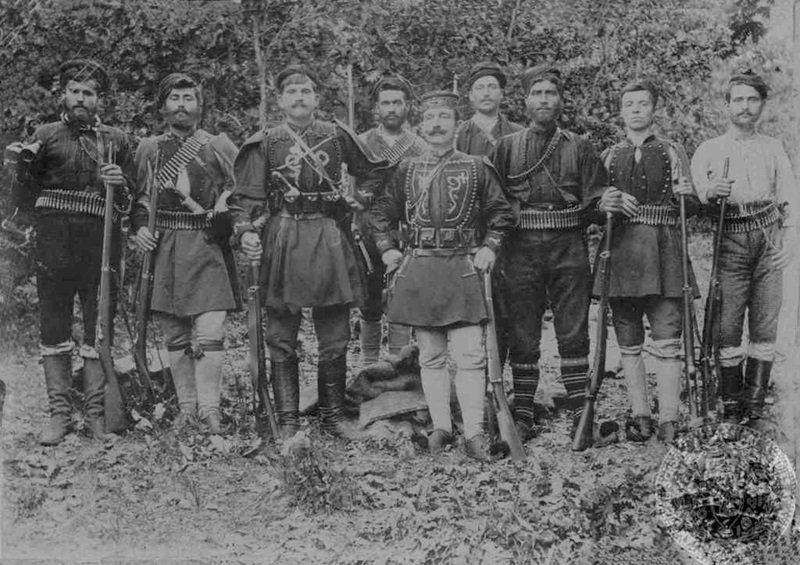
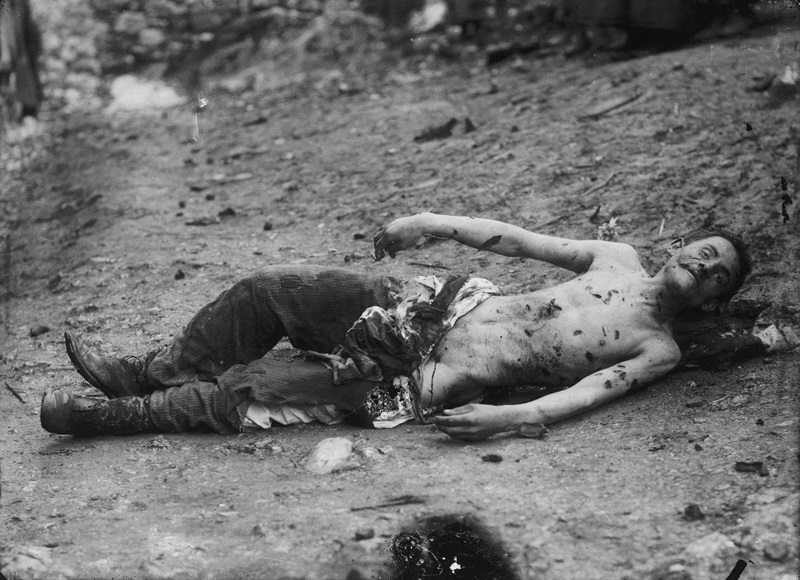
At dawn on March 25, 1905, the assembled forces of the Macedonian fighters, led by Captain Vardas, entered Zagoritsani from the south and the north to capture the exarchs living in the village. In the north, Captain Mallios' forces met no resistance and carried out their mission, capturing several Exarchists and the village priest. In the south, however, Captain Varda's forces were confronted by organized groups of armed Komitadjis, and the operation turned into an armed conflict. During the battle, the Greek Macedonian fighters fought with brutality, killing more than 60 Exarchists and burning many houses and buildings in Zagoritsani.
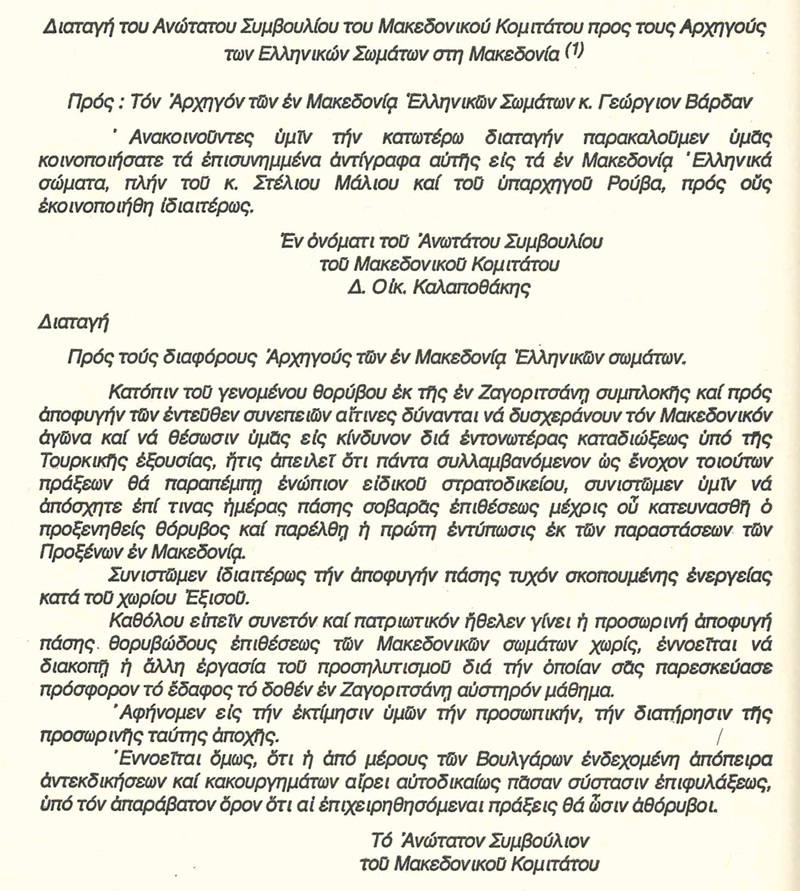
The victory at the Battle of Zagoritsani was of strategic importance for the Macedonian forces. However, the brutality of the hostilities, as well as the prohibition of burying the dead for four days in order to allow an international committee to verify the events, led to a general outcry and protests within the Greek state and internationally.
Indicative Literature:
Βακαλόπουλος Κωνσταντίνος Α., Μακεδονικός Αγώνας. Η ένοπλη φάση 1904-1908, Θεσσαλονίκη: Εκδόσεις Μπαρμπουνάκης, 1987.
Κολιόπουλος Ιωάννης Σ., Μιχαηλίδης Ιάκωβος Δ., Παπανικολάου Κωνσταντίνος Σ. (επιμ.), Αφανείς Γηγενείς Μακεδονομάχοι (1903-1913), Θεσσαλονίκη: Εταιρεία Μακεδονικών Σπουδών ‒ University Studio Press, 2008.
Μόδης Γεώργιος, Ο Μακεδονικός Αγών και η νεώτερη Μακεδονική ιστορία, Θεσσαλονίκη: Εταιρεία Μακεδονικών Σπουδών ‒ Μακεδονική Βιβλιοθήκη 26, 1967
Μόδης Γεώργιος, Αγώνες στη Μακεδονία, Θεσσαλονίκη: Εκδόσεις Μπαρμπουνάκης, 1975.
Πετσίβας Γεώργιος (επιμ.), Ιωάννου Καραβίτη, Ο Μακεδονικός Αγών. Απομνημονεύματα, 1, Αθήνα: χ.ε. 1994.
Ράπτης Σταμάτιος, Ιστορία του Μακεδονικού Αγώνος. Όλαι αι ιστορικαί μάχαι των μακεδονομάχων ηρώων κατά των Βουλγάρων και Τούρκων. Με τας γνησίας εικόνας των αγωνισθέντων και πεσόντων υπέρ Πατρίδος και Θρησκείας οπλαρχηγών. Από της ενάρξεως του Μακεδονικού αγώνος 1903 μέχρι σήμερον, Εν Αθήναις: Αναγνωστόπουλος και Πετράκος Εκδόται, 2χ.χ.
Χατζής Δημήτριος Κ., Ιστορία του Μακεδονικού Αγώνος: Αθήναι 1971.
Χοτζίδης Άγγελος Α. (επιμ.), Ευθύμιος Καούδης. Ένας Κρητικός αγωνίζεται για τη Μακεδονία. Απομνημονεύματα (1903-1907), Θεσσαλονίκη: Μουσείο Μακεδονικού Αγώνα, 1996.
Dakin Douglas, The Greek struggle in Macedonia, 1897-1913, Θεσσαλονίκη: Ίδρυμα Μελετών Χερσονήσου του Αίμου, 1966.
Livanios Dimitris, «’Conquering the souls’: nationalism and Greek guerrilla warfare in Ottoman Macedonia, 1904-1908», Byzantine and Modern Greek Studies 23 (1999): 216-217.

Related locations
The Monastery of Saint Nicholas Koromilias

The Monastery of Saint Nicholas Koromilias
The Monastery of Saint Nicholas of Tsirilovo

The Monastery of Saint Nicholas of Tsirilovo
The Monastery of Saint Athanasius of Zikovista

The Monastery of Saint Athanasius of Zikovista