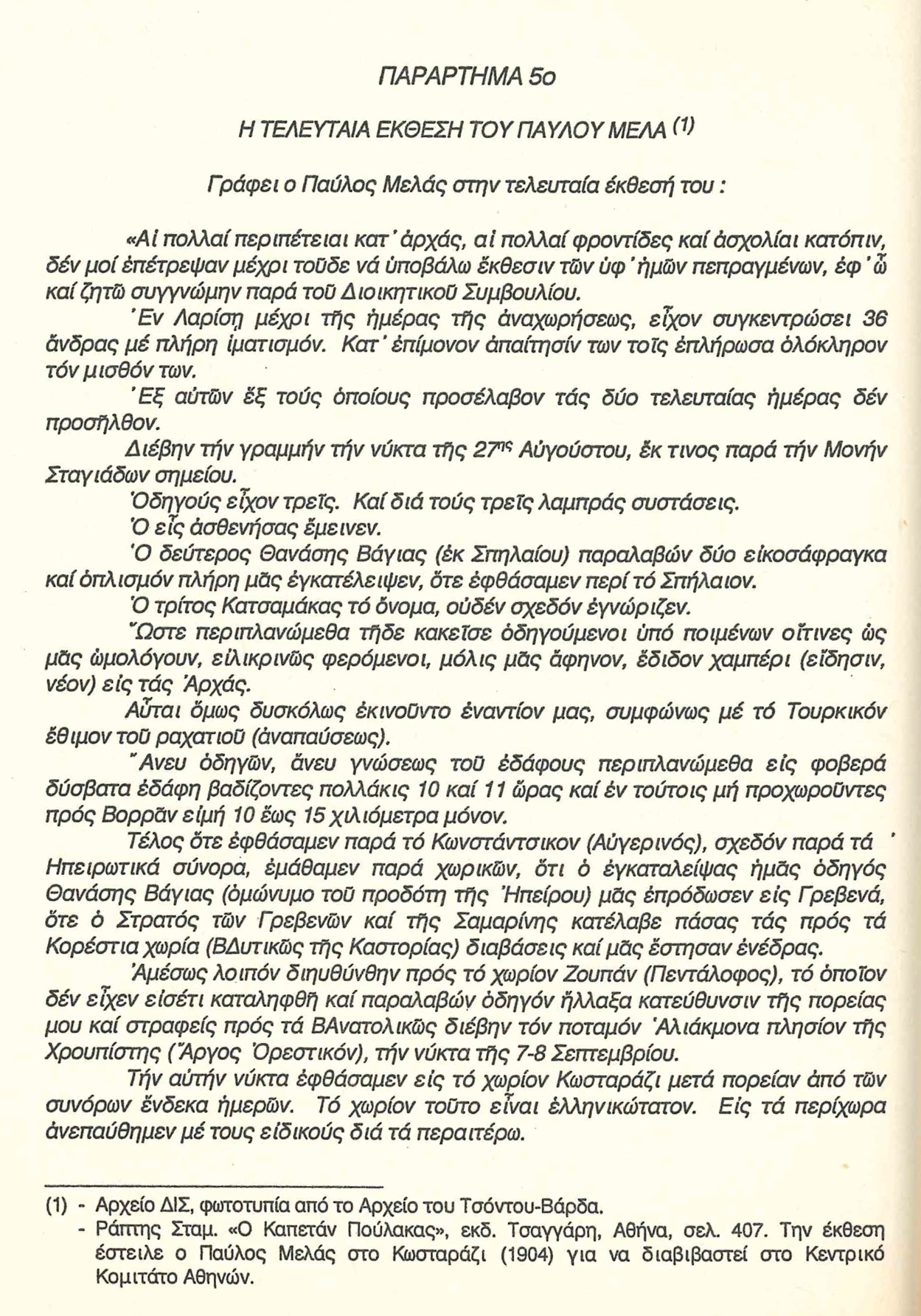
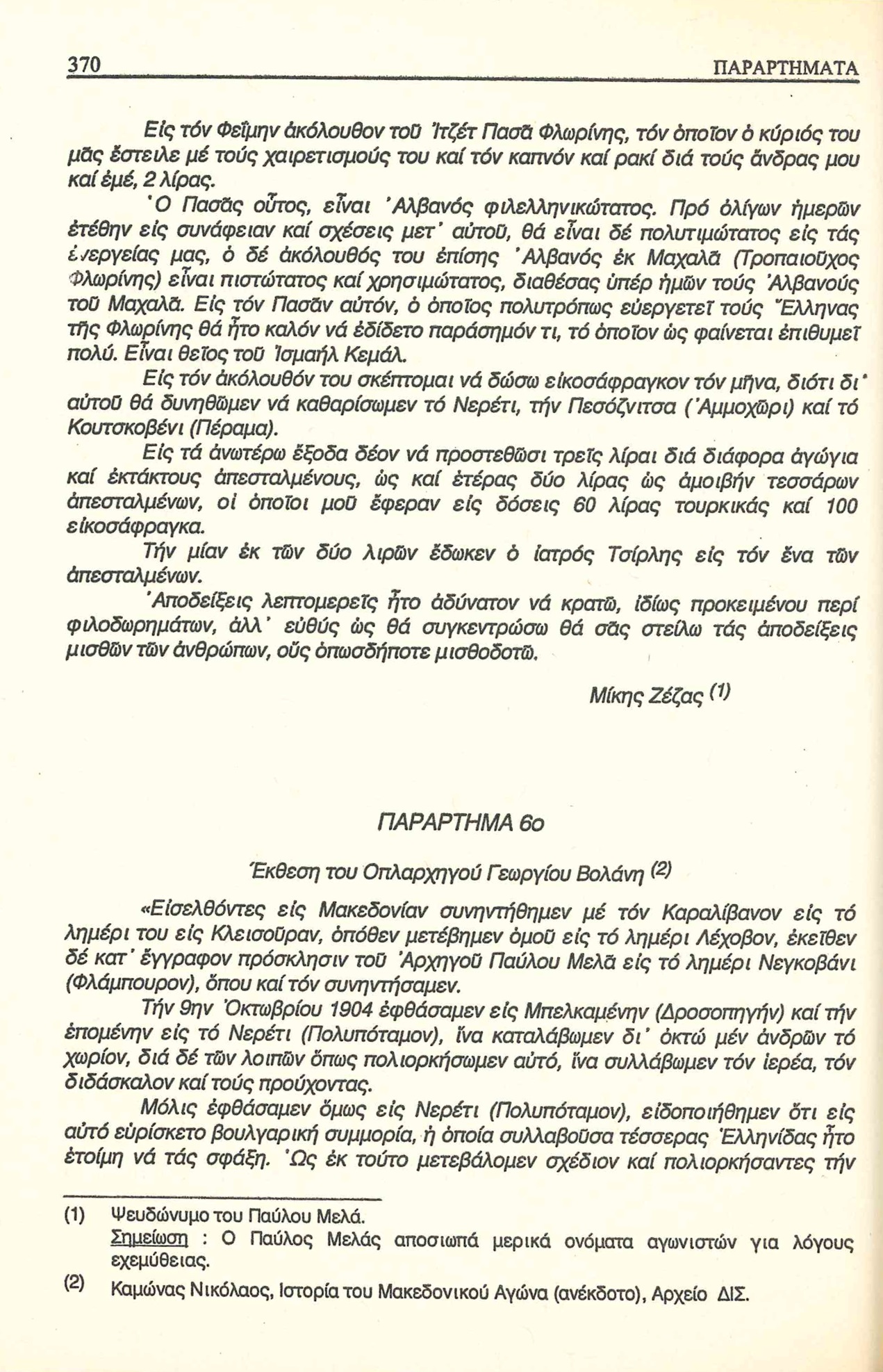
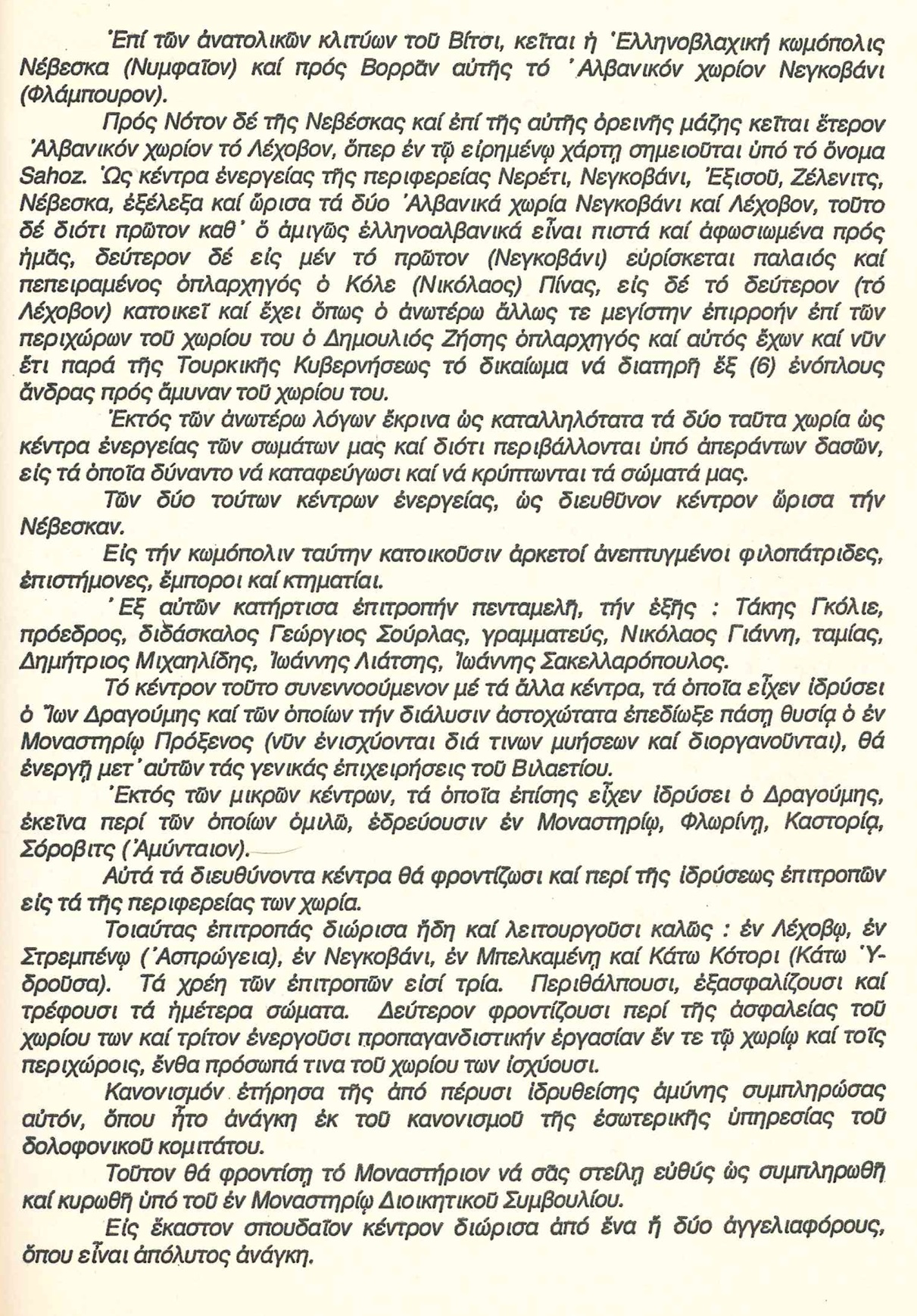
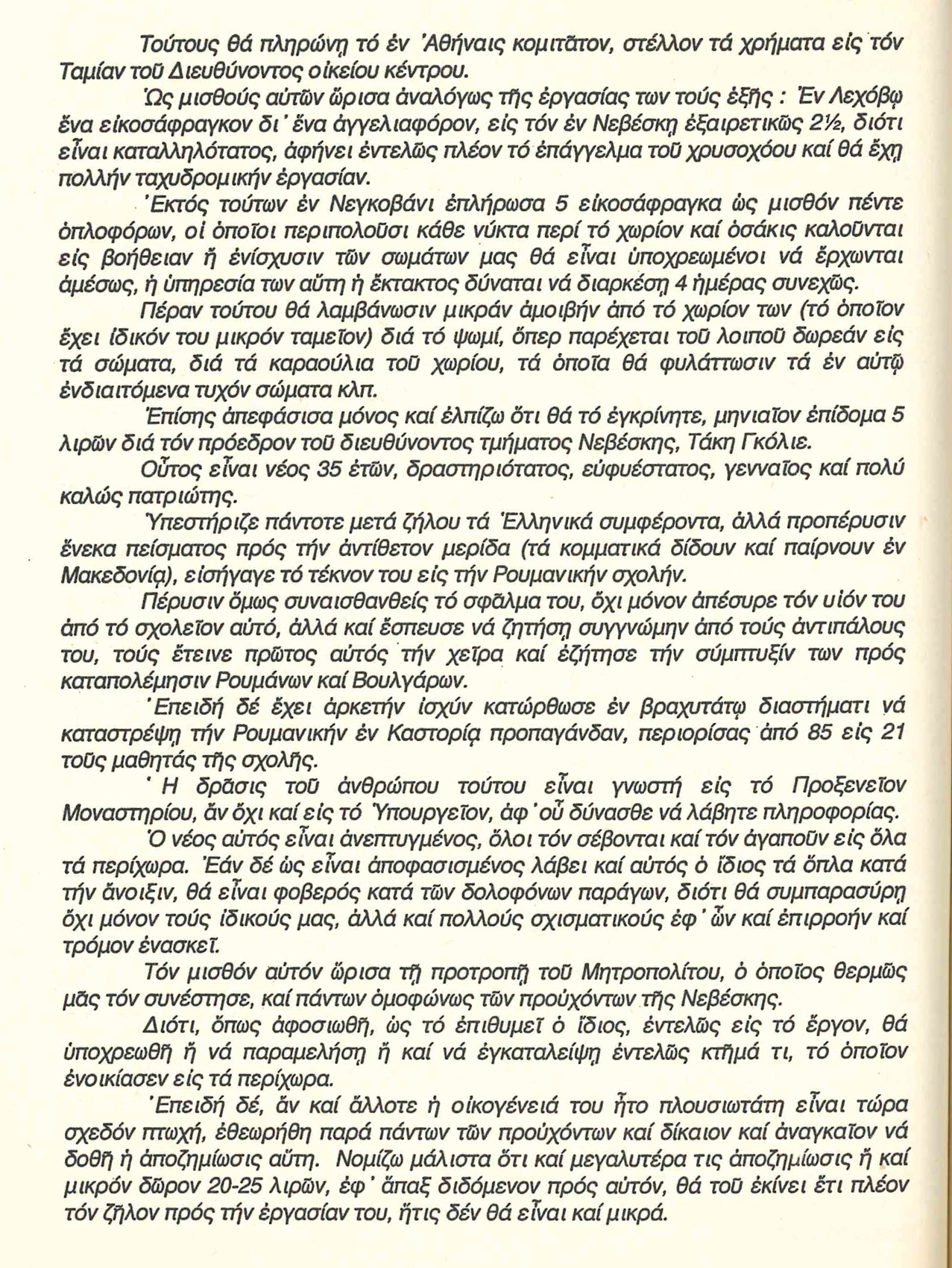
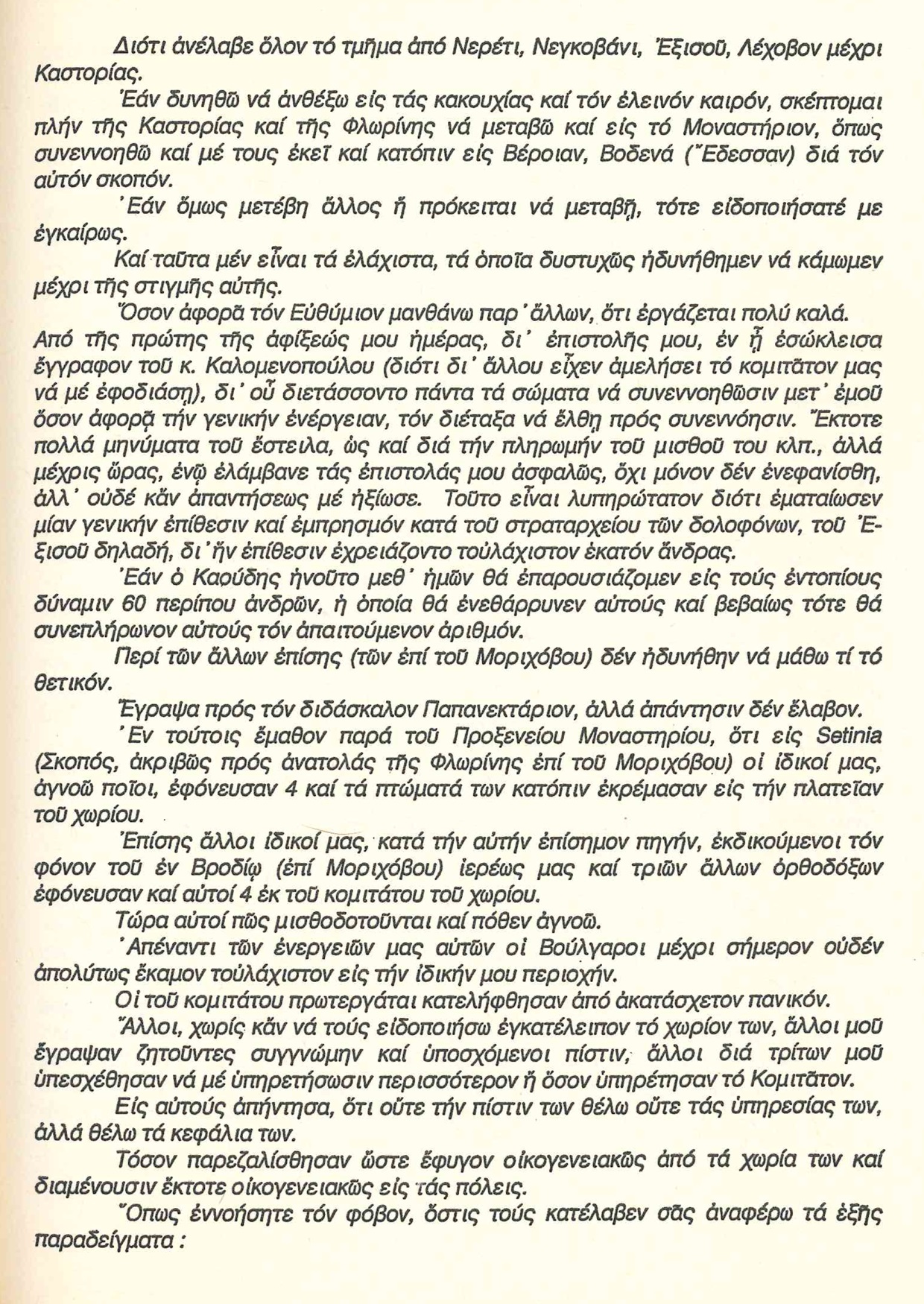
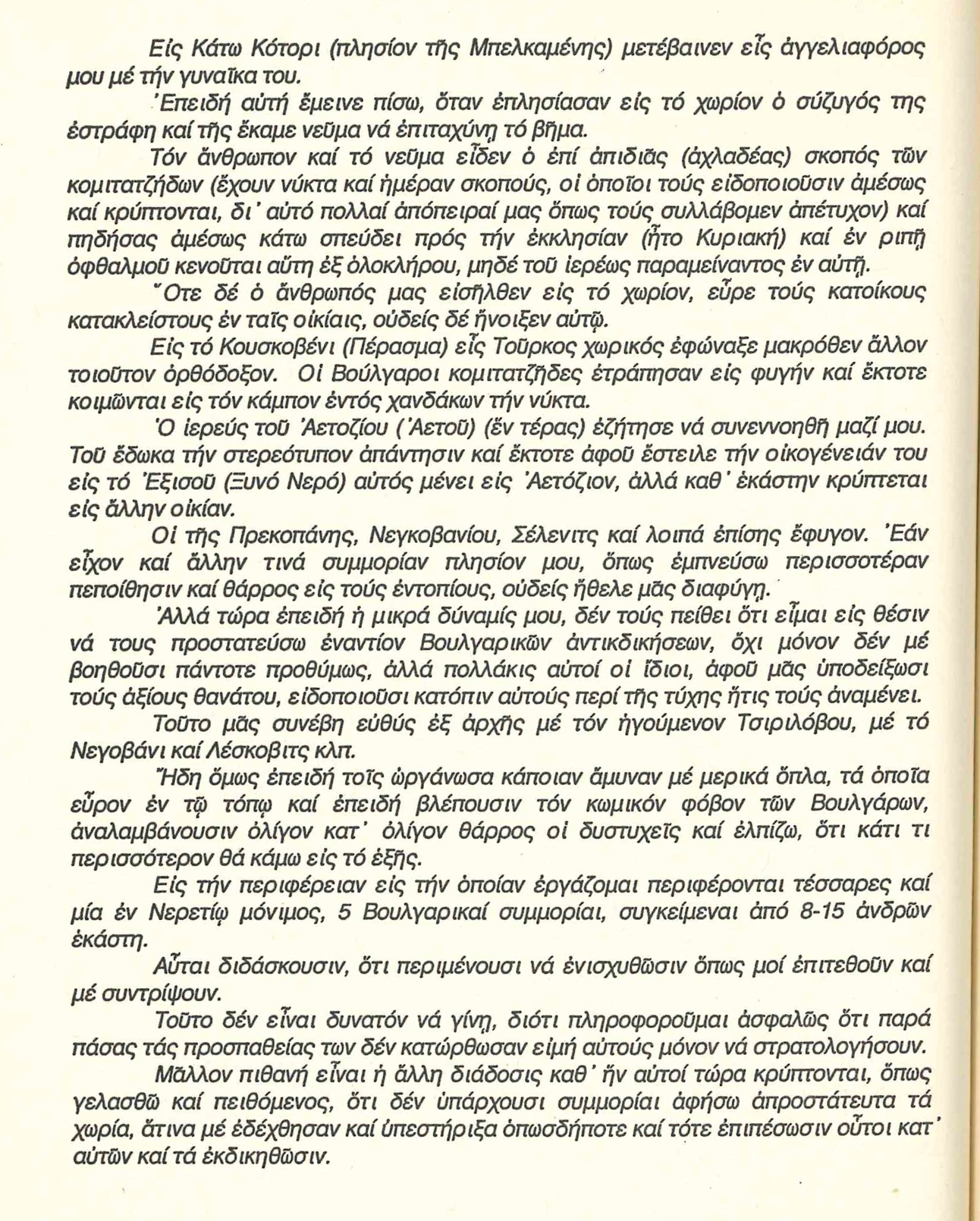
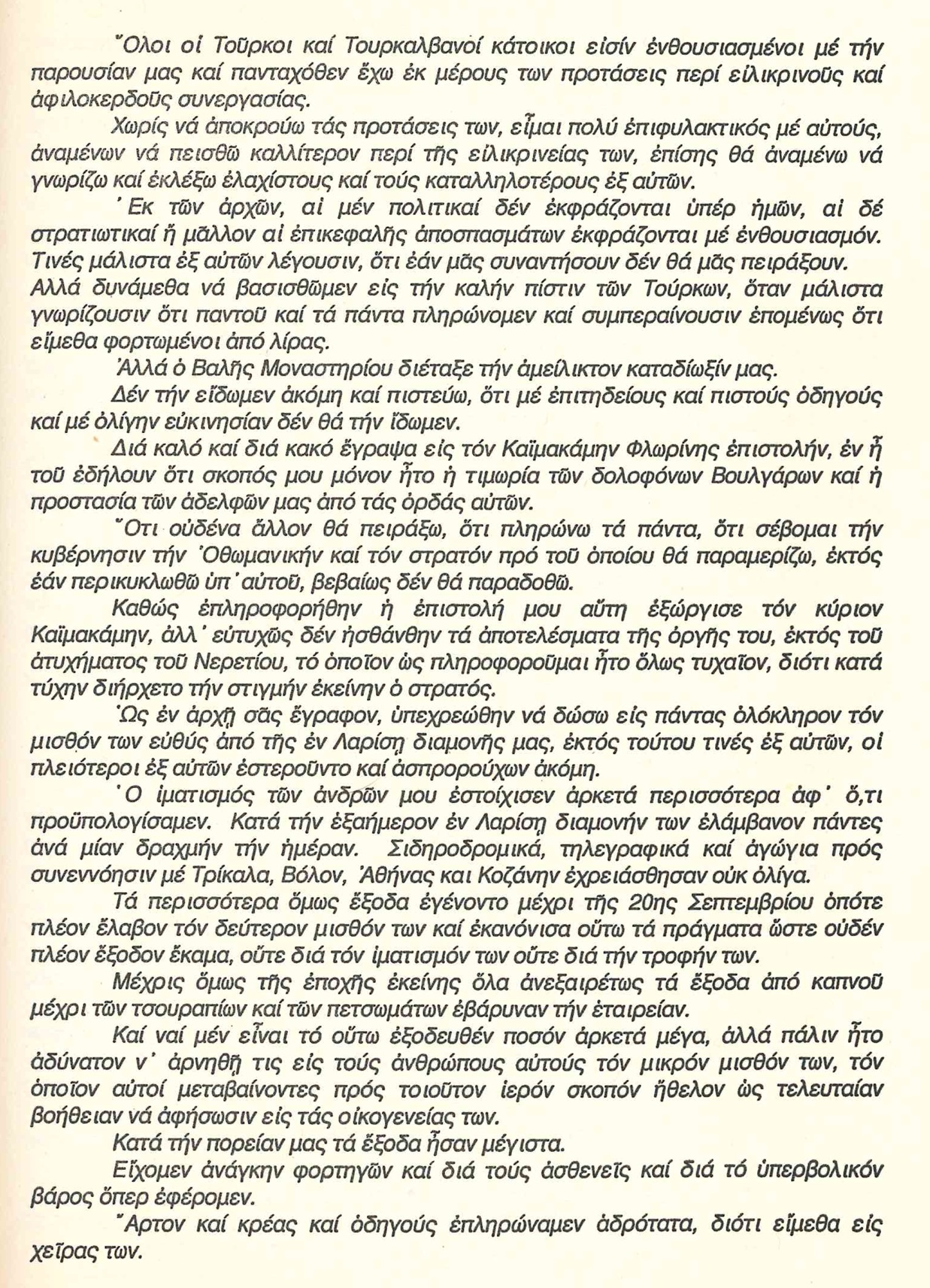
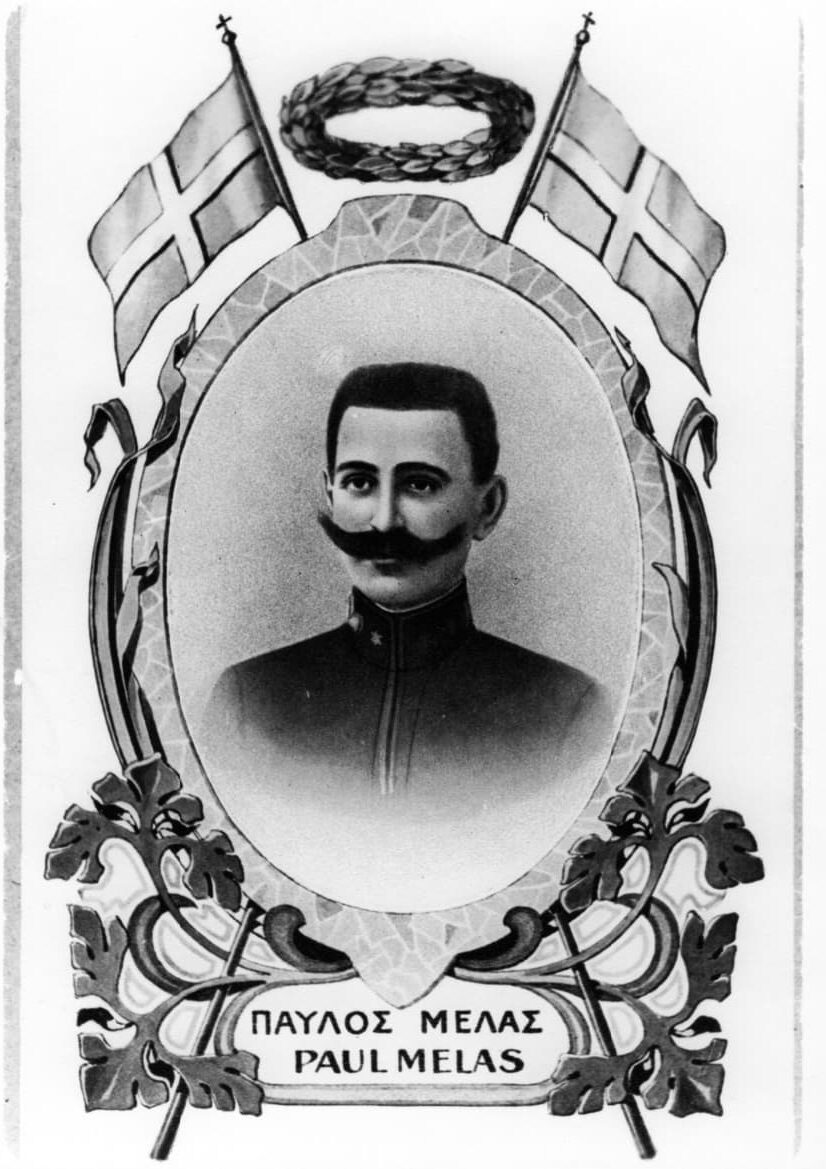
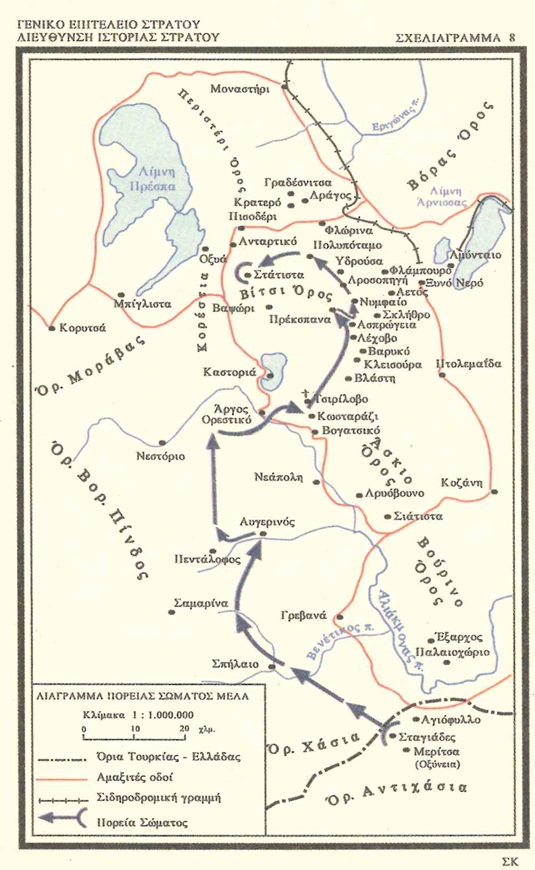
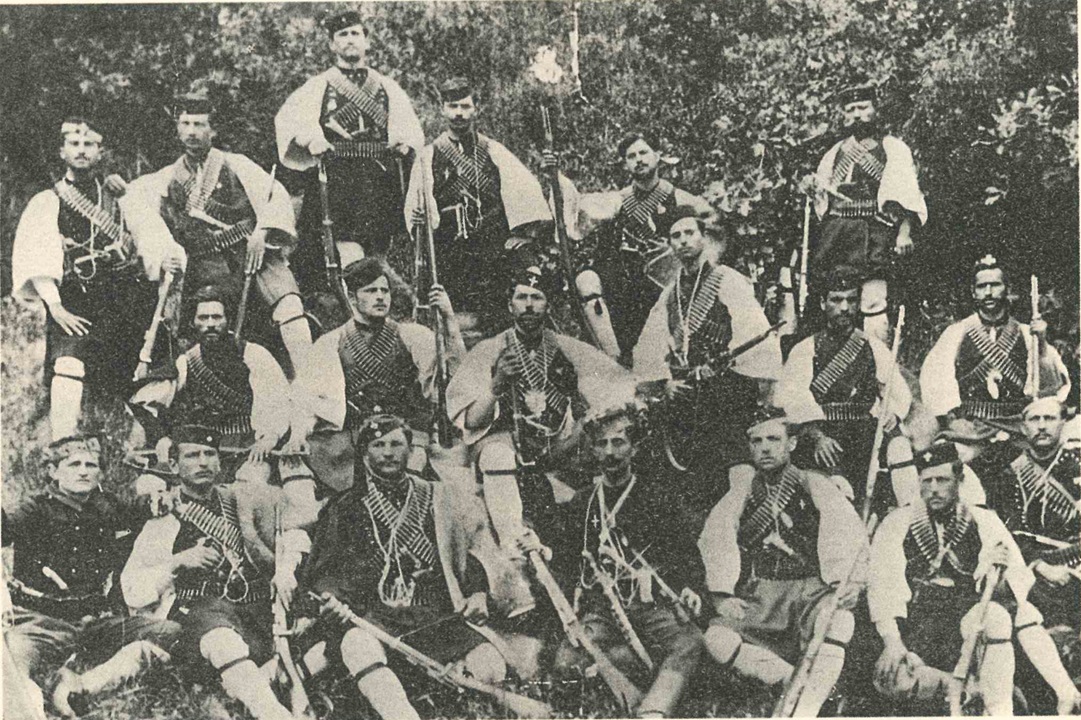
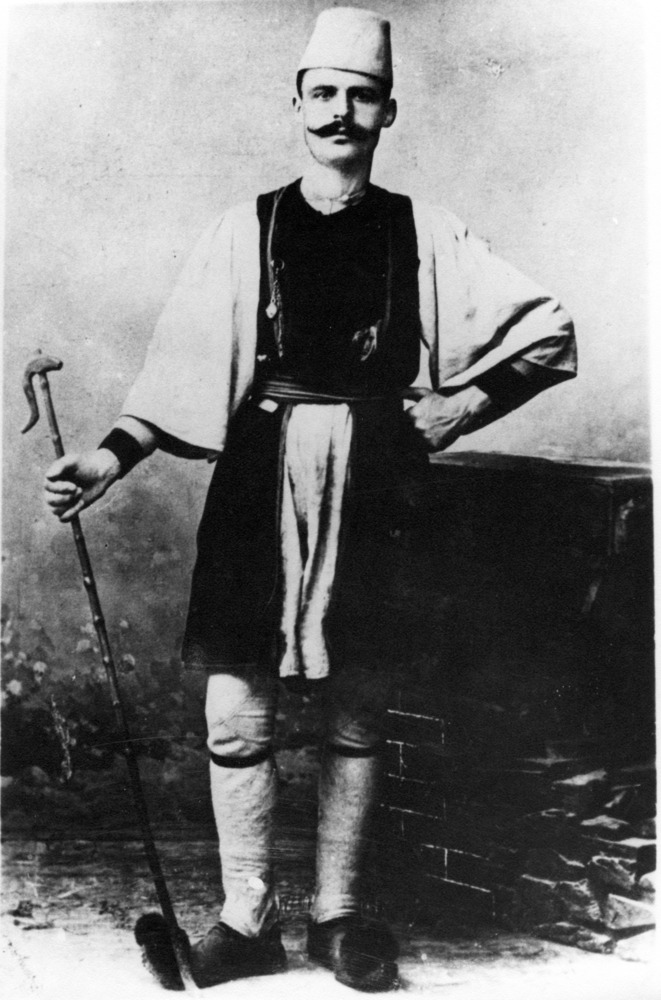
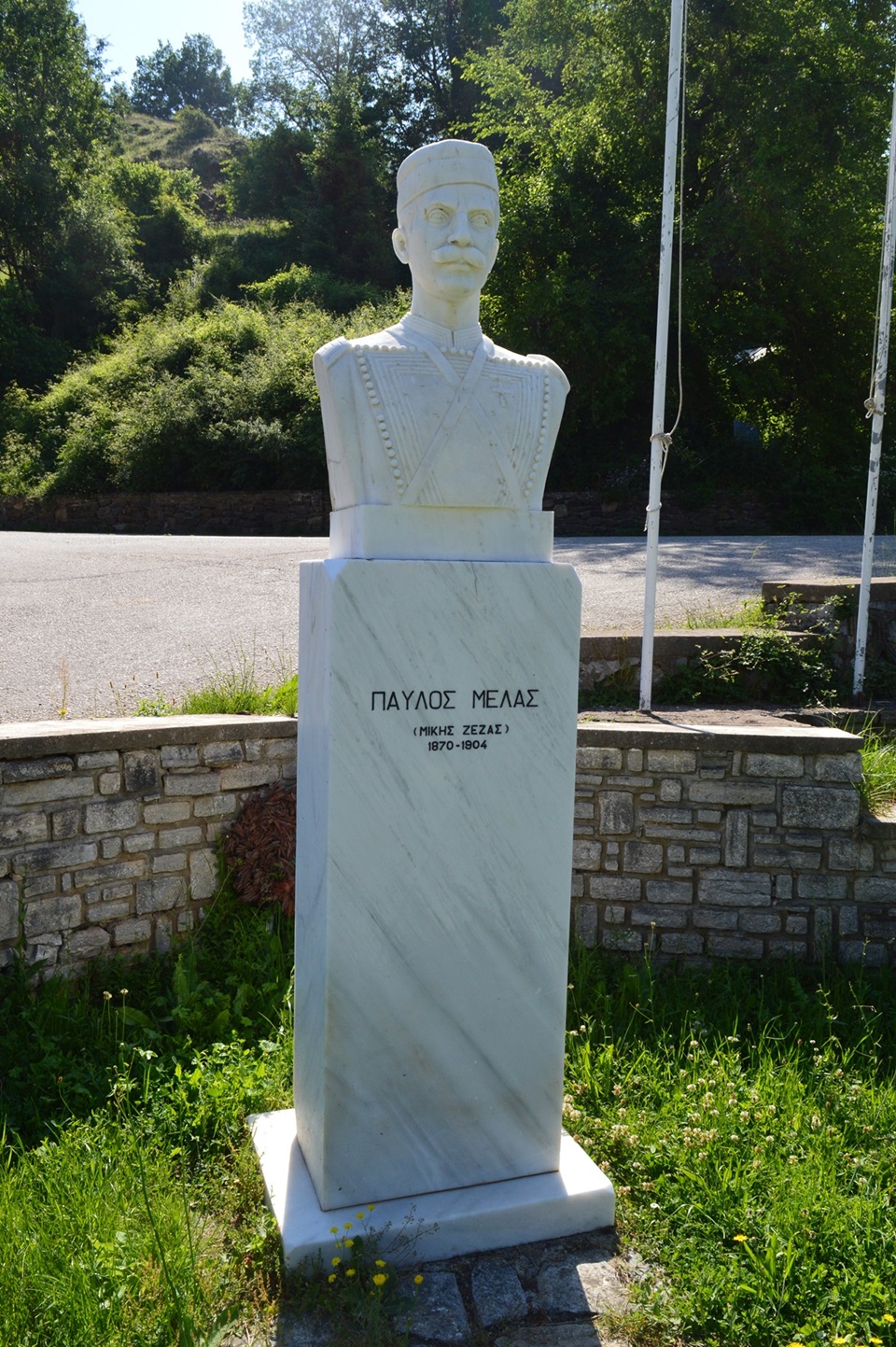
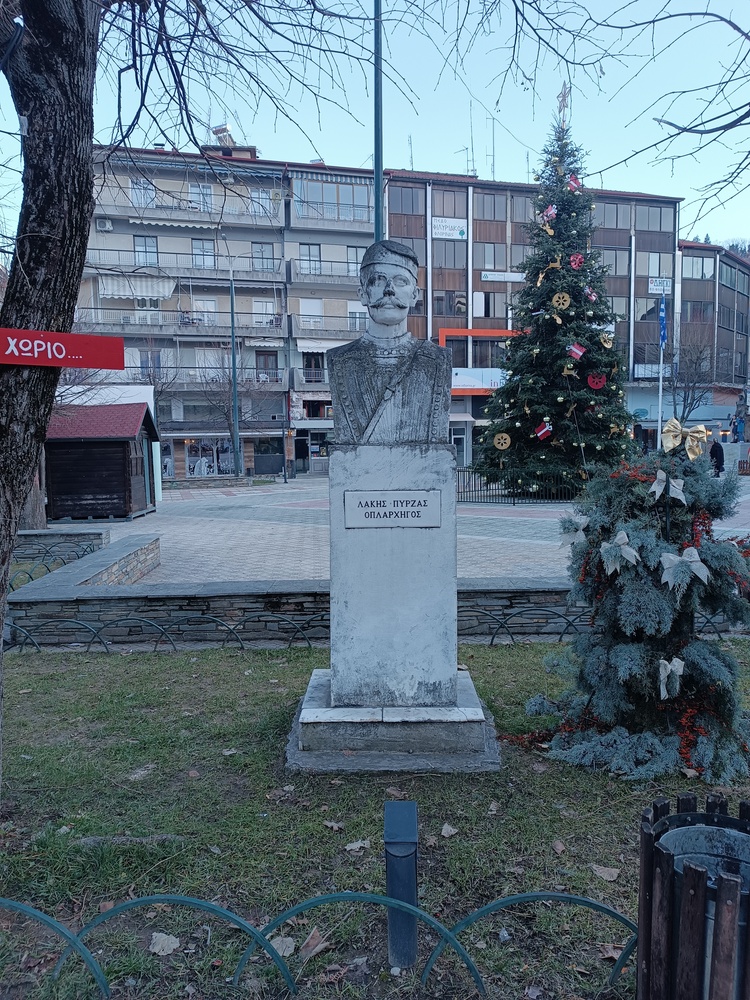
On August 14, 1904, the Greek Macedonian Committee appointed Pavlos Melas as leader of the armed forces operating between Monastir (now Bitola) and Kastoria. In September 1904, Pavlos Melas, under the pseudonym "Mikis Zezas", and having with him the chieftain Lakis Pyrzas, as deputy chief, and ten Cretans, crossed the Ottoman border and entered Western Macedonia. Their mission was to recruit men and organize armed groups to resist the armed forces of the IMRO (Internal Macedonian Revolutionary Organization).
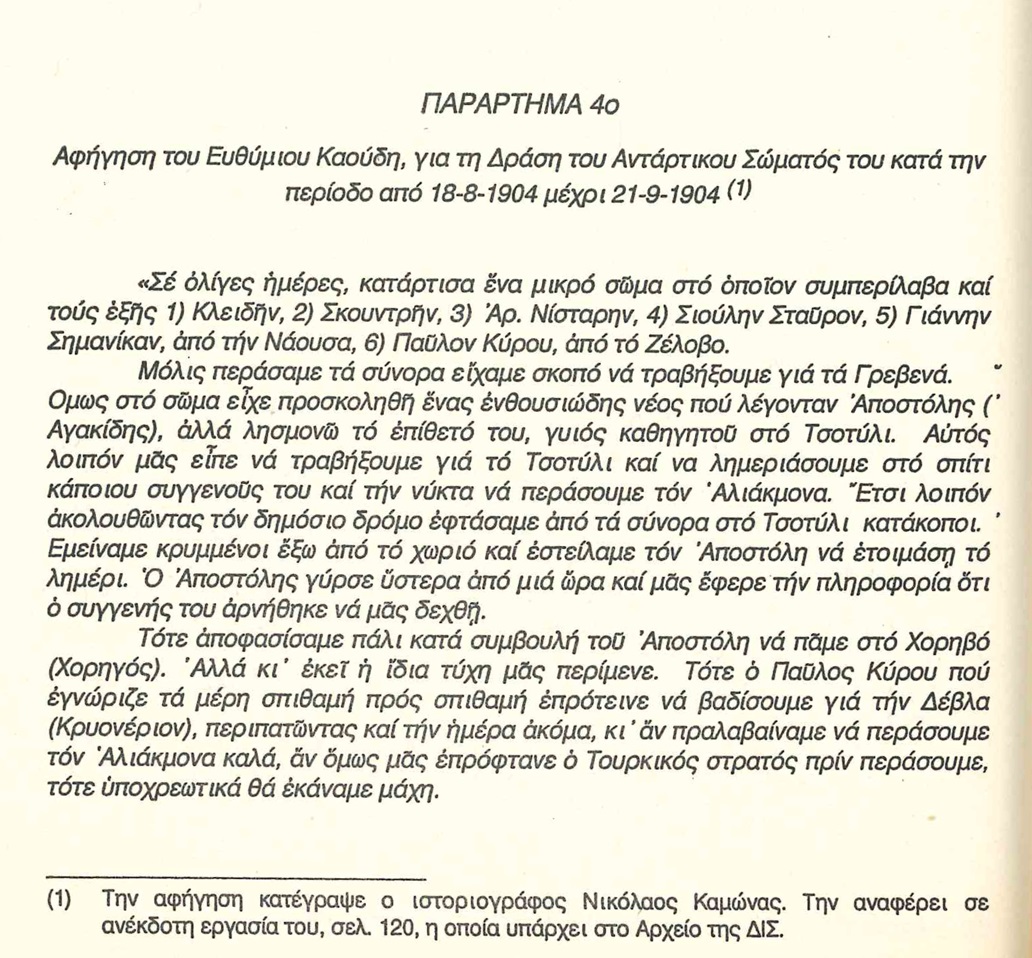
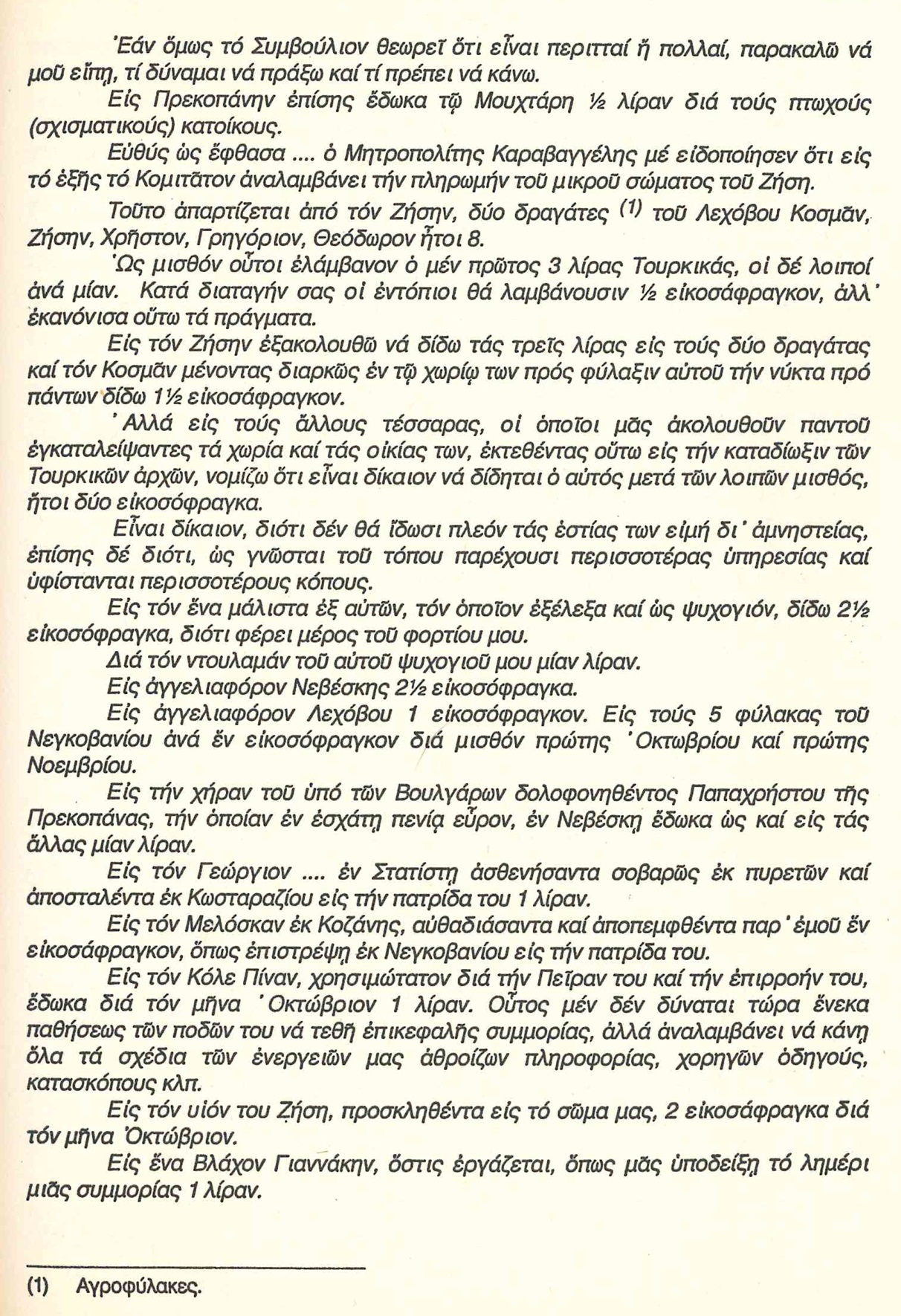
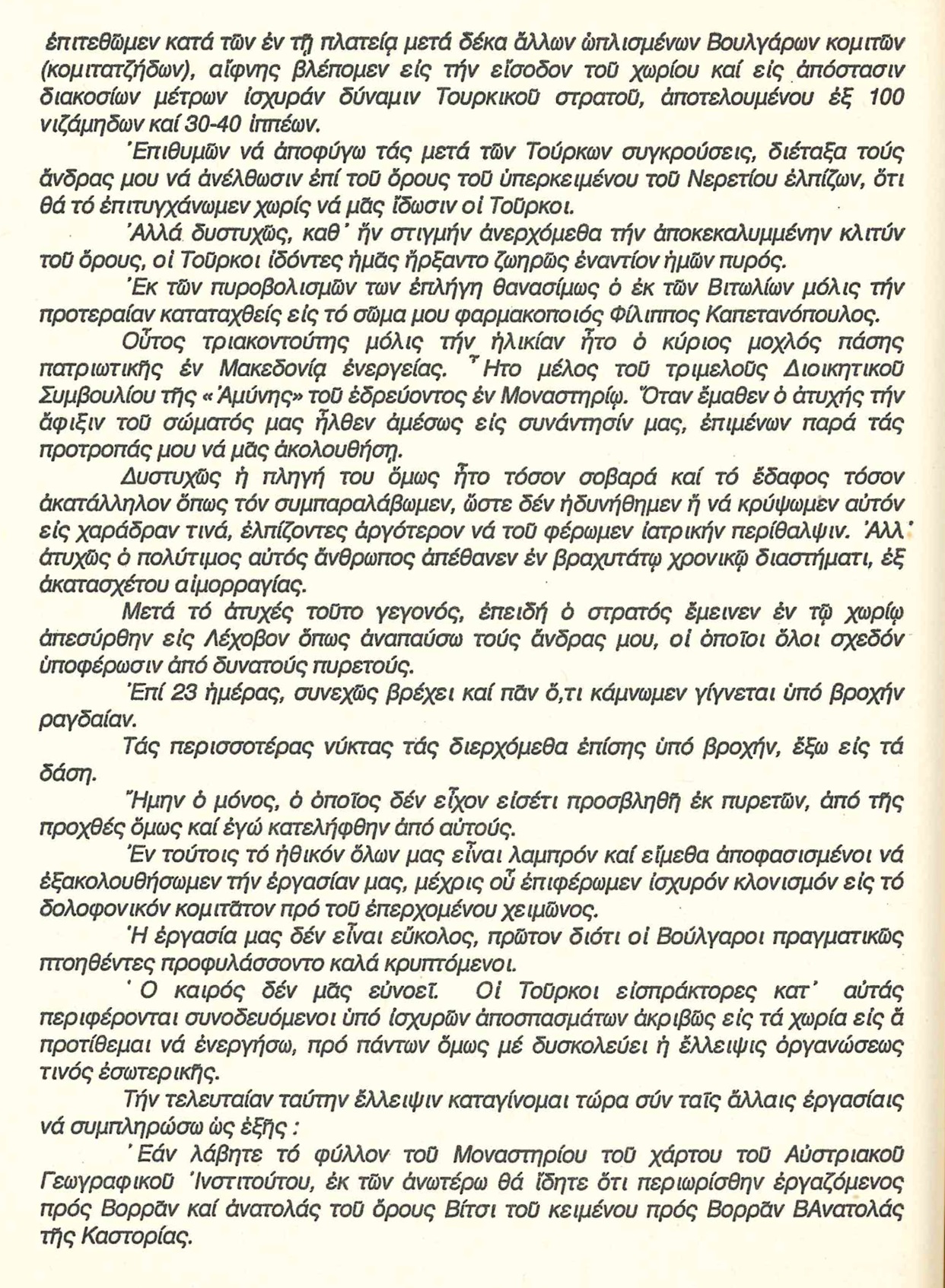
During his brief stay in Western Macedonia, Melas' team visited villages that had supported the Bulgarian Exarchate and tried to persuade them to declare their allegiance to the Ecumenical Patriarchate of Constantinople. At the same time, he engaged in military encounters with local voivodes and their groups, such as Kole Andreev and Mitros Vlachos. Finally, under his leadership, the Greek Macedonian fighters tried to punish the Komitadjis who were responsible for the deaths of the Greek Macedonian fighters, such as Captain Vangelis Strebeniotis and other.
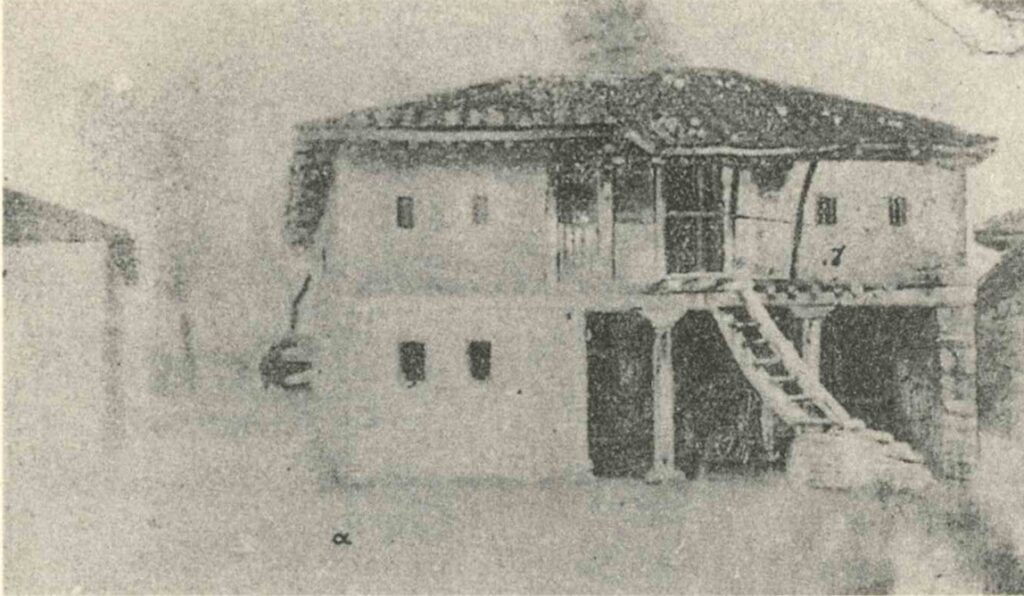
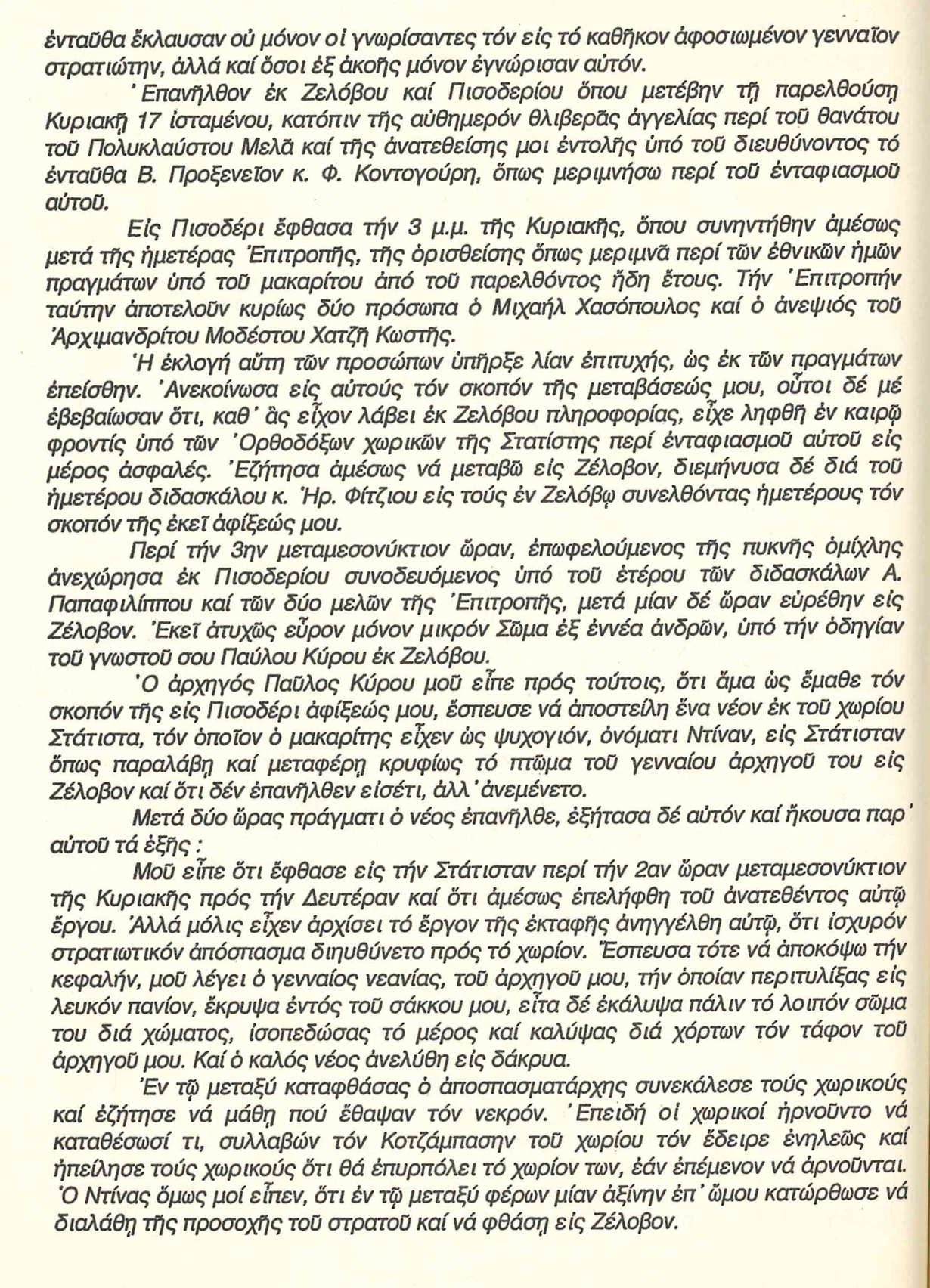
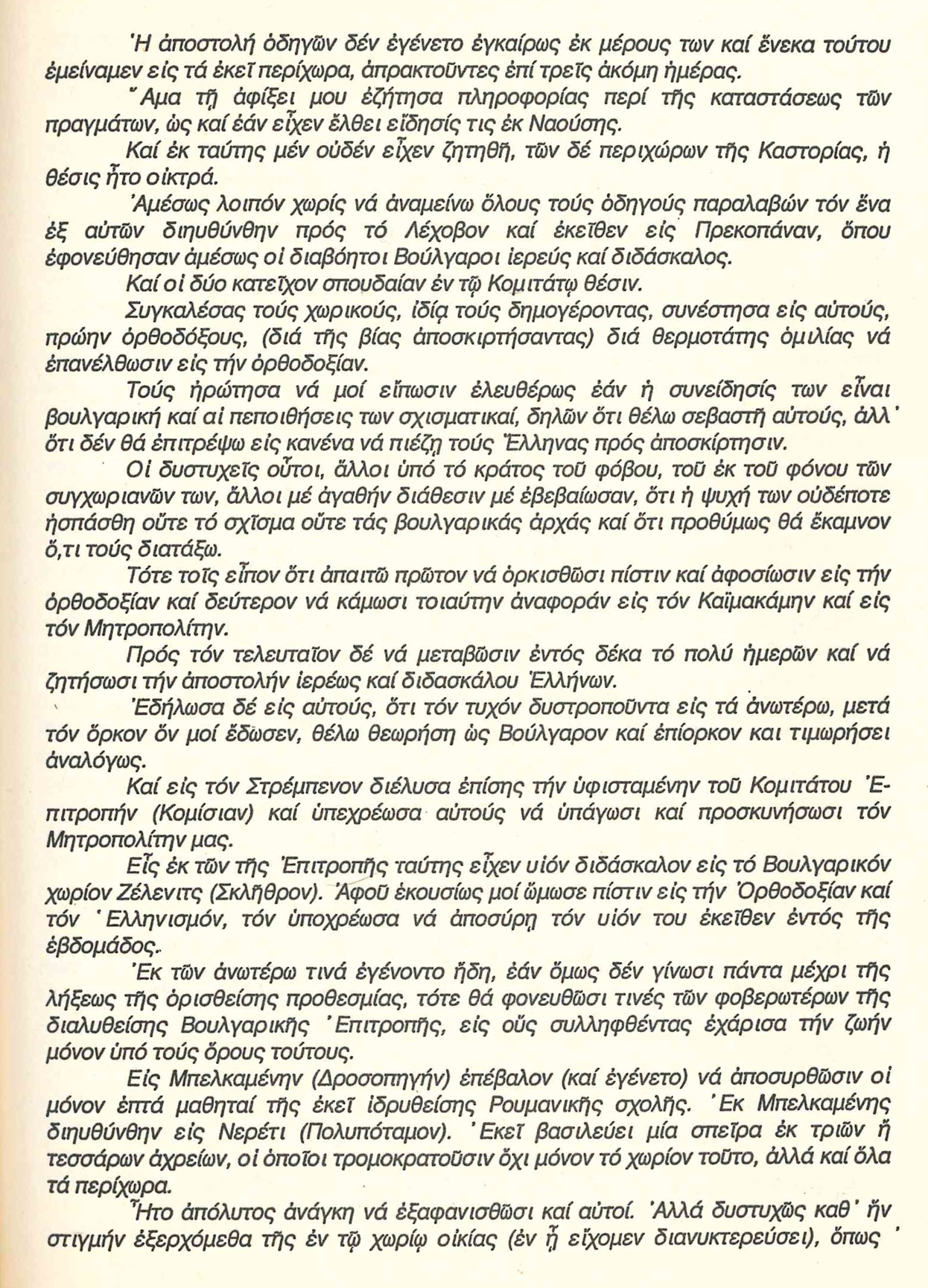
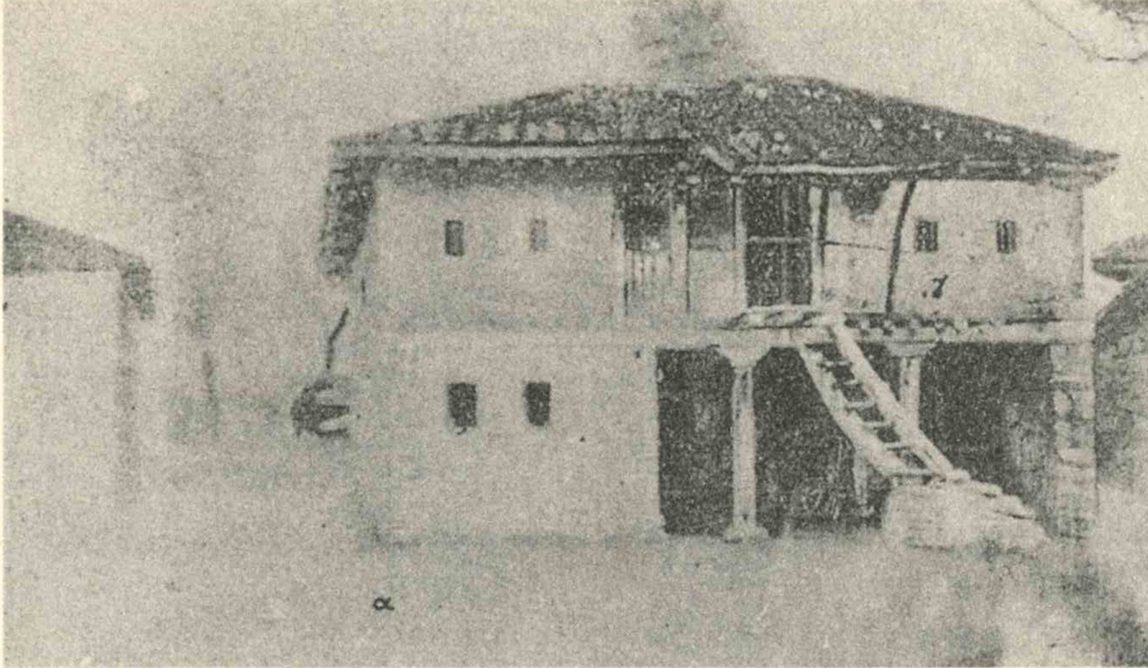
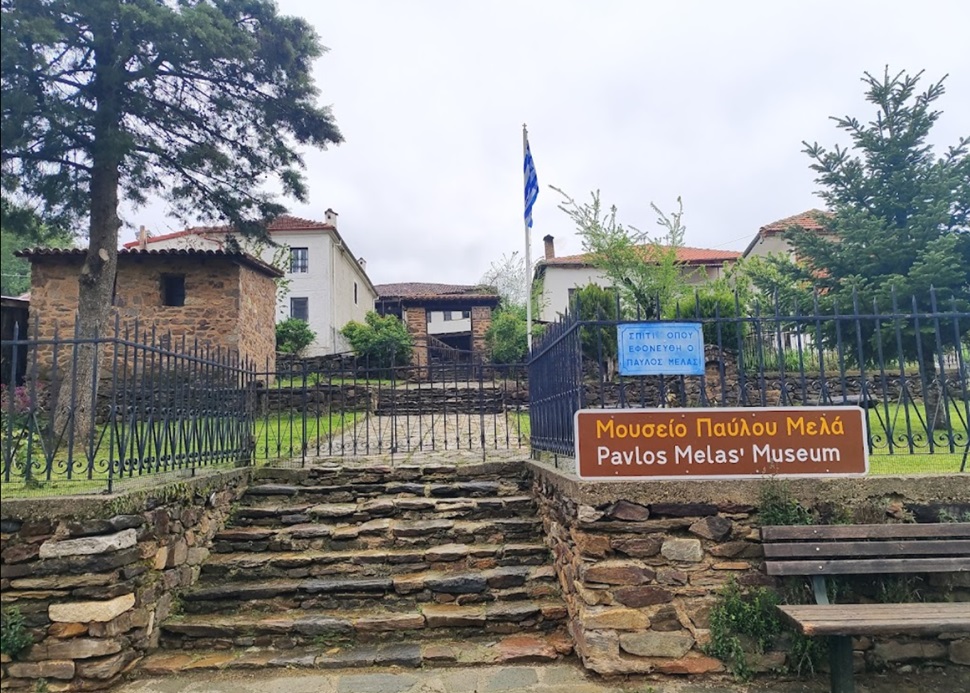
On October 12, 1904, due to bad weather, Melas' armed corps was forced to take shelter in Statista (now Melas), Kastoria. The choice of Statista as a place to stay was made at the suggestion of Dina Stergios, a former Komitadji who had defected to the Greek Macedonian Committee. Although Lakis Pyrzas raised objections, since Statista was then a Slavic village with a mixed population and a core of Komitadjis, and was frequently raided by Ottoman military detachments, Pavlos Melas decided to enter Statista and stay there with the armed Macedonian fighters. Inside the village, Melas and four of his men settled on the upper floor of a two-story building. Across the street, in a similar house, were seven other Macedonian fighters.
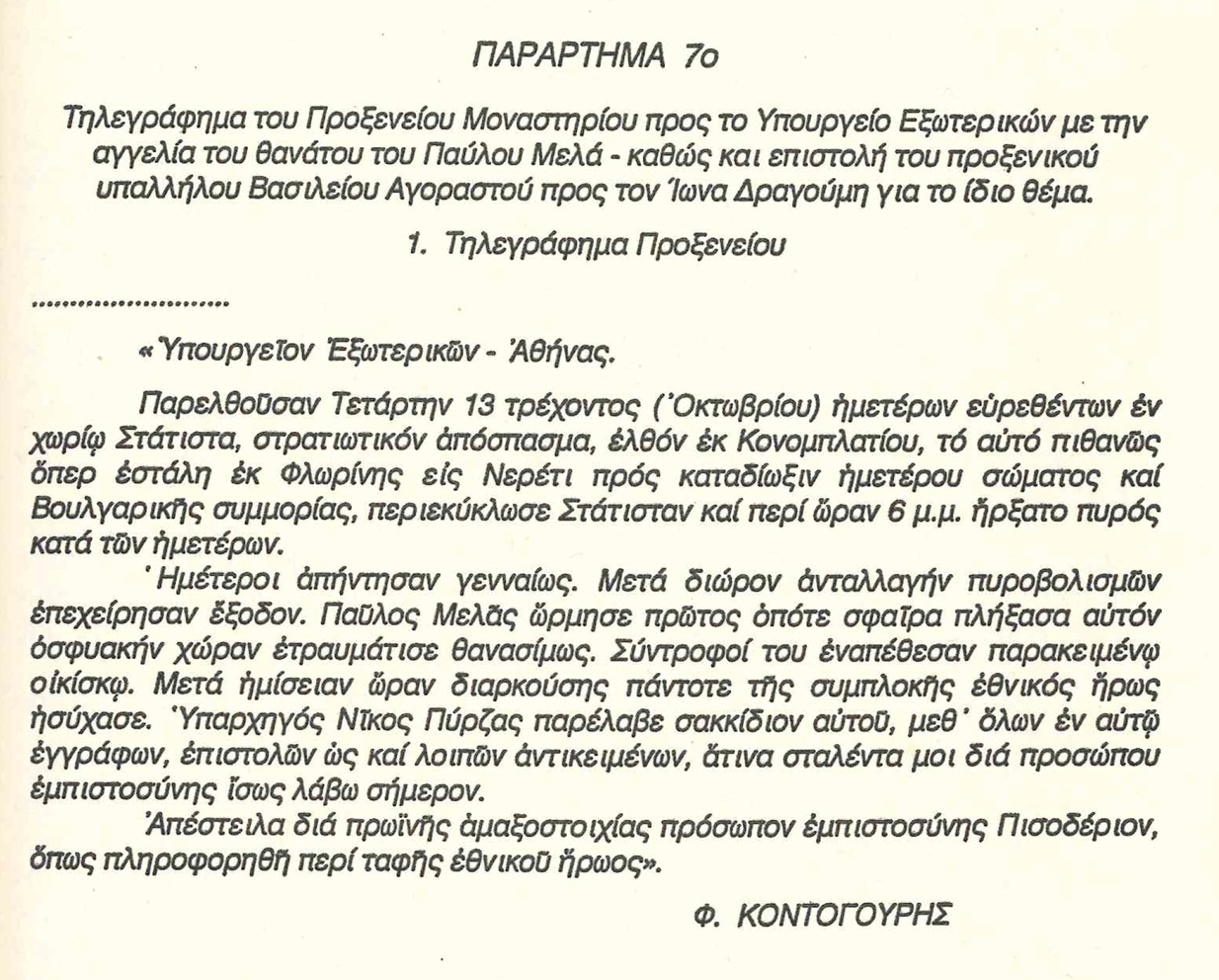
The next day, October 13, while the Greek Macedonian fighters were still in Statista, they were informed of the arrival of an Ottoman detachment in the village. The detachment had been sent by the Ottoman authorities, who had been alerted by a letter written in Greek and delivered by a woman. This letter contained information about the houses in Statista where the chief Mitro Vlachos and his men were supposedly hiding. In fact, it seems that the letter referred to the locations of the houses where Pavlos Mela's men were staying. The whole project was probably a ploy by Mitros Vlachos himself to turn a military detachment against the Greek Macedonian fighters.
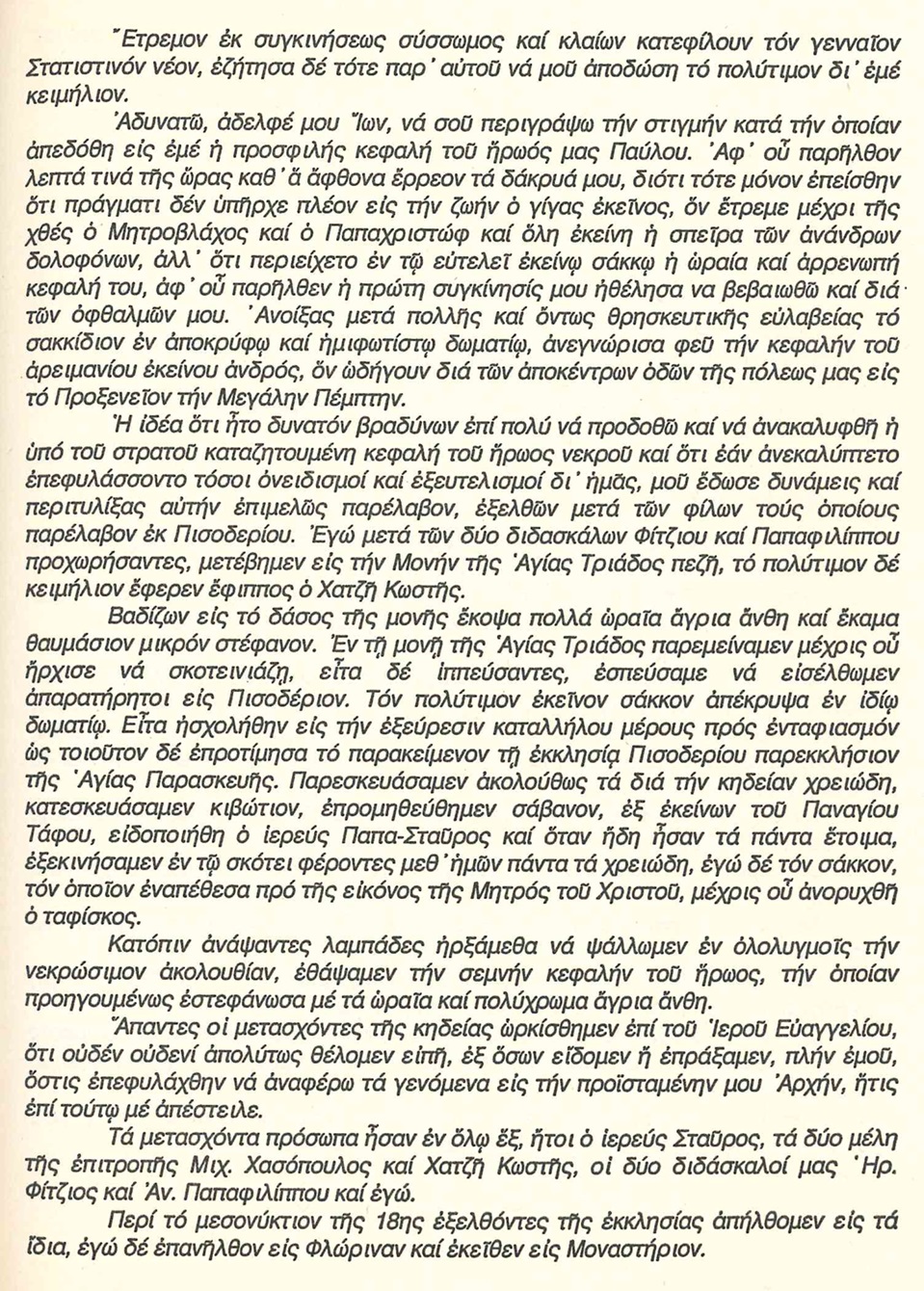
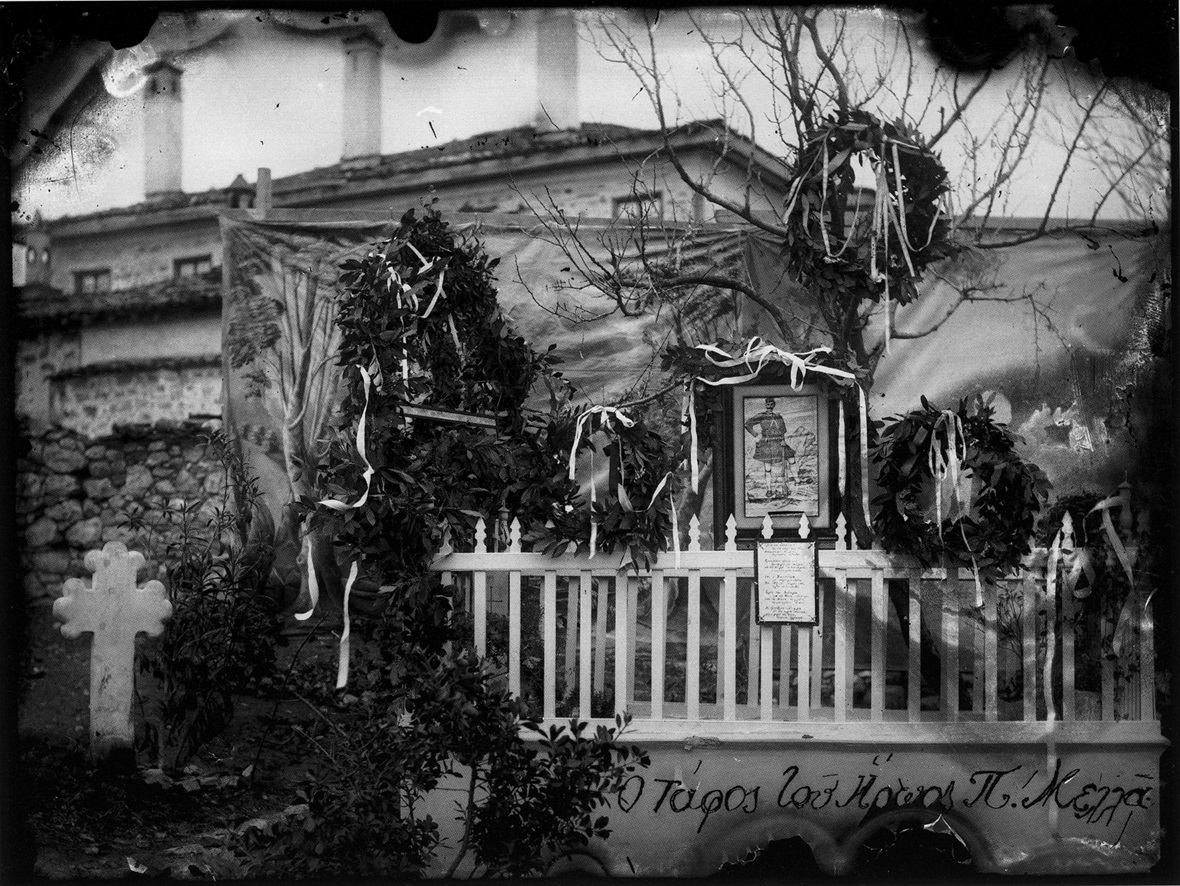
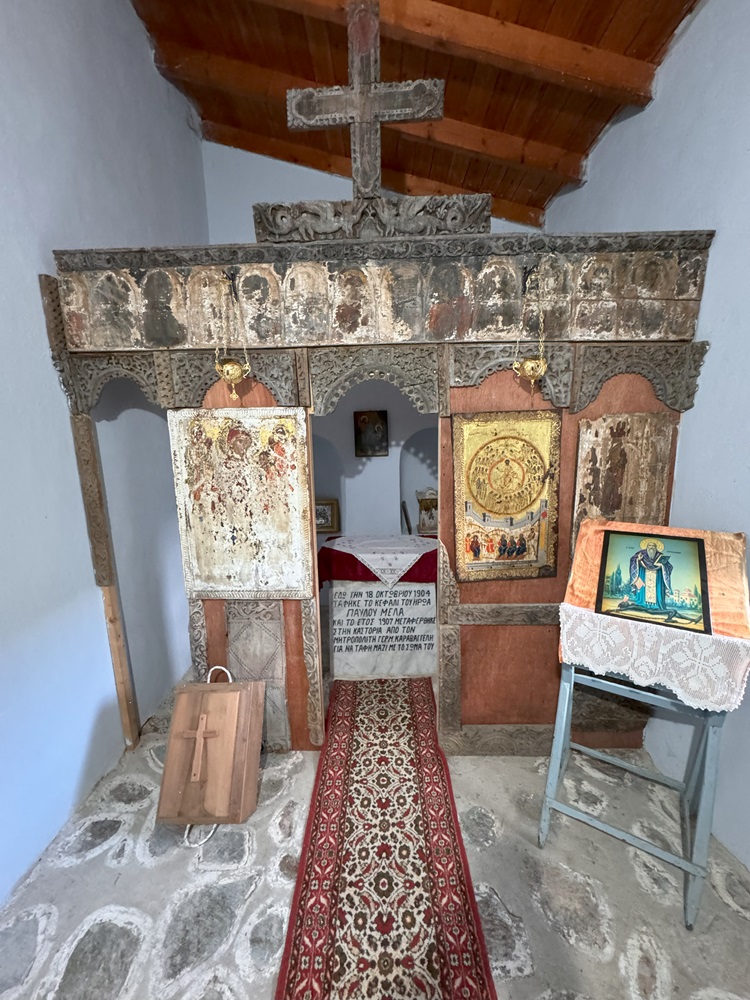
Going door to door, the Ottoman troops reached the two houses opposite each other where Pavlos Melas and the eleven Macedonian fighters were hiding. As they approached, Melas fired the first shot and an armed confrontation ensued. The Ottoman detachment took up fighting positions outside the houses, while Melas' men operated from inside the houses. At some point, when the shooting stopped, one of Melas' men, Stratinakis, suggested that they go down to the lower floor of the house, where there was a small stable. From there they could escape if the Ottoman troops tried to burn the house. The next morning, Pavlos Melas was dead. The circumstances of his death remain a mystery to this day. The mystery is compounded by the fact that the leader of the armed forces seems to have been the only one to die in the battle of Statista.
Later testimonies from Melas' comrades and Statista residents provide contradictory information and do not clarify the circumstances of the Macedonian leader's death. Some sources claim that Melas was mortally wounded by a shot fired by the Ottoman detachment and burned to death in the stable where the Macedonian fighters were hiding. Other sources claim that his injury was the result of an accidental discharge of a weapon. There is also a theory that Melas did not die from his injury, but that someone from his group took it upon themselves to deliver the coup de grace.
Some sources claim that Dina Stergiou was responsible for the execution of Pavlos Melas, indirectly accusing him of treason. Dina, a former member of Mitros Vlachos' group, had been recruited by the Metropolitan of Kastoria, Germanos Karavangelis, but failed to gain the trust of the Greek chieftains. Suspicions of his involvement in the assassination of Melas are strengthened by his actions in urging the Macedonian fighters to remain in Statista, despite the strong objections of Laki Pyrzas. Stergiou's participation in the battle and his presence with Melas on the night of his death add further weight to the suspicion. Finally, Stergiou's decision to leave Greece and immigrate to America, avoiding any interrogation, further strengthens the suspicion of his involvement in the death of the Greek leader of the Macedonian fighters.
The suspicion of Stergiou's involvement in the death of Melas stems from his initiative to encourage the Macedonian fighters to remain in Statista, ignoring the well-founded objections of Lakis Pyrzas. Moreover, the presence of Stergios near Melas during the battle, and the fact that they both stayed in the same house on the night of the death of the leader of the Macedonian fighters, constitute important evidence that strengthens the case of his involvement in the murder. Finally, the fact that Dina Stergios left Greece and immigrated to America to avoid testifying about the incident, further fuels these suspicions.