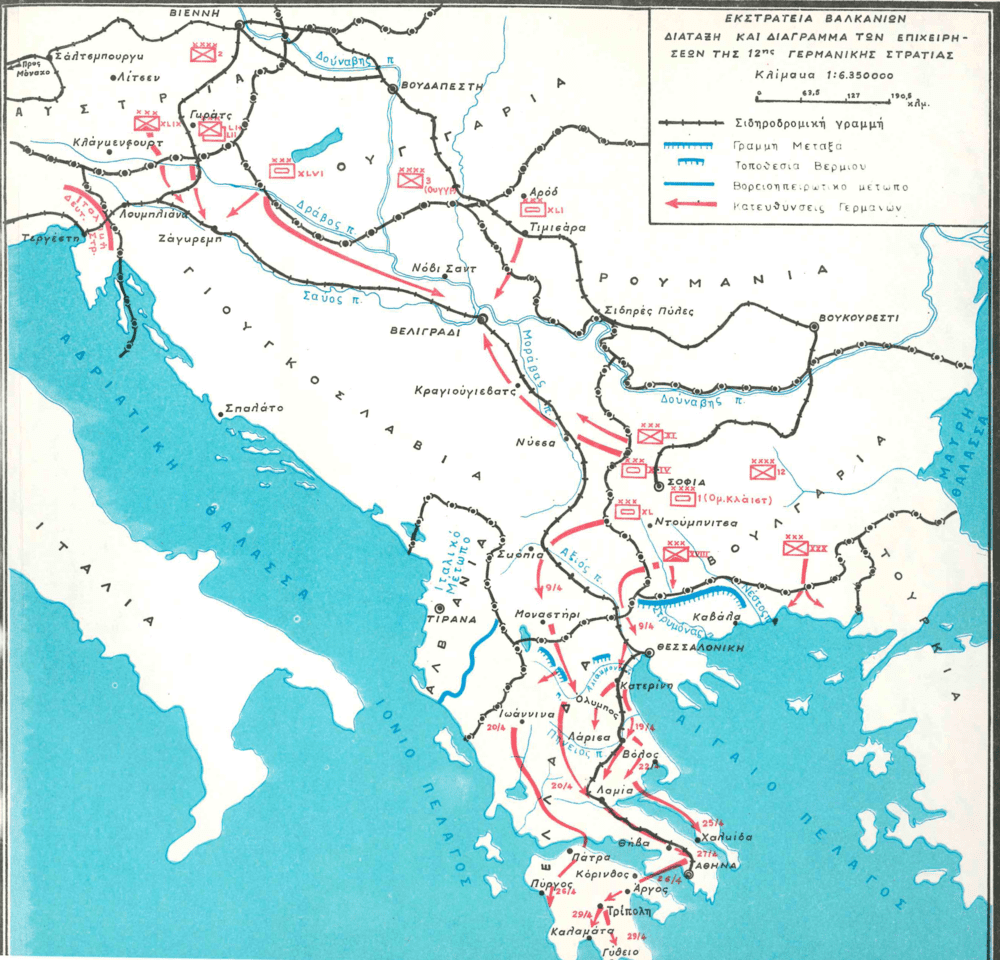
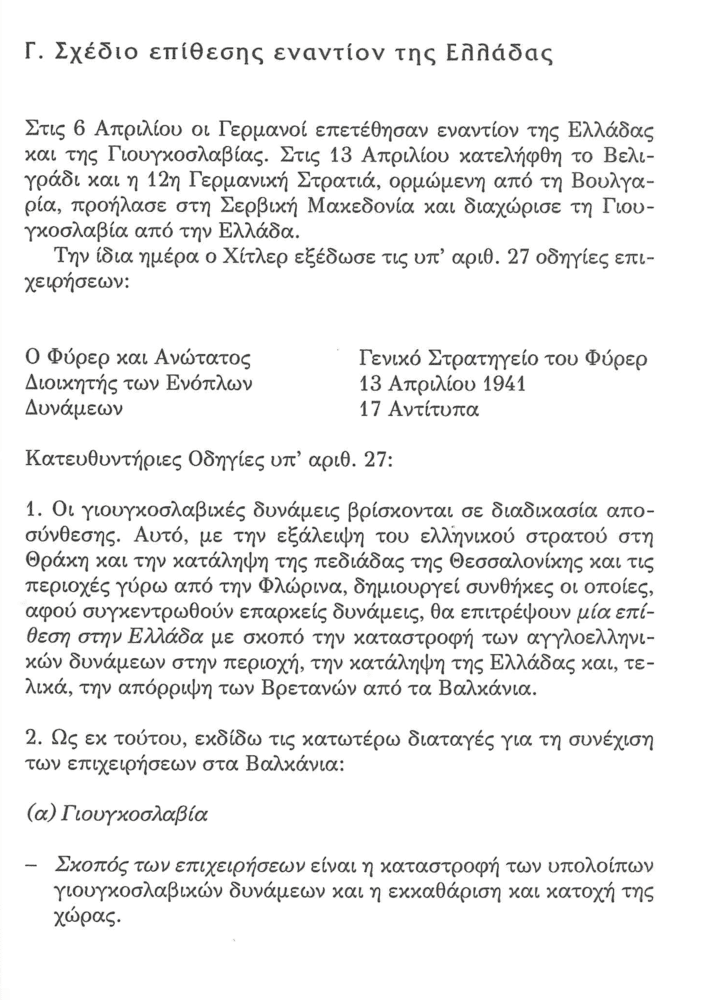
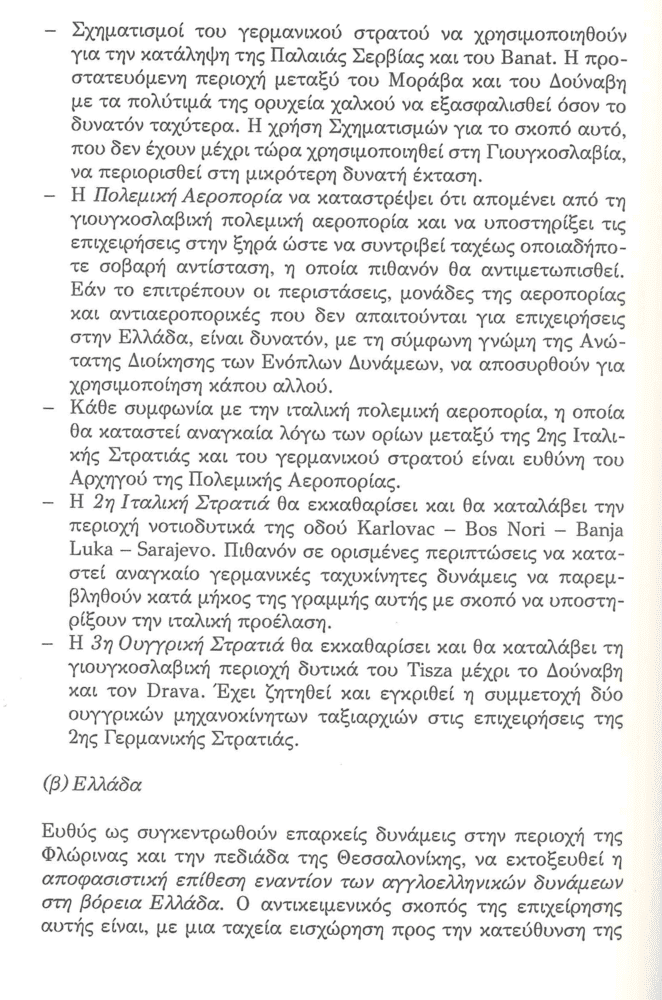
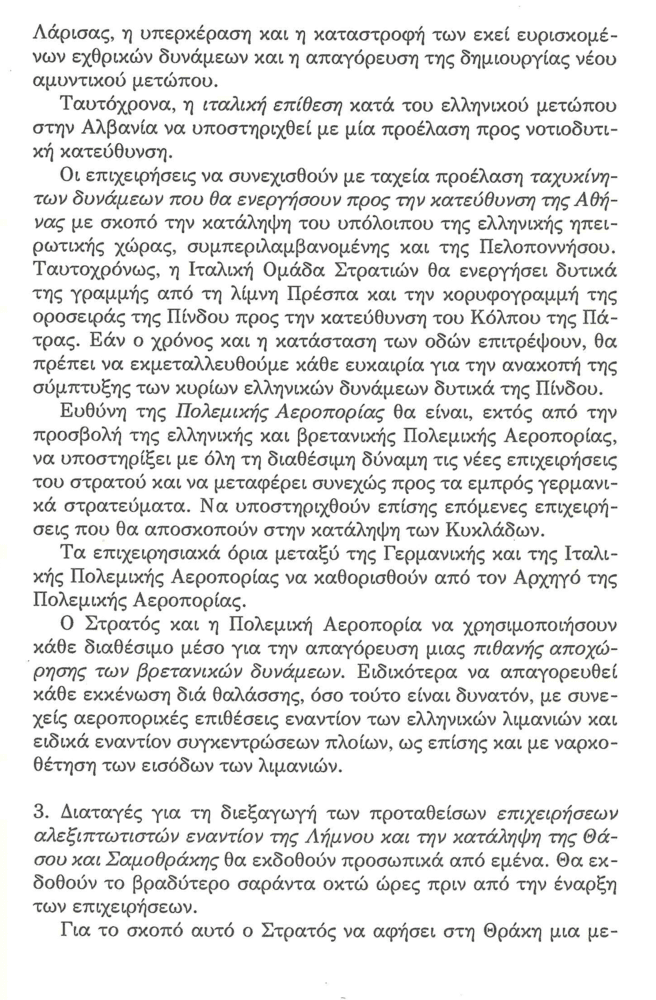
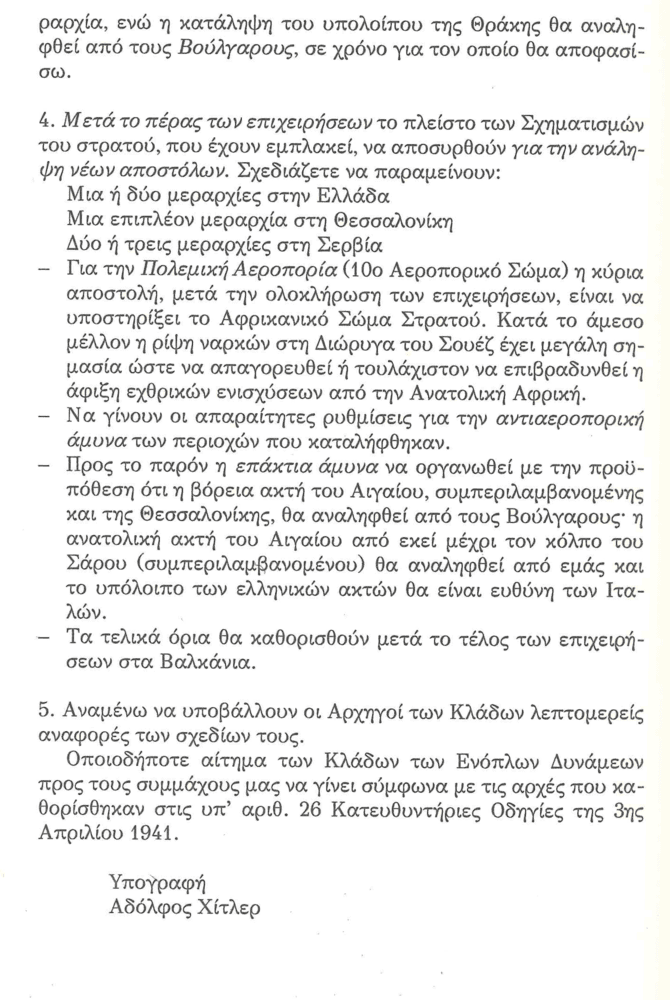
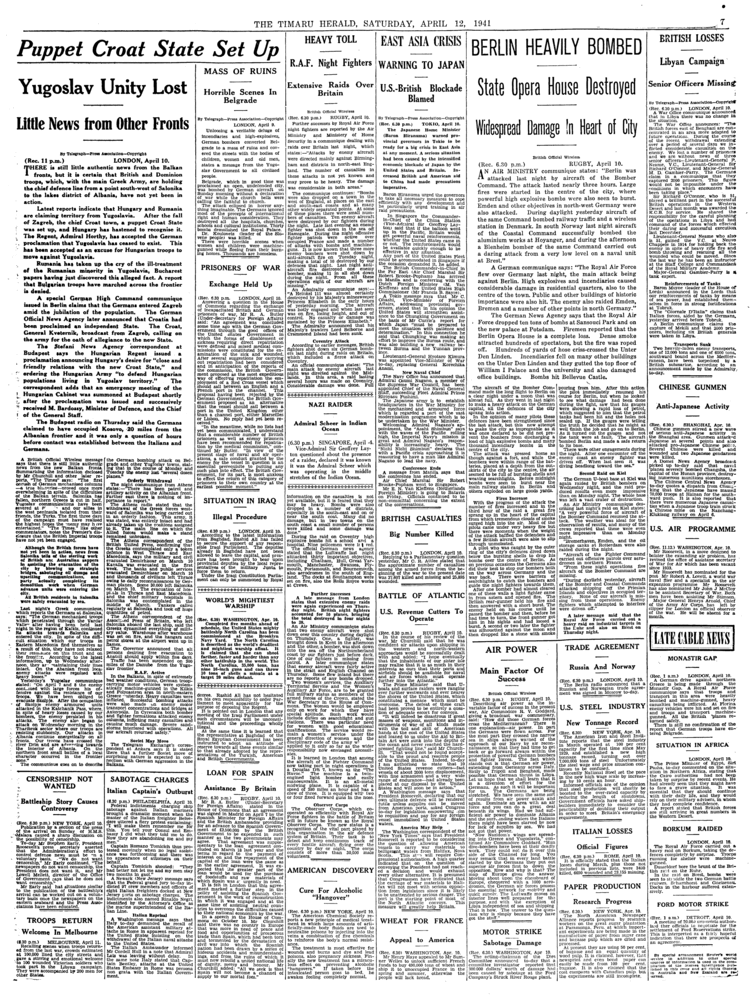
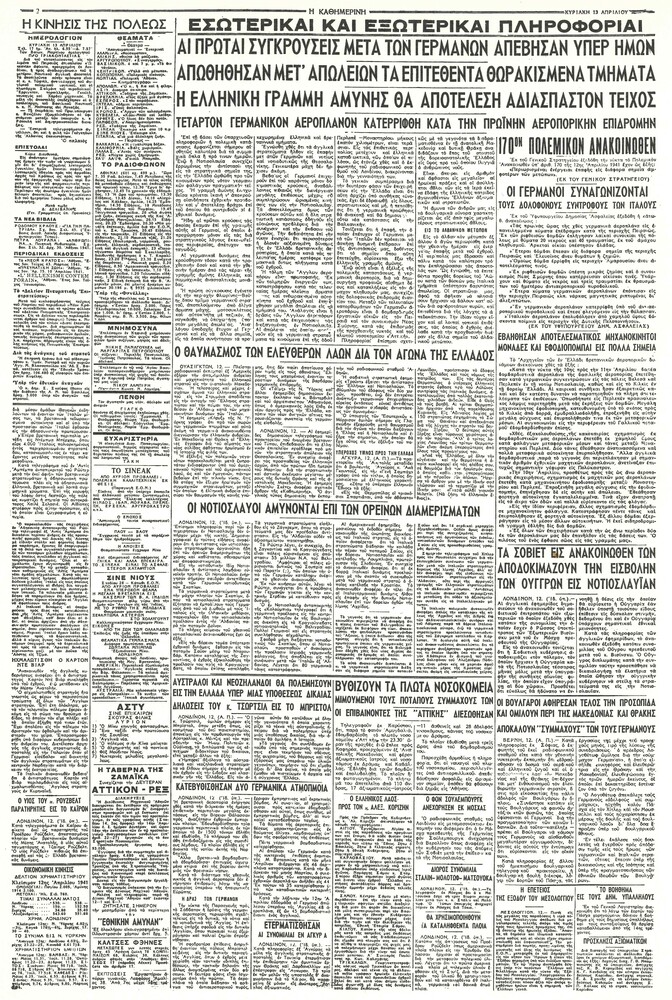
On April 6, 1941, at 05:15, the German army initiated an incursion into South Yugoslavia and Greece without prior notification, as part of the military operation designated "Operation Marita." In contrast with the customary practice of issuing an ultimatum and commencing hostilities upon its expiration, the assault on the two Balkan countries commenced without the issuance of the ultimatum. The majority of German forces concentrated their efforts on Fort Istibey and Rupel, while smaller-scale attacks were conducted on the Nevrokopi plateau and in Western Thrace. The German advance was rapid, and by the 9th, despite the heroic resistance of the Greeks at the Metaxa Line forts, they had overrun the Greek defenses and entered Thessaloniki. Concurrently, on the evening of April 8, the Army Department of Eastern Macedonia had already dispatched a letter to the German forces, proposing capitulation.
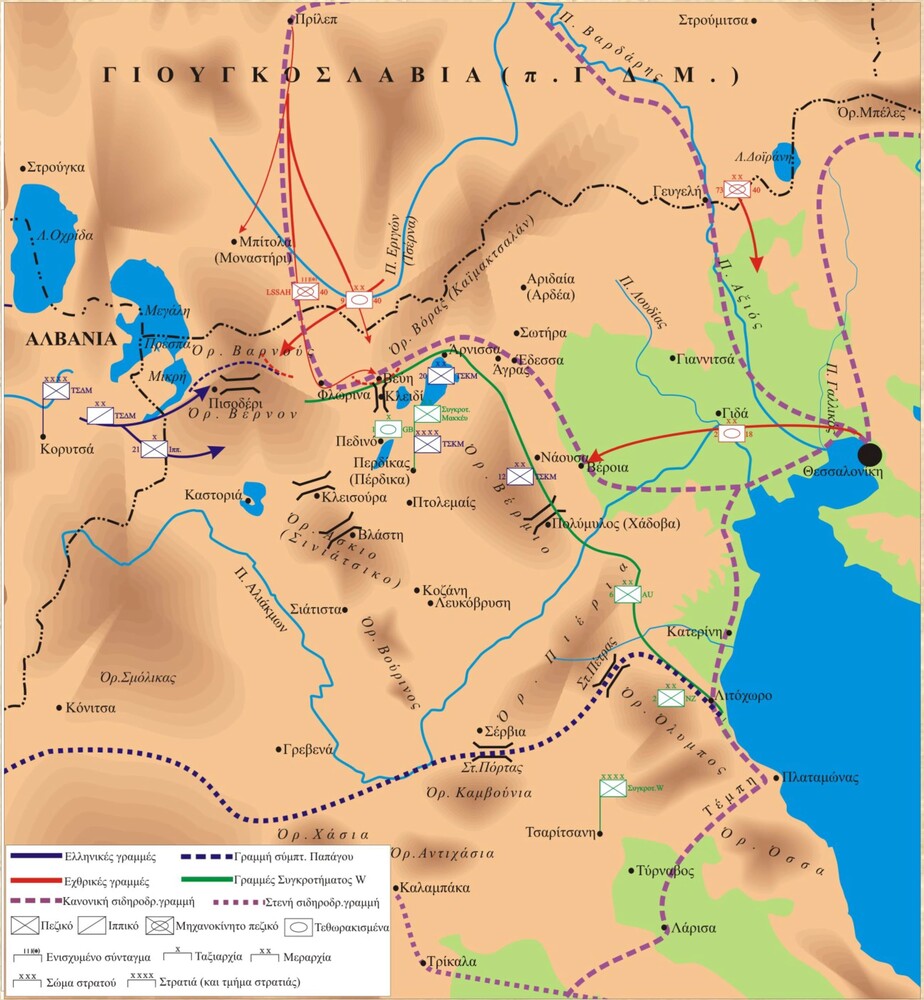
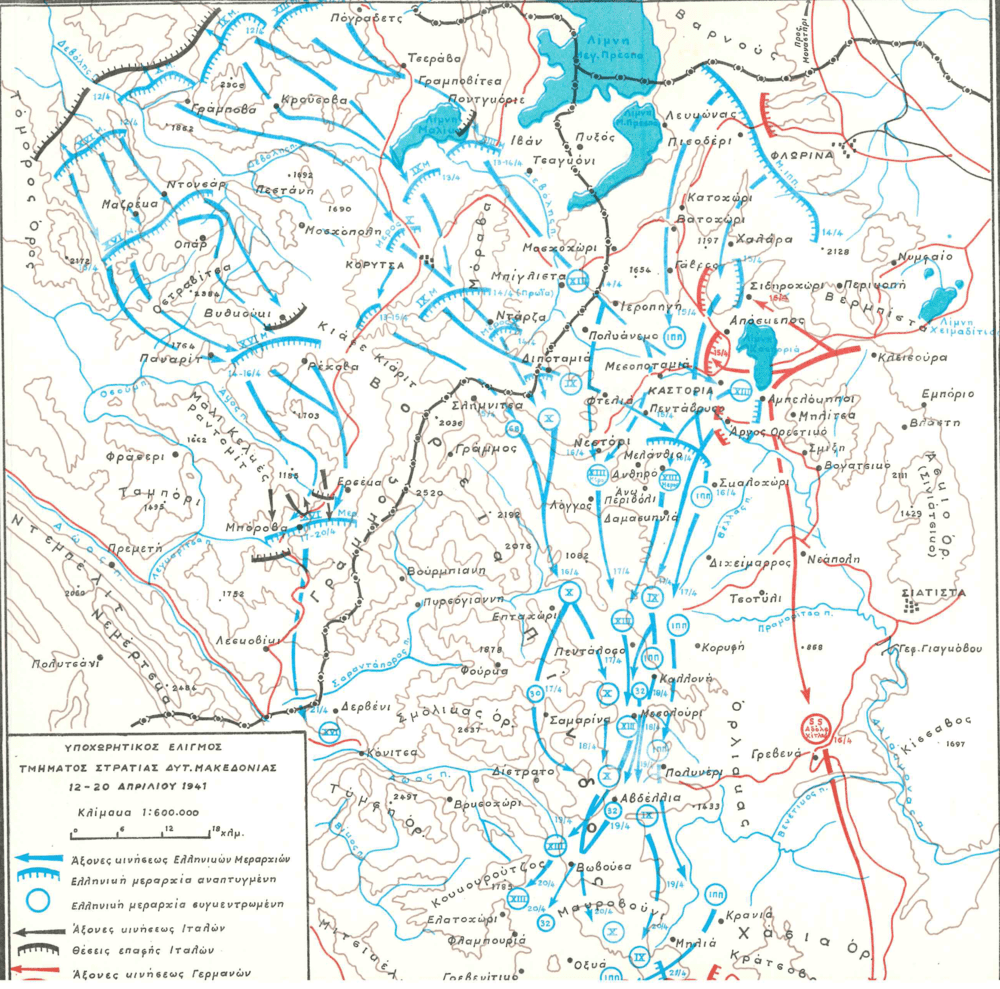
In response to the rapid advancements of the war, on April 8, the forces of the "W" Group —a coalition of Greek, British, and Australian troops— retired from their positions in southern Albania and relocated to Western Macedonia. In the territories of Western Macedonia, Group "W" established defensive positions from the Klidi Pass to the area of Nymfaio, anticipating the imminent advance of formidable German forces towards the region in the coming days.
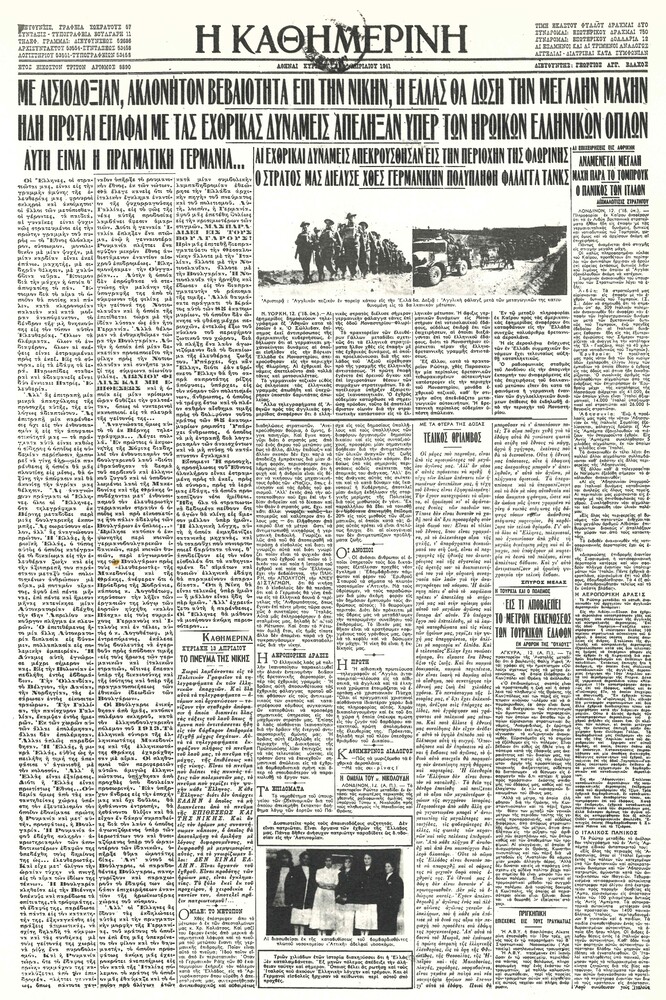
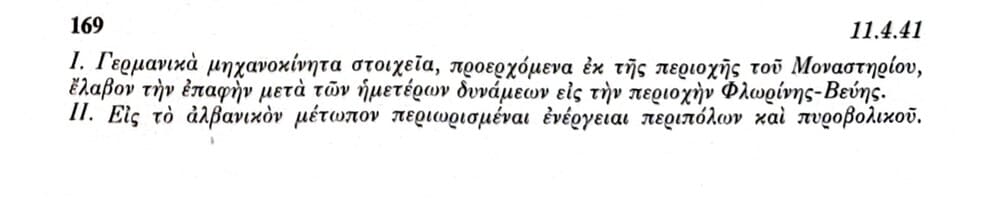
On April 10, 1941, a reconnaissance battalion of the German XL Armored Corps advanced towards Florina and captured it without encountering any resistance. On the same day, at approximately 16:00, a section of the Greek Cavalry Division, engaged in reconnaissance along the Florina-Pisoderi road, identified the German motorized battalion and subsequently withdrew to the defensive positions of the 3rd Cavalry Regiment. The defensive lines were situated to the east of Pisoderi, along the Kulino-Kulino-Kusta-Plaka-Vigla line. Subsequently, the German mechanized battalion endeavored to breach the Greek defensive positions, but their assaults were repelled by the Greeks. At approximately 21:45, the Germans resumed their attack, this time reinforced with artillery, mortars, and infantry. The ensuing battle, which lasted approximately three hours, saw the Greeks mount a vigorous defense, forcing the Germans to retreat towards Florina.
From the evening of April 10 to the evening of April 12, the 3rd Cavalry Regiment was subjected to repeated attacks by the German motorized battalion. Despite numerical superiority and an abundance of military resources, the German contingent sustained significant losses and was unable to overcome the formidable defense mounted by the Greek Cavalry Regiment.