
Battle of Siatista
Short Description:
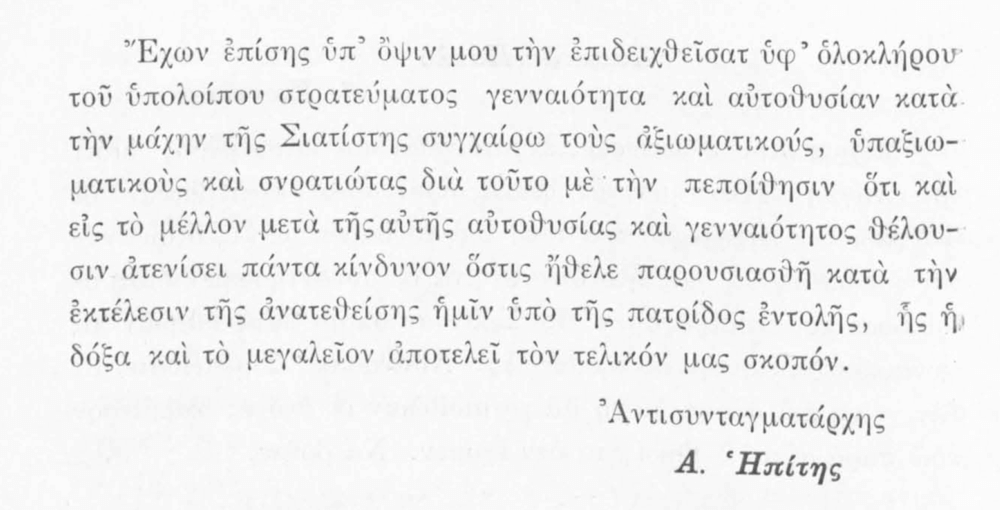
On November 4th, a strong Ottoman force launched an attack on Siatista, engaging in combat with the main body of the Greek Siatista Detachment. The battle continued until the evening, with the Greek forces effectively countering the continuous attacks, particularly those from the Ottoman mountain artillery operating from the heights of Kaloneri. Despite the numerical superiority of the Ottomans, the Greeks defended with great tenacity and eventually forced the enemy to retreat. The intense battle occasioned the deaths of 25 Greek soldiers and the wounding of 73 others. On the Ottoman side, the losses were significantly higher, with contemporary accounts reporting approximately 400 dead.
Photo gallery:
Detailed Description:
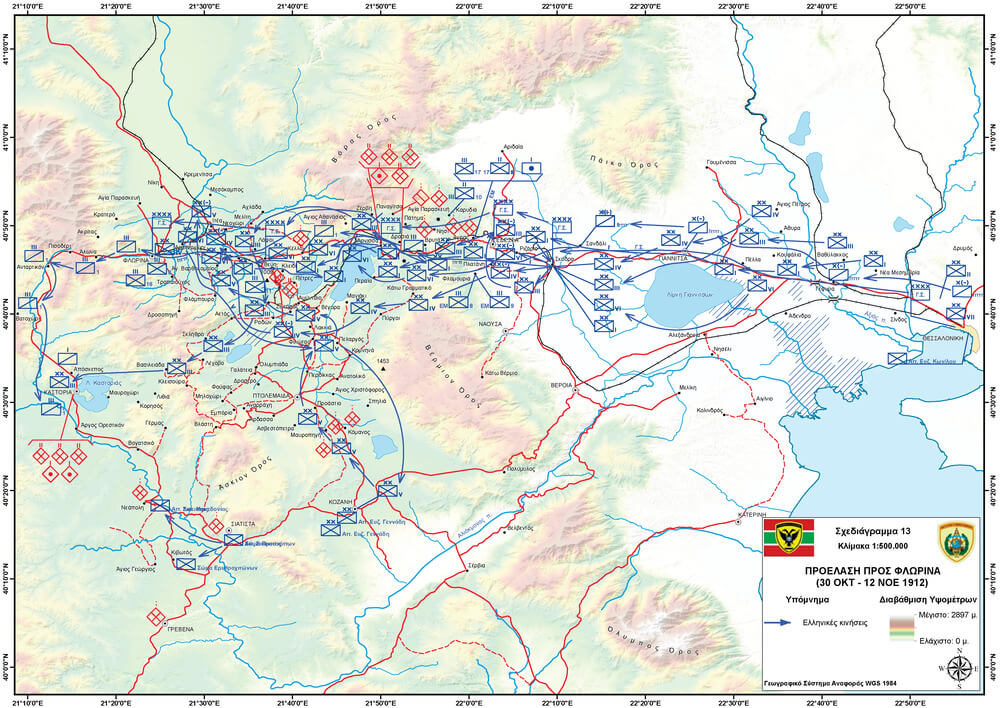
On October 24, 1912, the V Division, pursued by a powerful Ottoman military force, was compelled to retreat in a disorderly manner towards Kozani. In light of the necessity to reorganize the defense in Western Macedonia, the General Headquarters issued an order for the immediate movement of the Gennadis' Evzones Detachment from Lipsisti (now Neapolis) of Kozani. As a result of this relocation, the military presence in the Lipsisti-Grevena area was significantly diminished, with only two infantry companies from the 24th Regiment and Greek Scout Corpses remaining. The command of this region was entrusted to Infantry Captain Nikolaos Katechakis, who was responsible for leading Scout Corpses.
On November 2, during the regrouping of the forces in the area of Lipsisti-Grevena, a threatening letter was received in Siatista from the Ottoman commander of Kastoria-Lipsisti. The letter demanded the immediate surrender of Siatista within 24 hours, warning of imminent attack. In response, the General Headquarters promptly established the Siatisti Detachment, appointing Lieutenant Colonel Antonios Ipitis as its leader. Concurrently, he directed the immediate transportation of reinforcements to the area to commence the organization of the defense.
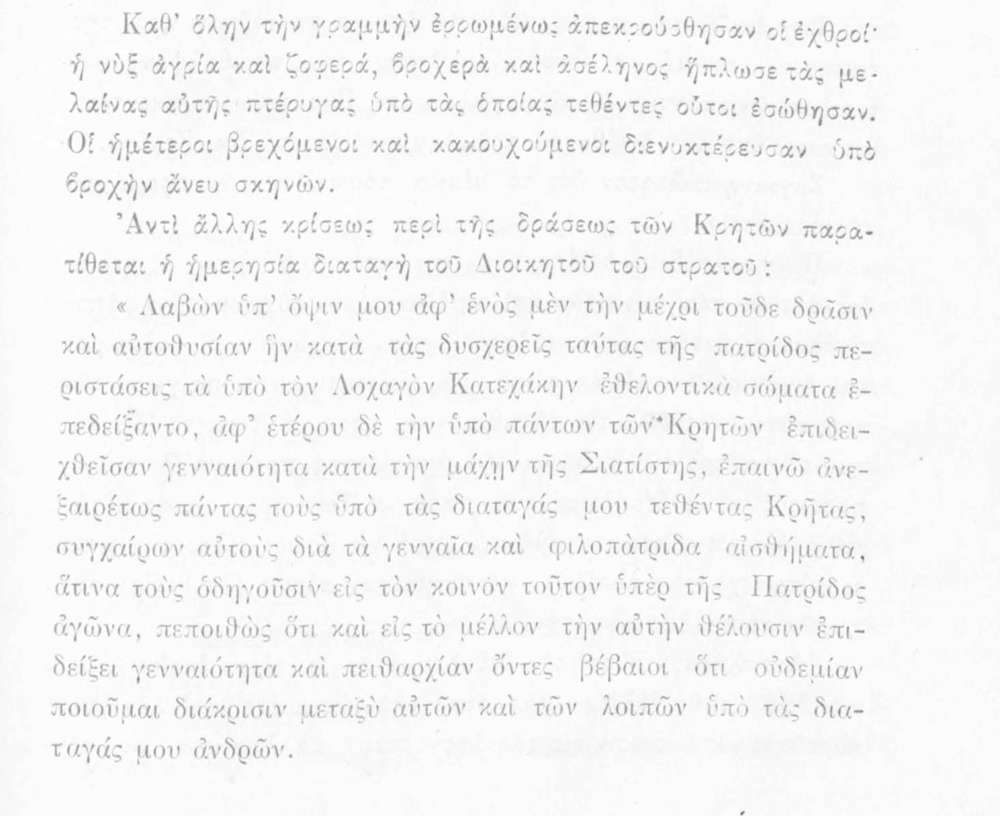
On the following day, November 3, Lieutenant Colonel Ipitis was reassigned to Siatista. Additionally, a battalion and an artillery division from Larissa arrived in the area, as well as a volunteer corps of Cretans under the leadership of the experienced chieftain, Captain Georgios Katechakis and Lieutenant Georgios Kapitsini. According to Ipitis's diary, the Greek forces in Siatista numbered approximately 2,000 men, with one plain artillery division and three artillery pieces. Shortly after his arrival, Ipitis was informed of the presence of some 3,500-4,000 Ottoman soldiers in the area, who were setting fire to villages on the outskirts of Grevena. Additionally, it was reported that some of these troops had advanced as far as the town.
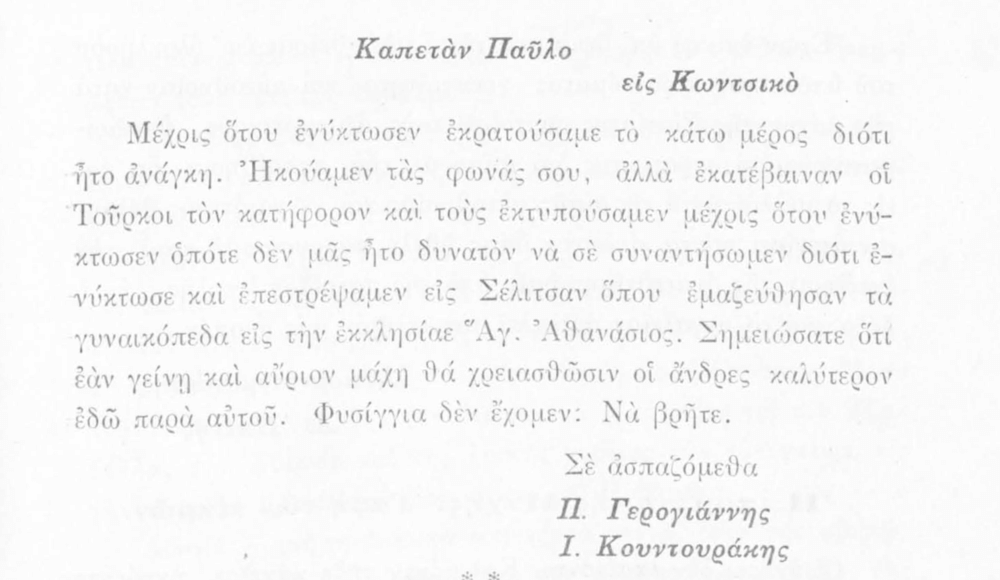
On November 4, a force of over 3,500 Ottoman troops assembled to the northwest of Siatista. The Ottoman forces commenced their advance from the village of Vrogista (now Kaloneri) where their mountain artillery was positioned. Deploying to the north and west of Siatista, the objective was to launch a double front attack on the Greek forces. The seasoned Cretan volunteers were positioned in the vanguard of the defense on both fronts, with detachments of the Greek army following at a slightly greater distance. The battle continued into the evening, with the Greek forces mounting a robust defense against the powerful Ottoman assault. During the intense battle, the Greeks sustained 25 fatalities, including Lieutenant Georgios Kapitsinis, while 73 men were wounded. In comparison, the Ottomans suffered considerably higher losses, with some sources estimating the death toll at approximately 400.

Indicative Literature:
ΓΕΣ, Επίτομη Ιστορία των Βαλκανικών Πολέμων 1912-1913, Αθήνα 1987.
Ισίδωρος Φραγκίσκος, Πολεμικόν Ημερολόγιον οπλίτου της Vης Μεραρχίας κατά τον Ελληνο-Τουρκικόν Πόλεμον 1912-13, Εν Αλεξάνδρεια 1914.