
Battle of Grevena
Short Description:
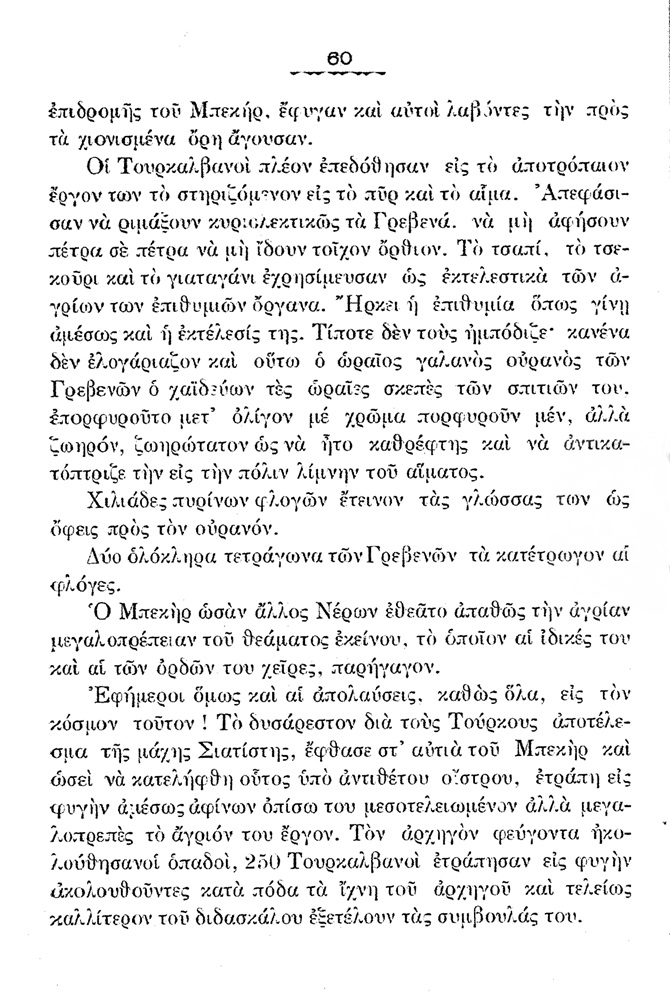
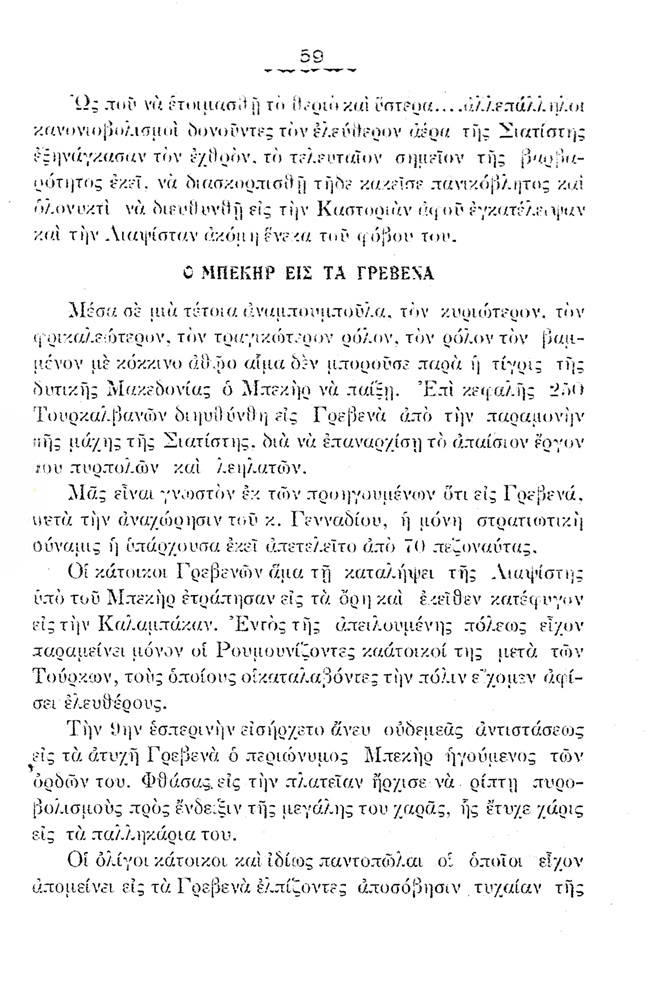
On the afternoon of November 3, a portion of the Ottoman military forces initiated a sudden assault on the city of Grevena. Despite the circumstances of the attack, the Greek forces demonstrated composure and fortitude in defending the city. They maintained their positions and facilitated the safe evacuation of civilians to Elefthero-chori. With the successful removal of the civilians, the Greek soldiers initiated a gradual withdrawal, relinquishing control of the city to the invaders. The following day, the Ottomans proceeded to sack Grevena, destroying and burning numerous shops and houses. The occupation of Grevena was, however, of a temporary nature, as the Greeks recaptured the city on November 7.
Photo gallery:
Detailed Description:
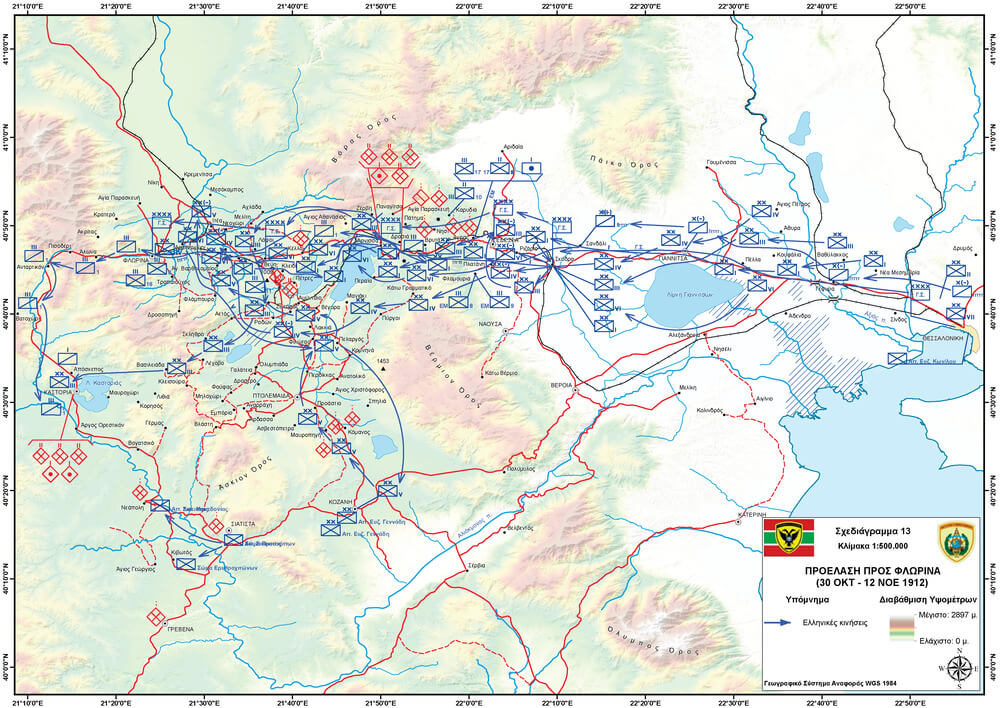
On October 24, 1912, the V Division retreated in a disorderly manner towards Koza-ni, facing strong opposition from Ottoman forces. Facing the challenging circum-stances, the General Headquarters promptly directed the relocation of the Gennadi's Evzones Detachment from Lipsisti (now Neapolis) to Kozani. This strategic move aimed to reinforce the defense in the region. Following the withdrawal of the Ev-zones Detachment, two infantry companies of the 24th Regiment and Greek Scout Corpses remained in the Lipsi-Grevena area. The military commander of the entire area was appointed Infantry Captain Nikolaos Katechakis, who was also the head of the Scout Corpses.
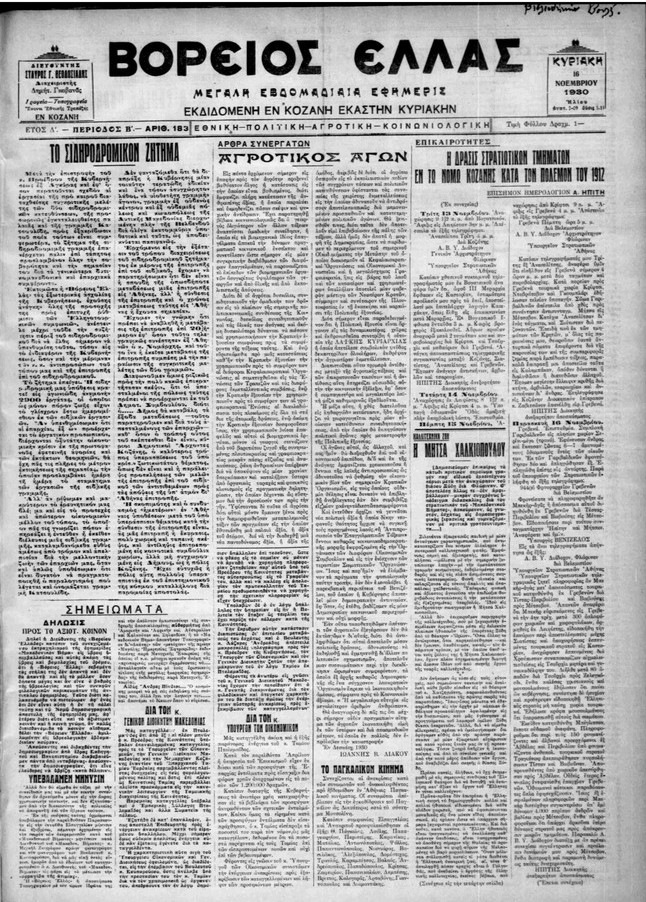
On November 2, while the greek forces were engaged in regrouping efforts in the Lipsisti-Grevena area, a missive arrived in Siatista from the Ottoman Commander of the Kastoria-Lipsisti area. In the missive, the Ottoman forces demanded the immedi-ate capitulation of Siatista within a 24-hour period. In response to the imminent threat of attack, the General Headquarters took immediate action, forming the Siatis-ti Detachment and appointing Lieutenant Colonel of Artillery Antonios Ipitis as its commanding officer. Concurrently, the deployment of reinforcements to the area was ordered. With regard to Grevena, a modest garrison of approximately 100 Ma-rines from the 24th Regiment, in conjunction with a corps under the command of Chieftain Ioannis Karavitis, constituted the city's defense.
The garrison commander of Grevena opted to deploy the available forces to the out-skirts and within the city walls, despite the counsel of the seasoned Karavitis, who had proposed advancing the contingent to the route from Kriftsi (now Kivotos) to Grevena, anticipating an assault from that direction, as well as the deployment of his troops on surrounding hills to evade the city's siege. The decision of the garrison commander resulted in the battle being fought within the city of Grevena, thereby endangering the lives of civilians who had not been evacuated in a timely manner.
At approximately 19:00 on November 3, while the majority of the Siatisti Detach-ment had congregated in the village of the same name, awaiting the expiration of the ultimatum and the commencement of the attack, the Ottoman forces, under the command of Bekir Efendi, comprising approximately 1,000 men, initiated a surprise attack on Grevena. Despite the surprise attack, the Greek forces met the Ottoman invasion with composure, maintaining their positions, defending themselves vigor-ously, and delaying the enemy's advance. This allowed women, children, and elderly individuals to evacuate safely to Eleftherochori. Once the civilians had been secured, the Greek soldiers commenced a gradual withdrawal from their positions, leaving the deserted town to the invaders. From the early hours of the morning, the Ottomans proceeded to loot Grevena, with soldiers engaging in the looting and burning of shops and houses.
The Ottoman conquest of Grevena proved to be of limited duration. The following day, November 4, the Ottoman forces sustained significant casualties in their unsuc-cessful endeavor to seize control of Siatista. Following the successful defense of Sia-tista on October 5, the Greek presence in the region was significantly reinforced. In particular, a corps of "Erythrochitones" (a volunteer corps named Redshirts or Gari-baldini, derived from the red color of the tunic they wore) was deployed to the north of Grevena, in the vicinity of Agios Georgios – Kivotos, while two companies of the 24th Regiment were positioned to the south, in the village of Agiofyllo. To these two companies were added three more, which had originated from Grevena and Lipsisti. Additionally, 300 men, 100 privates, and 200 Cretan volunteers positioned to the north of Grevena, in the village of Milia. Concurrently, the Commander of the V Di-vision, Colonel Stefanos Gennadis, directed Lieutenant Colonel Ipitis to amass forces and undertake an assertive assault on the Ottoman positions in Grevena and the sur-rounding region.
On October 6, the remaining companies in Agiofyllo relayed to the Commander of the 24th Regiment the withdrawal from Grevena of a substantial Ottoman force, comprising approximately 2,000 soldiers, two cannons, and 50 horsemen. On the following day, October 7, the Commander of the 24th Regiment directed the mobilization of a small reconnaissance unit to assess the circumstances in Grevena. The unit advanced to Grevena and took control of the town without encountering any resistance. The Erythrochitones maintained their position in the Agios Georgios – Kivotos – Kokkinia region, while the 300 troops from Milia relocated to Metsovo.

Indicative Literature:
ΓΕΣ, Επίτομη Ιστορία των Βαλκανικών Πολέμων 1912-1913, Αθήνα 1987.
Ισίδωρος Φραγκίσκος, Πολεμικόν Ημερολόγιον οπλίτου της Vης Μεραρχίας κατά τον Ελληνο-Τουρκικόν Πόλεμον 1912-13, Εν Αλεξάνδρεια 1914.
Related locations
Monument to the Fallen
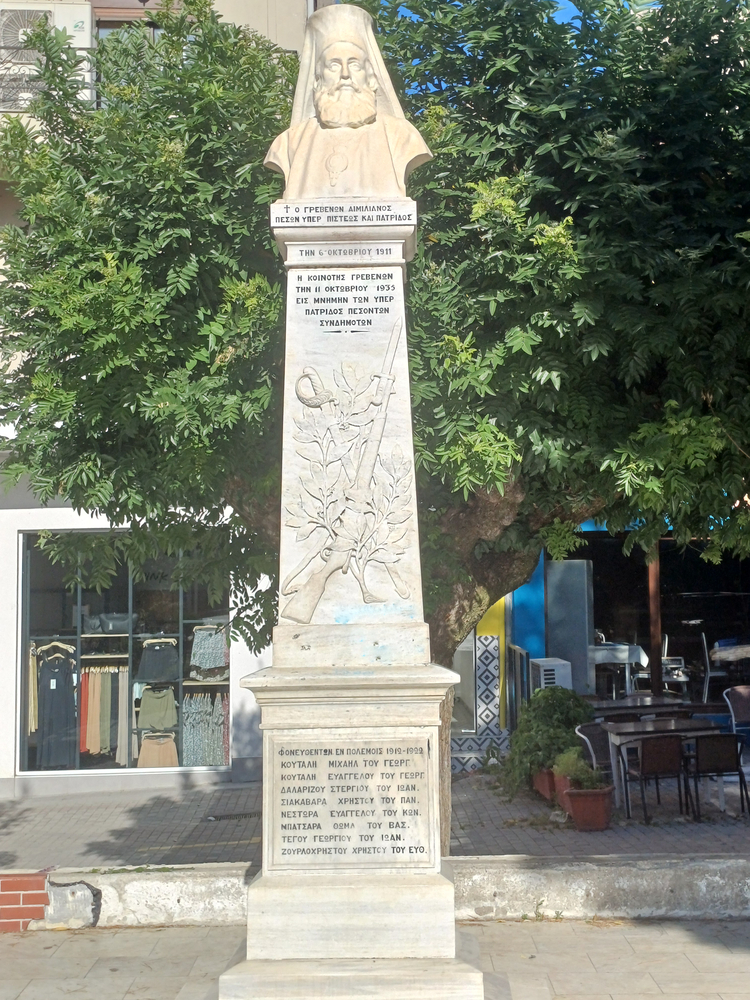
Monument to the Fallen