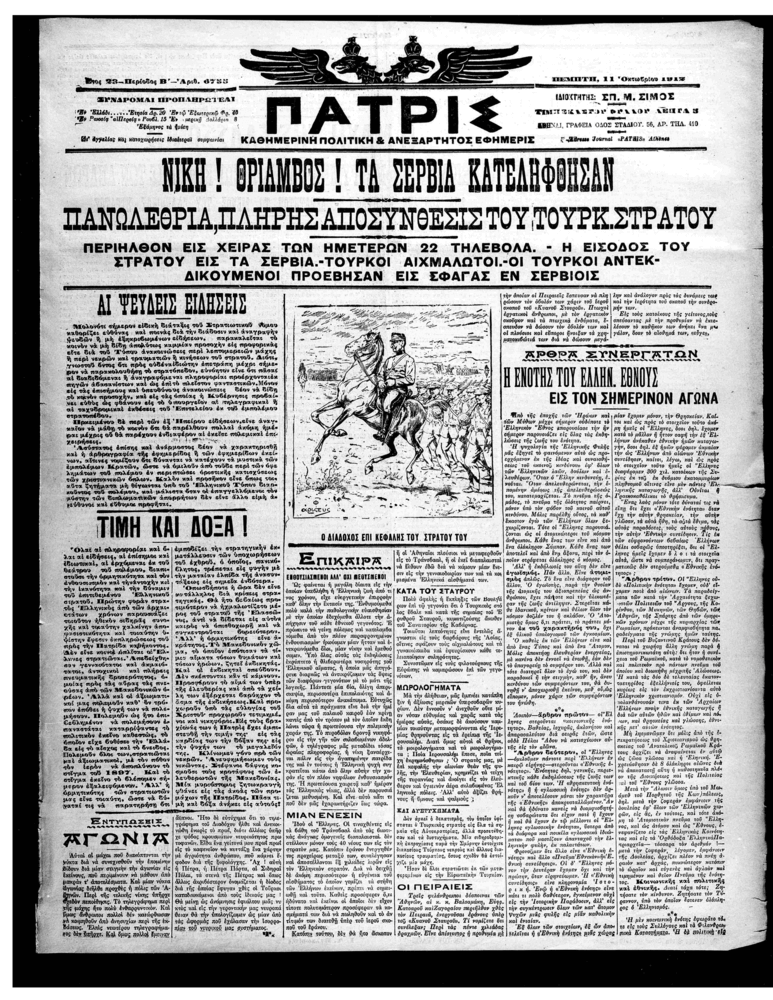
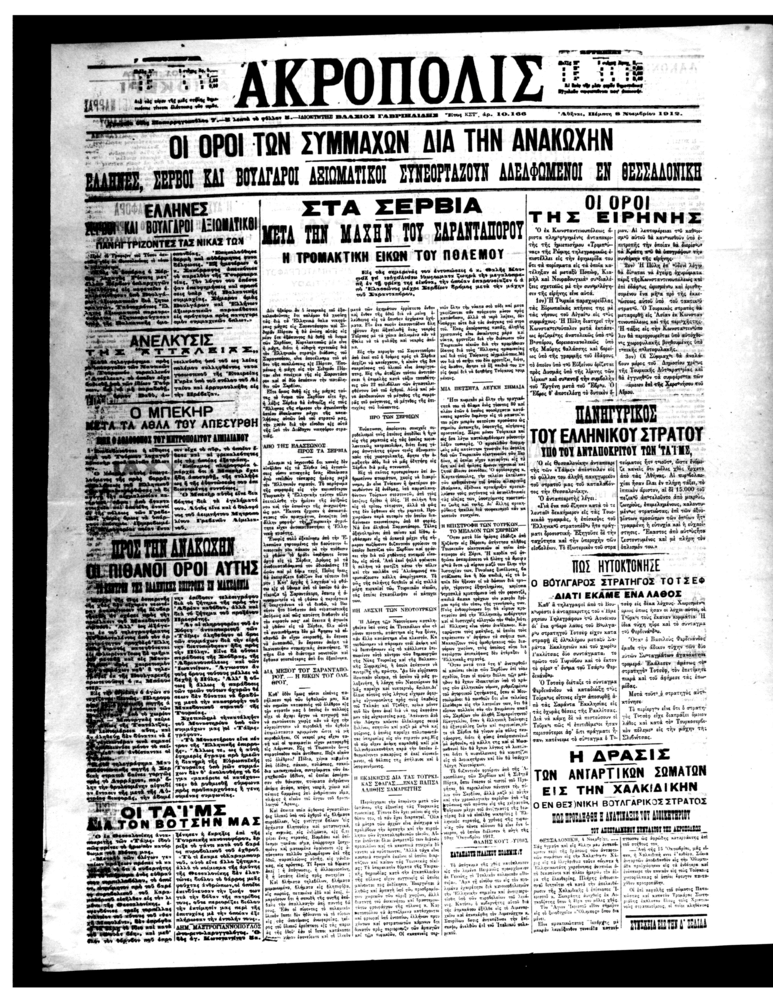
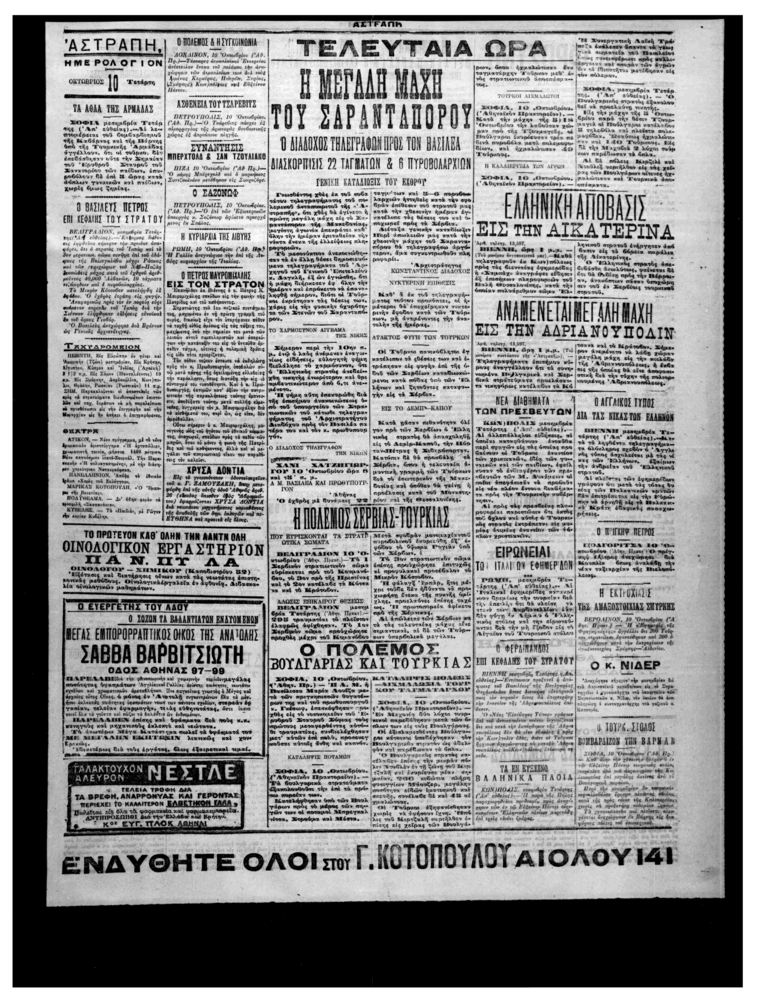
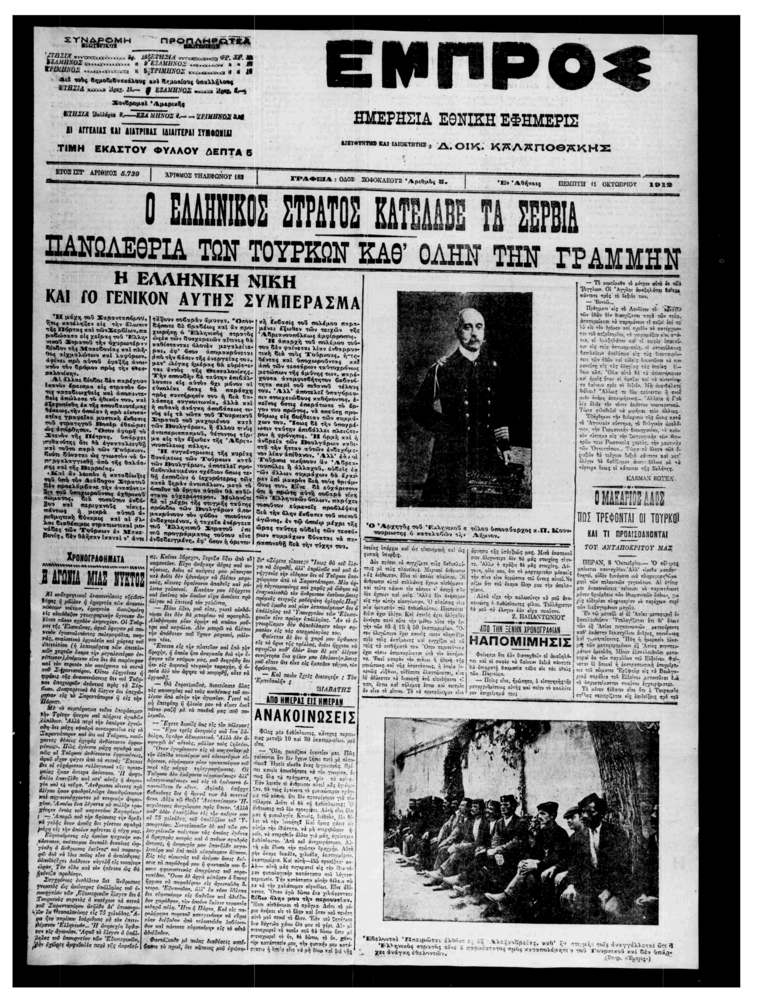
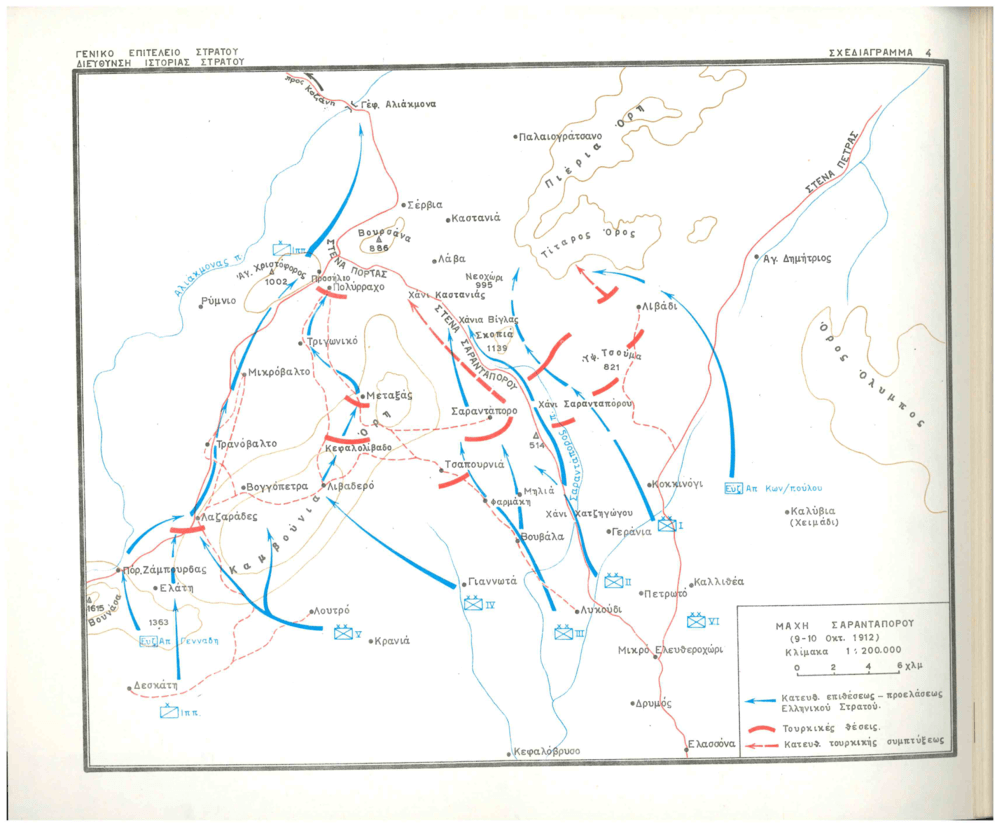
Following the capture of Descati in Western Macedonia and Elassona in Thessaly on October 6, the Greek army initiated an offensive with the objective of expanding towards the northern Ottoman possessions. Conversely, the Ottoman administration sought to impede the Greek army's advancement towards Western Macedonia, prioritizing the safeguarding of the broader region of Servia and notably the Aliákmon bridge. In order to achieve this objective, the majority of Ottoman forces were concentrated at Sarantaporo, with the intention of impeding the Greek advance along the Elassona-Servia route. Concurrently, four infantry battalions and a machine gun company were deployed to the Lazarades region with the objective of intercepting the Greek forces and safeguarding the route to Servia.
On the early morning of October 9, 1912, the Greek forces commenced their advance in a northerly direction. Divisions I-III proceeded in a northerly direction towards Sarantaporo, while the V Division, in collaboration with the Gennadis’ Evzones Detachment and the Cavalry Brigade, endeavoured to surmount the Ottoman resistance at Lazarades. Of particular significance was the contribution of the IV Division, which, following the route Livadero-Kefalolivado-Metaxas-Trigoniko, secured the villages of Polyrracho and Prosilio in the afternoon, situated at a distance of 8-9 km from Servia. The relentless pressure from Divisions I-III, coupled with the decisive actions of Division IV, compelled the Ottomans to evacuate Sarantaporo during the night of October 9-10 and retreat towards Servia.
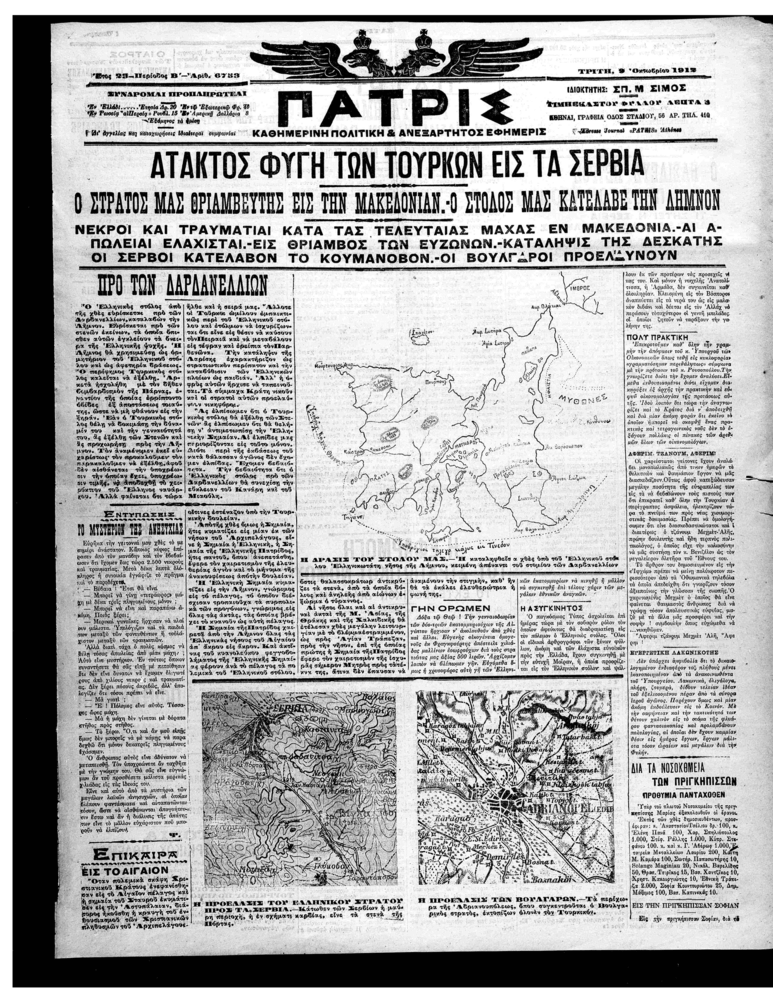
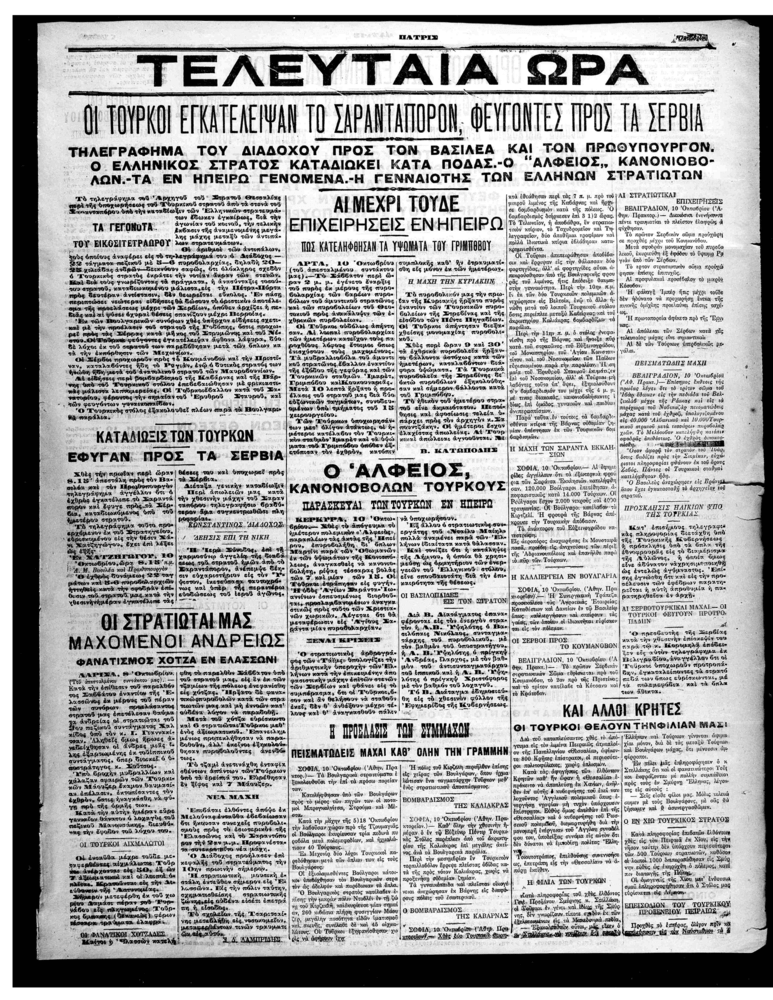
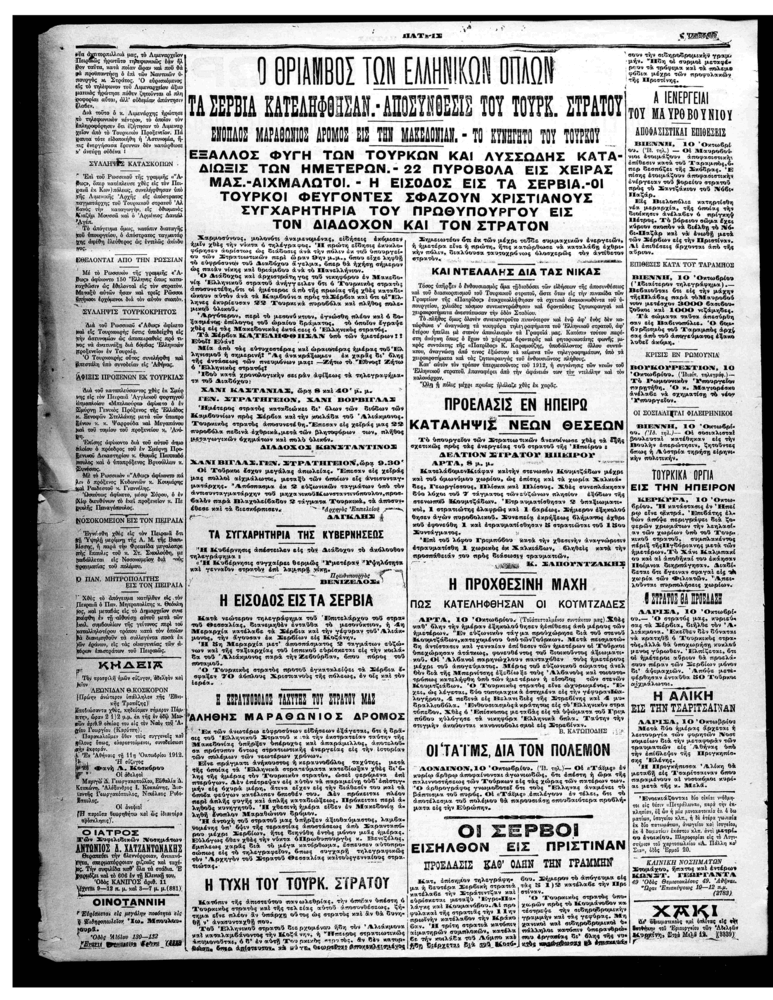
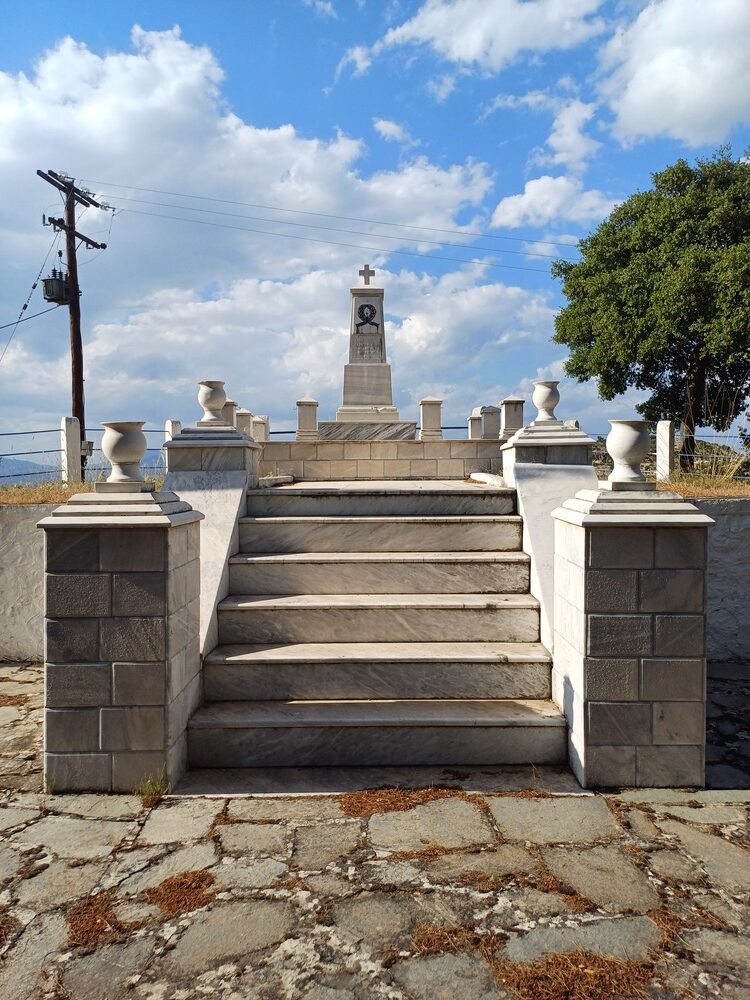
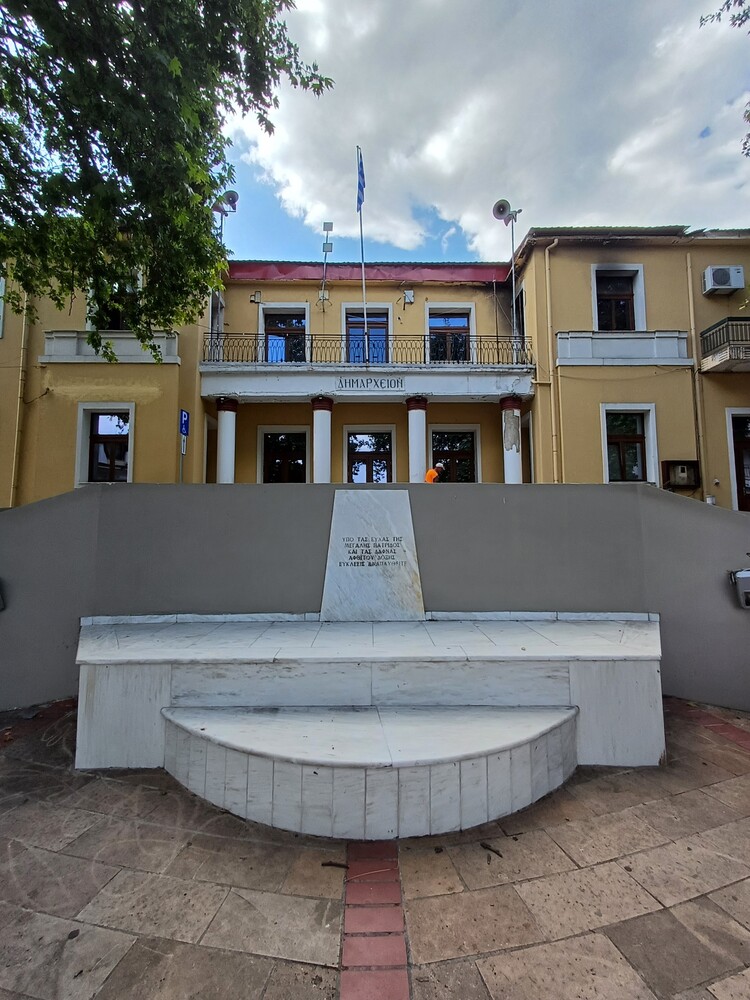
In the early morning hours of October 10, the Greek army successfully captured Sarantaporo. Simultaneously, the IV Division was confronted with considerable difficulties in the northwest, situated between two fronts. In the north, it was engaged with Ottoman forces advancing from Servia, while in the east, it was confronted with troops retreating from Sarantaporo. Despite the challenging circumstances, the IV Division responded in an effective and successful manner, confronting the Ottoman forces. Its advance to the north continued, resulting in the launching of an attack towards Voursana Height and the achievement of a new victory over Ottoman resistance. At approximately 16:00, the Division entered Servia and promptly proceeded northwest, occupying the Aliákmon bridge, a strategically significant location. During the Greek forces' entry into Servia at noon on October 10, the soldiers encountered a distressing and horrifying incident: the Ottomans, as they were departing Servia, executed 70 procrites and 5 priests and left their corpses exposed in the streets of the village.
On October 11, the General Headquarters relocated its headquarters of the Army of Thessaly to Servia. The villagers extended a warm welcome to the soldiers. In a ceremony held in the presence of the General Headquarters, the funeral of 75 civilians who had been victims of the Ottoman reprisals was conducted.
The victories on October 9 and 10, which resulted in the capture of vital strategic locations such as Sarantaporo, Servia, and the Aliákmon bridge, had a considerable impact on the morale of the Greek Army. Simultaneously, they paved the way for the Greek advance towards Western Macedonia. During the course of the hostilities, 182 Greek officers and soldiers perished, while 995 others sustained injuries. Among the deceased was Lieutenant Colonel of Infantry Kyriakos Mavromichalis, Commander of the 22nd Infantry Regiment of the V Division, who was killed during the operation at Lazarades.