
Battle of Klisoura Pass
Short Description:
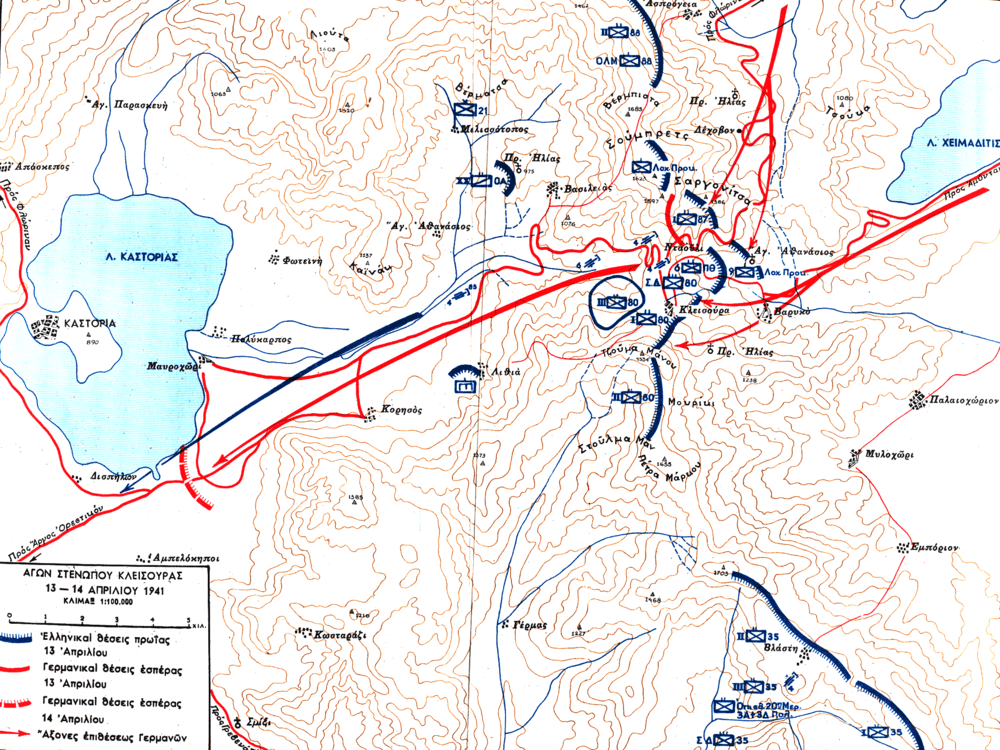
On April 13, 1941, SS troops attacked the Klisoura Pass and after long battles captured the Sargonitsa Heights. The Greeks fought back fiercely and managed to hold the remaining defensive positions throughout the night. However, on the morning of April 14, the Germans launched an even stronger attack with infantry, armor, artillery and air power. Under the pressure of the more numerous and better equipped forces, the Greeks gradually retreated, ceding control of the Klidi Pass to the Germans. Despite the defeat, delaying the German advance by about a day proved crucial, allowing the Greek and Allied forces to retreat safely to the south and providing the necessary escape routes.
Photo gallery:
Detailed Description:
On April 6, 1941, at 5:15 a.m., the German army invaded southern Yugoslavia and Greece without warning as part of Operation Marita. Contrary to the usual procedure of sending an ultimatum and attacking after its expiration, the Operation Marita began immediately. The bulk of the German forces concentrated on Fort Istibey and Rupel, while smaller attacks were made on the Nevrokopi area and in Western Thrace. The German advance was rapid, and by the 9th, despite the heroic resistance of the Greeks at the forts of the Metaxa line, they managed to overrun the Greek defenses and enter Thessaloniki. At the same time, on the evening of April 8, the Eastern Macedonia Army Section had already sent a letter to the German forces proposing its surrender.
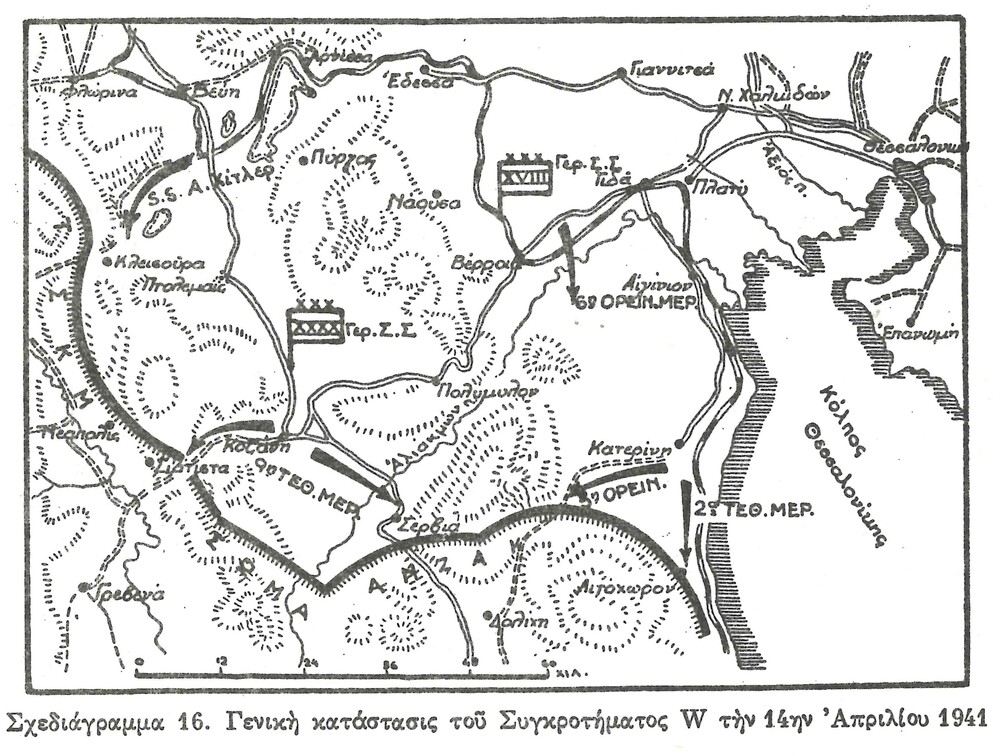
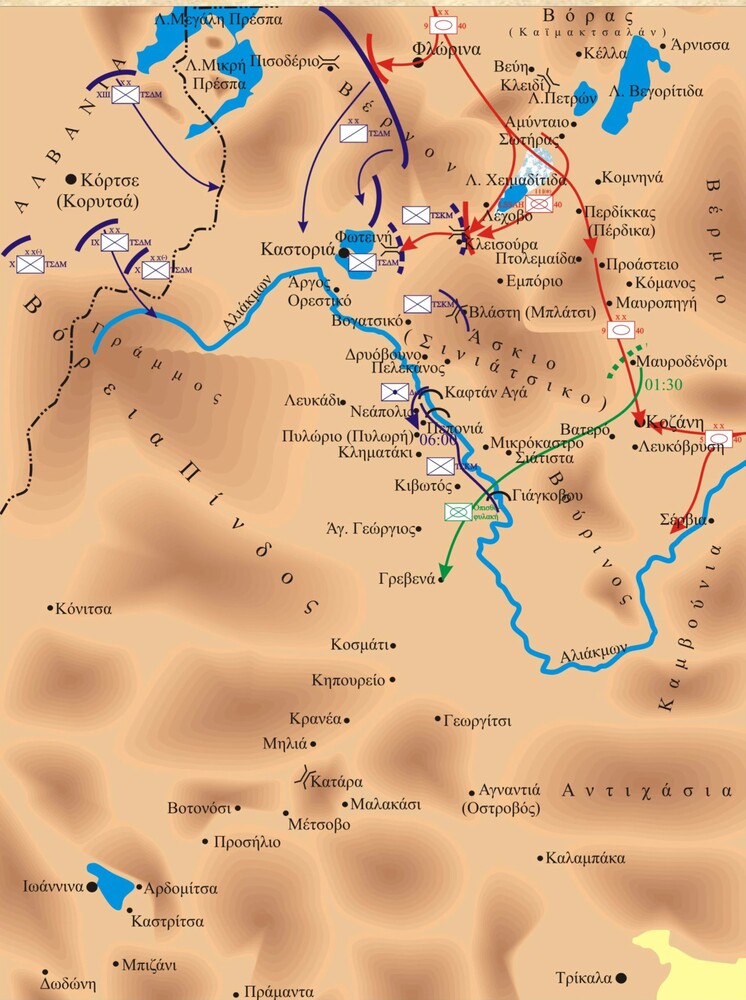
On April 8, in view of the rapid development of the war, the forces of Group "W" –a coalition of Greek, British and Australian troops– withdrew from their positions in southern Albania and returned to Western Macedonia. In the territories of Western Macedonia, Group "W" took up defensive positions from the Klidi Pass to the area of Nymfaio, preparing to face the strong German forces that were expected to advance towards the area in the coming days.
On April 10, German forces began to advance into the Klidi Pass. British and Australian "W" Group units attempted to repel them. However, despite fierce Allied resistance, the Germans captured the Klidi Pass area on April 12 after three days of continuous fighting. The fall of the pass opened the way for further German advances into the areas of Western Macedonia and more broadly into Central and Southern Greece.
After the Germans captured the Klidi Pass, the Allied forces were concentrated in a diagonal line south of Amyntaio and Sotiras. On April 13, the Germans attacked these positions with strong forces, forcing the Allied forces to retreat towards Ptolemaida. At noon, after taking Ptolemaida, the Germans launched a strong attack with tanks, artillery, motor vehicles, infantry, and aircraft. In the ensuing tank battle, the only one to take place on Greek soil, the Allies managed to temporarily halt the German advance into southern Greece. The Allied forces of Group "W" then withdrew to Grevena to set up a defense around Mount Askio.
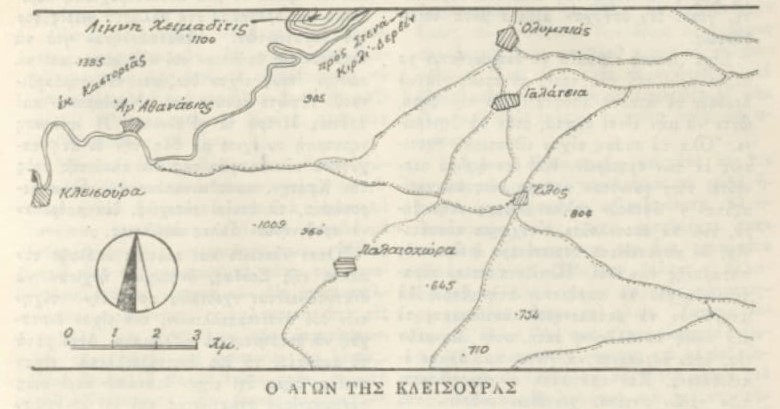
In addition to the operations in the Kozani area, the conquerors turned their attention to the occupation of the Klisoura Pass, a place of particular strategic importance. This was because its occupation would cut off the escape route of the allied forces in the Klidi Pass and threaten the rear of the Epirus Army Division in the east. For these reasons, on April 10 the Western Macedonia Army Section had sent two battalions –a mountaineering squadron and a scavenger squadron of the 20th Division– to organize the defense. According to the defense plan, the Greek forces were deployed on the heights of Subrec and Sargonitsa and the advance guard on the line of Prophitis Ilias – heights west of Variko – Agios Athanasios.
On April 13, 1941, around 17:00, the vanguard of the 1st SS Armored Regiment, coming from Lechovo, launched an attack on Klisoura and Sargonitsa Height. Supported by artillery fire, the SS forces managed to capture the Sargonitsa Height after hours of fierce fighting. The parts of the Greek I/87 battalion defending the hill retreated westwards to the positions of heights 1624 and 1597. The 1st company of the battalion, surrounded by the German forces, was forced to surrender. Around 23:00, heights 1624 and 1597 were reinforced with men from III/80 Battalion. The fighting continued at a reduced pace during the night of April 13-14, with artillery fire against enemy positions. In the morning the Greek forces managed to hold their defensive positions and prevent the rapid advance of the German forces.
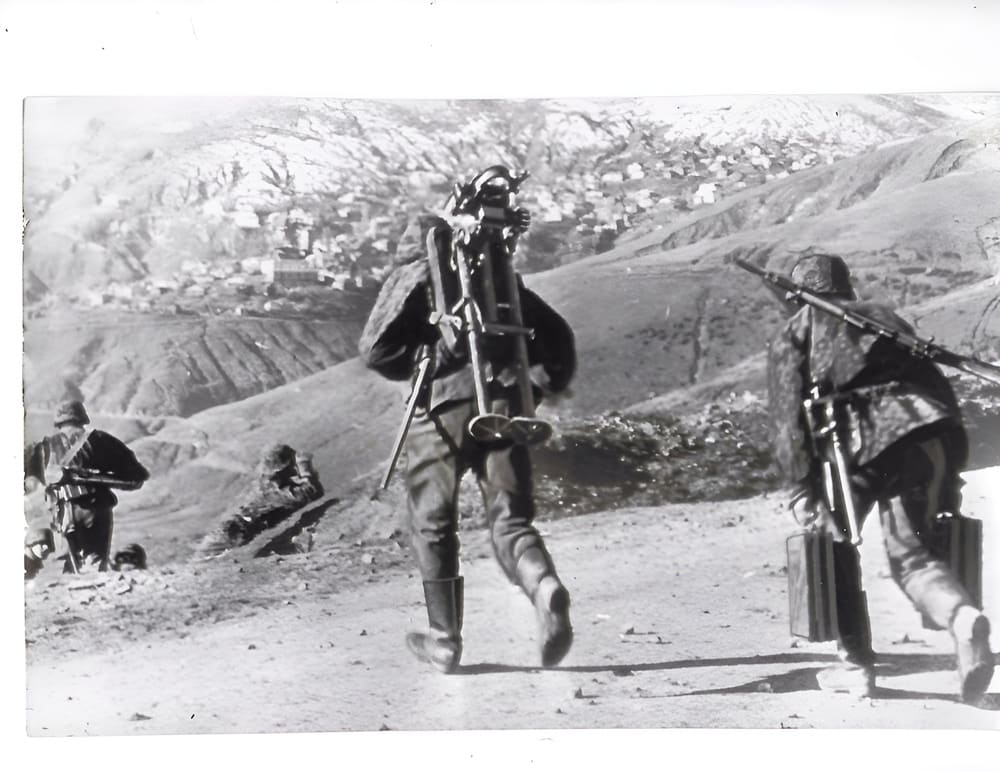
From 04:30 on April 14, a new, even stronger German attack was launched against the Greek forces defending the neck of the Daouli Height, north of Klisoura. The Germans, taking advantage of their control of the Sargonitsa Height, fired artillery shells with trajectory markers against the Greek positions. This was the first time that Greek soldiers had encountered tracer ammunition, a fact that underscores the significant difference in the availability of technological equipment between the two armies. In addition to the forces on the Sargonitsa Height, German infantry and armored tanks attacked on the eastern side of the pass, as well as south of Klisoura, on the Tzoumas Manos Height. Throughout the battle, German troops were also supported by German air power.
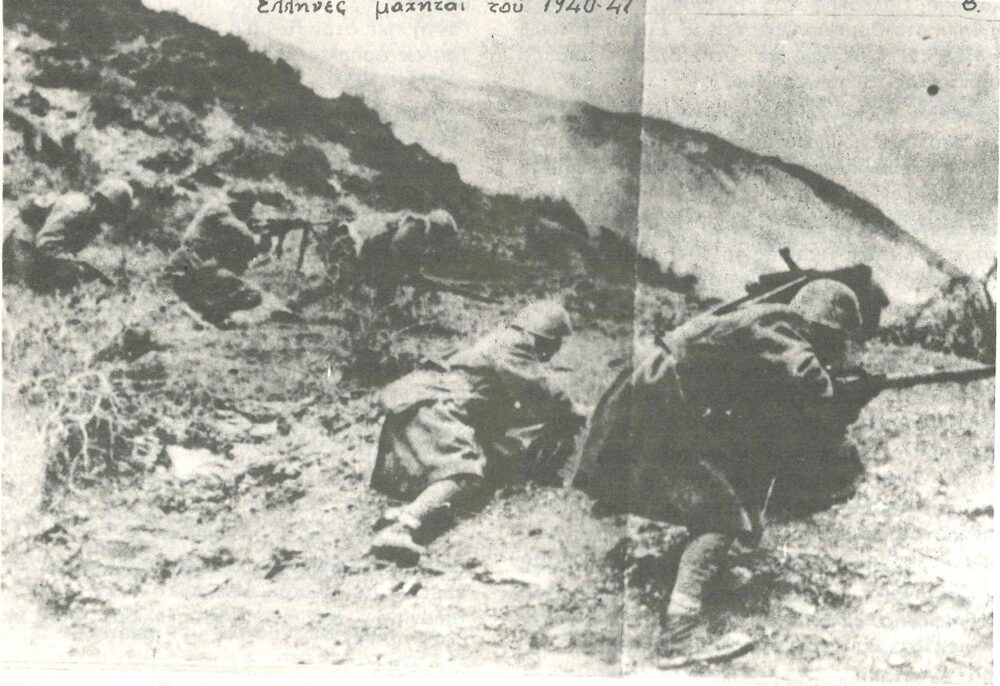
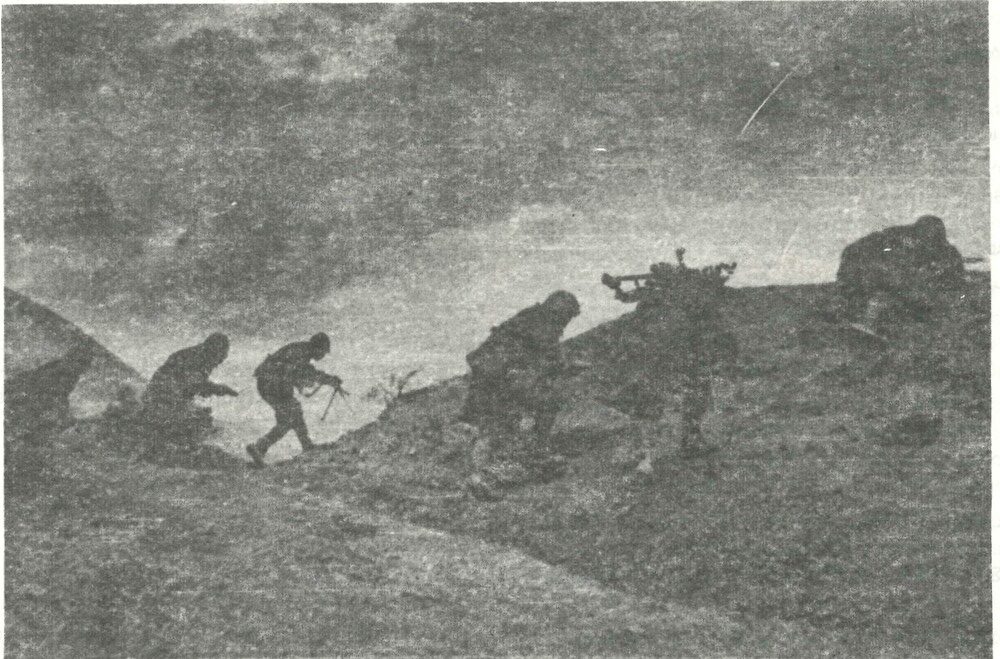
The battle that ensued was clearly unequal. Two Greek infantry battalions equipped with old machine guns and rifles faced numerous German infantry units supported by artillery, armor, aircraft and modern communications. Despite the lack of ammunition, air support, anti-tank and anti-aircraft weapons, and the lack of adequate communications, the Greek forces fought bravely. However, after a few hours of intense fighting, pressure from the stronger German forces led to a gradual Greek retreat. Around 09:00, the Greek forces began to gradually withdraw, and by 10:30, only a few forces were left at the Daouli position, which finally withdrew after exhausting its available ammunition.
The occupation of the Klisoura pass was completed in the early hours of April 14. The German victory and occupation of the wider area was of strategic importance, as it gave them control of the road leading to Grevena and Kastoria. Despite the expected defeat of the Greeks at the Battle of Klisoura Pass, the German delay of about a day's advance had significant consequences. First, it allowed the Greek forces of the Central Macedonia Army Section to avoid capture by the Germans east of the Aliákmon. Second, it kept open the escape routes to southern Greece for troops returning from the Albanian front. Finally, it provided valuable time for the forces of the British I Armored Brigade to move directly to Kalabaka.

Indicative Literature:
Η εποποιία του 1940-41. Αρχείον ιστορικών σελίδων, Αθήνα 1969.
Γενικό Επιτελείο Στρατού, Το τέλος μιας Εποποιίας – Απρίλιος 1941, Αθήνα 1959.
Γενικό Επιτελείο Στρατού, Εφοδιασμοί στρατού εις υλικά οπλισμού πυρομ/κων πυρ/κου πεζικού 1940-1941, Αθήνα 1982.
Γενικό Επιτελείο Στρατού, η Υγειονομική Υπηρεσία του στρατού κατά τον πόλεμο 1940-1941, Αθήνα 1983.
Γενικό Επιτελείο Στρατού, Επίτομη Ιστορία του Ελληνοϊταλικού και Ελληνογερμανικού πολέμου 1940-1941. Επιχειρήσεις Στρατού Ξηράς, Αθήνα 1985.
Γενικό Επιτελείο Στρατού, Αγώνες και Νεκροί του Ελληνικού Στρατού κατά το Δεύτερο Παγκόσμιο Πόλεμο 1940-1945, Αθήνα 1990.
Διεύθυνση Ιστορίας Στρατού των ΗΠΑ, Η εκστρατεία των Γερμανών στα Βαλκάνια (Άνοιξη 1941), Αθήνα 1996.
Εδιπίδης Α. (επιμ.), Μεγάλη Εικονογραφημένη Ιστορία του Ελληνοϊταλικού και Ελληνογερμανικού Πολέμου 1940-1941, Επιμέλεια της Στρατιωτικής Ύλης Αλεξ. Εδιπίδου Αντιστράτηγου Ε. Α., Τόμος Β’, Αθήνα 1954.
Καραβίτης Γ., Το Σύνταγμα Δωδεκανησίων, Κως 2014.
Παπακωνσταντίνου Θ.Φ., Η μάχη της Ελλάδος 1940-1941, Αθήνα 1971.
Higham R., Το ημερολόγιο μιας καταστροφής. Η Βρετανική βοήθεια στην Ελλάδα 1940-1941, Αθήνα 2008.
Plowman J., Images of War in the Balkans. The battle for Greece and Crete 1940-1941. Rare photographs from wartime archives, South Yorkshire 2013.
Walker A.S., Middle East and Far East. Australia in the war of 1939-1945, Canberra 1953.