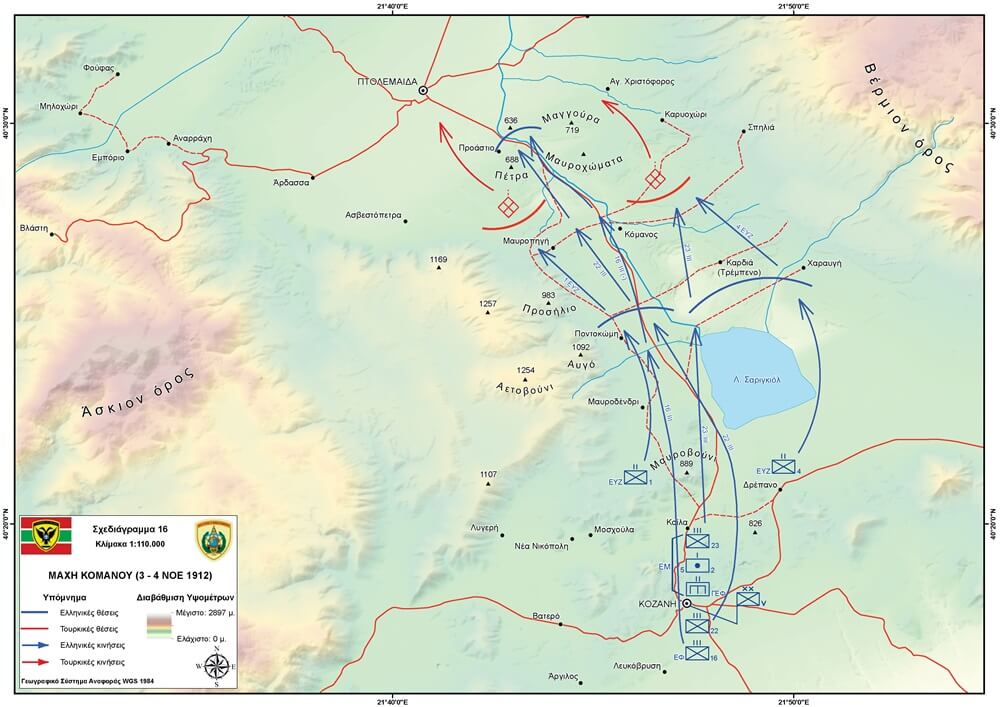
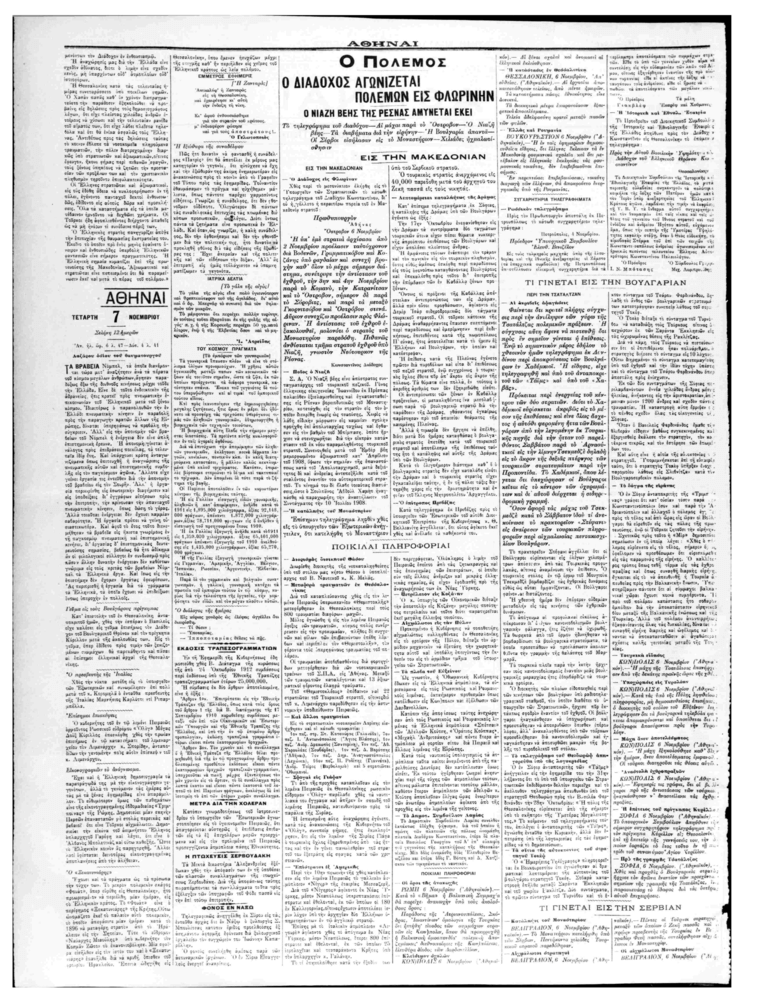
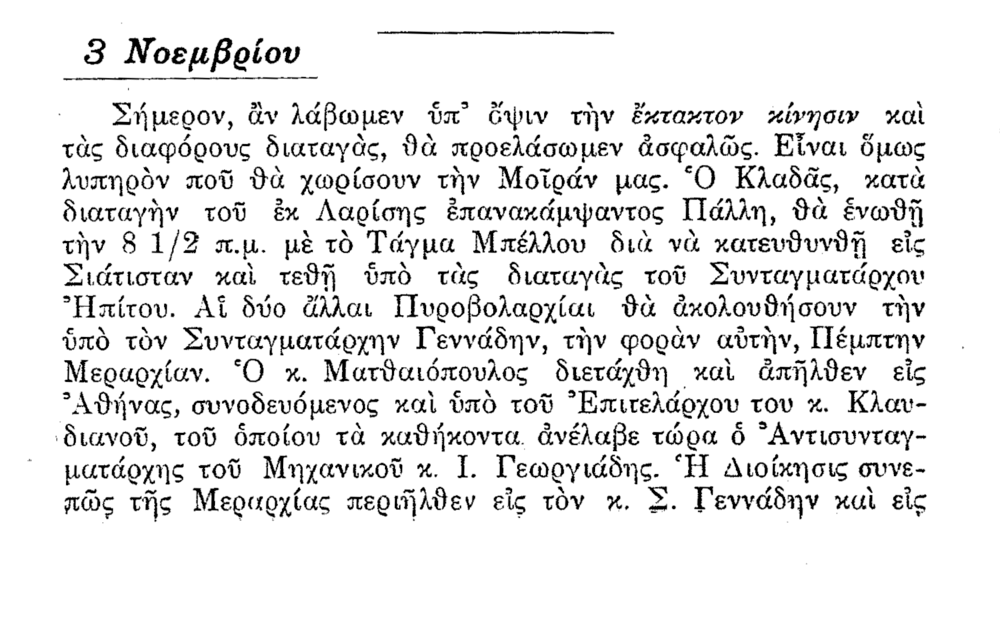
On October 24, 1912, the troops of the V Division, which had been engaged in combat in the Western Macedonia region since October 13, withdrew to Kozani, pursued by strong Ottoman military force. This was followed by the reorganization of the Division's forces with the formation of the Kozani Army Department, which was placed under the command of Colonel Stephanos Gennadis. The newly formed Department consisted of the V Division, the Gennadis' Evsones Detachment, and a division of the 20th Regiment. By October 27, the Kozani Army Department had successfully intercepted the attacks of the Ottoman forces, stabilized the development of the front, and initiated plans for new offensive operations in Western Macedonia.
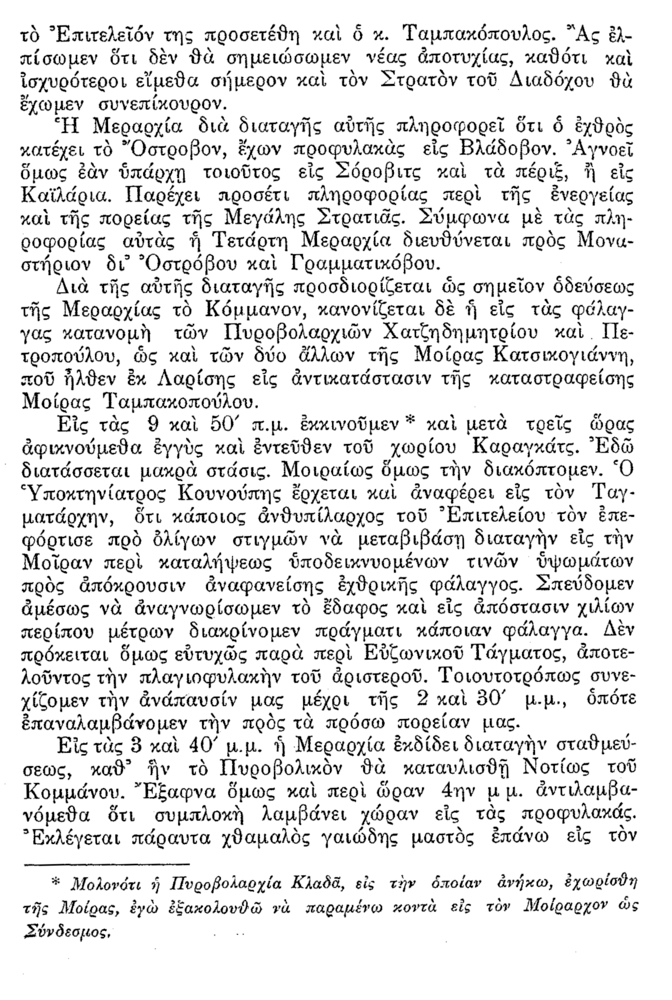
On November 2, the Army Department of Kozani was disbanded by order of the General Headquarters, having achieved its objectives. The individual sections of the Army were incorporated into the V Division, with Colonel Stephanos Gennadis retaining command. The same order directed the V Division to advance as far as Kailaria (now Ptolemaida) via the Kozani – Kailaria road.
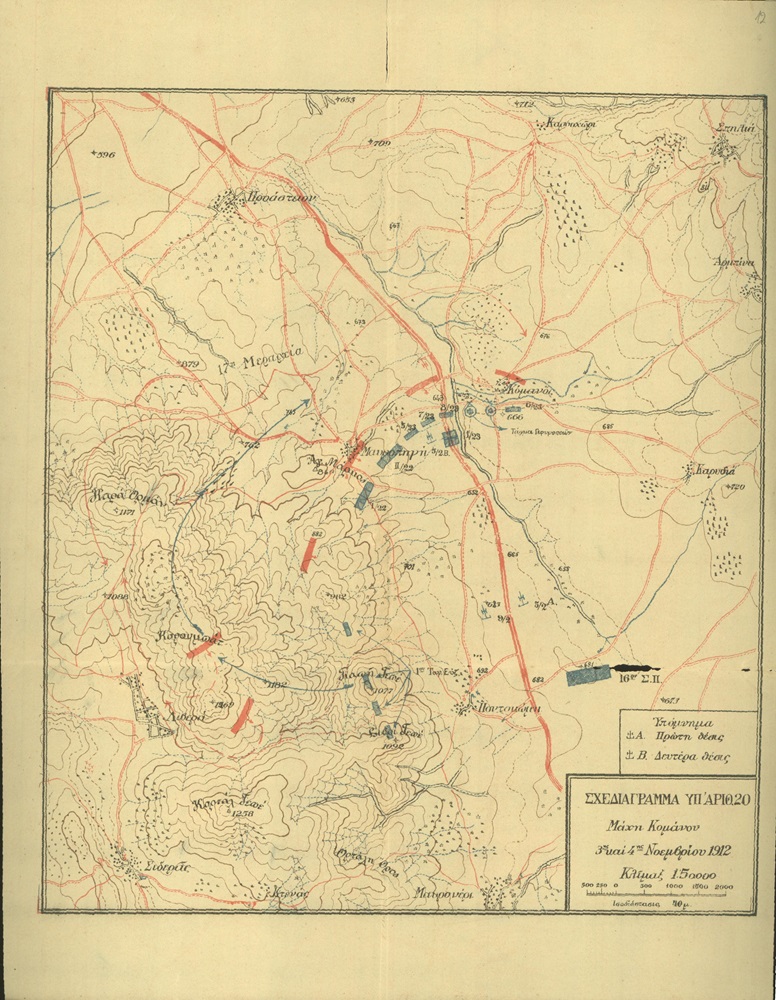
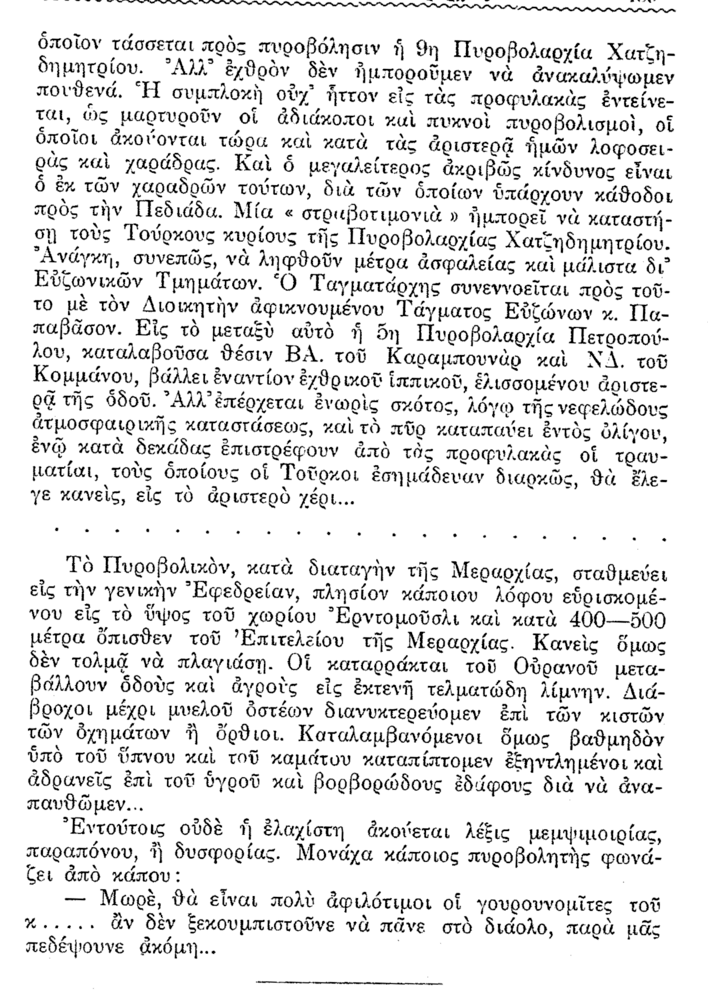
At noon on November 3, just a few kilometers away from Kailaria, in the village of Komanos, the leading cavalry troop of the vanguard of the V Division, having successfully attacked a detachment of Ottoman cavalry and villagers, proceeded to invade the village of Komanos. However, it was subsequently compelled to withdraw to the south and converge with the Division's advance guard due to the presence of strong Ottoman forces originating from Kaillaria. At approximately 16:00, the 22nd Infantry Regiment of the V Division arrived in the area and, in conjunction with the 23rd, initiated an offensive to seize control of the villages of Mavropigi and Komanos. The engagement continued until evening, yet the confrontation with the robust Ottoman forces did not yield the anticipated outcome, as the two villages remained under Ottoman occupation.
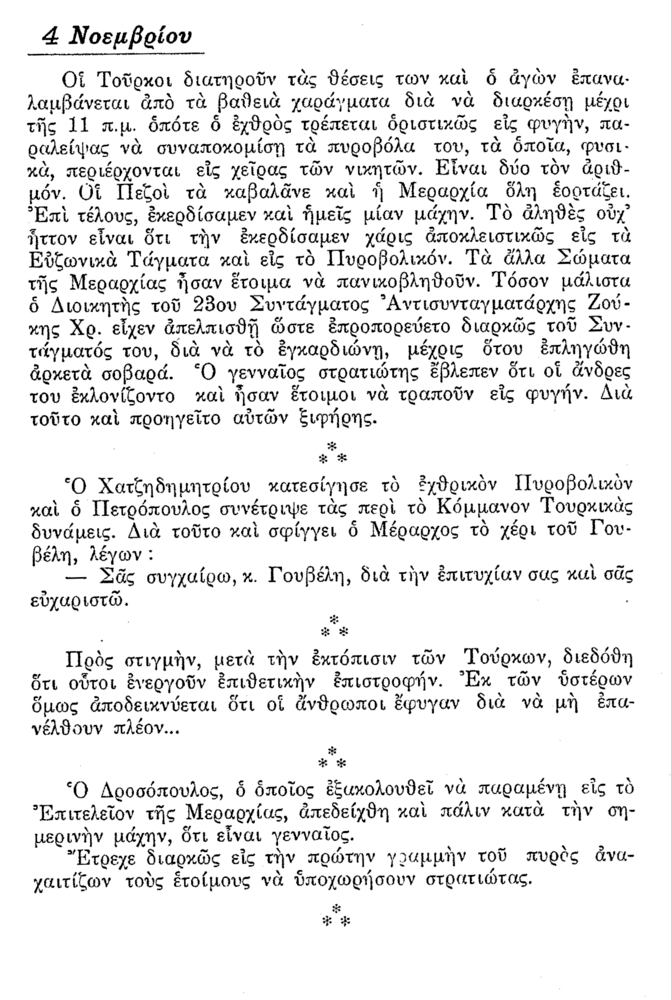
From the early hours of the following day, the battle continued with unabated intensity. The V Division continued to launch attacks, encountering considerable opposition from the Ottoman army. The 23rd Regiment, operating in the vicinity of the village of Komanos, sustained considerable losses, while its commanding officer was seriously wounded and withdrew from the battlefield. Despite the confusion and panic within the ranks of the regiment, the division took immediate action, sending two reserve battalions and increasing the intensity of the attack. Finally, at noon, the perseverance and fortitude of the Greek forces resulted in the much-desired victory for the Greek army. After hours of intense combat, the villages of Mavropigi and Komanos were captured, and the V Division, now in control of the area, advanced to the Pass of Komanos.
The victory at the Battle of Mavropigi and Komano had a considerable impact on the morale of the V Division, which had experienced a setback following the events of October 21. Despite the significant victory, the two days of fighting resulted in 352 fatalities and injuries, with the majority of these occurring within the ranks of the Division's 23rd Infantry Regiment.th Συντάγματος Πεζικού της Μεραρχίας.