
Battle of the Klidi Pass (Eastern Front)
Short Description:
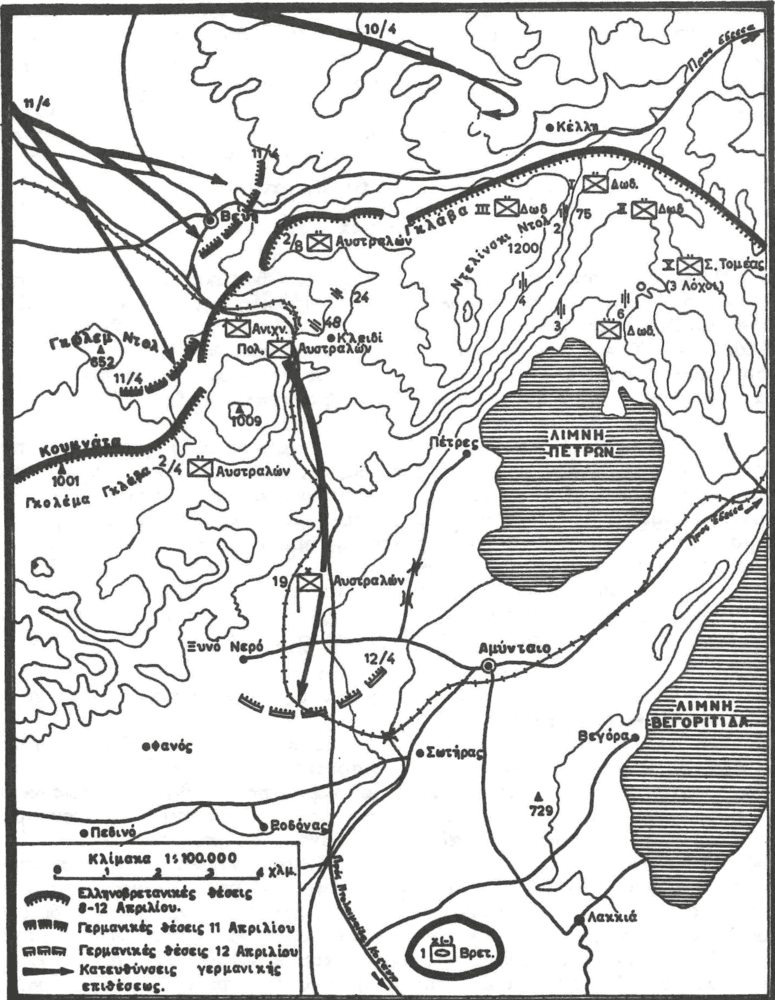
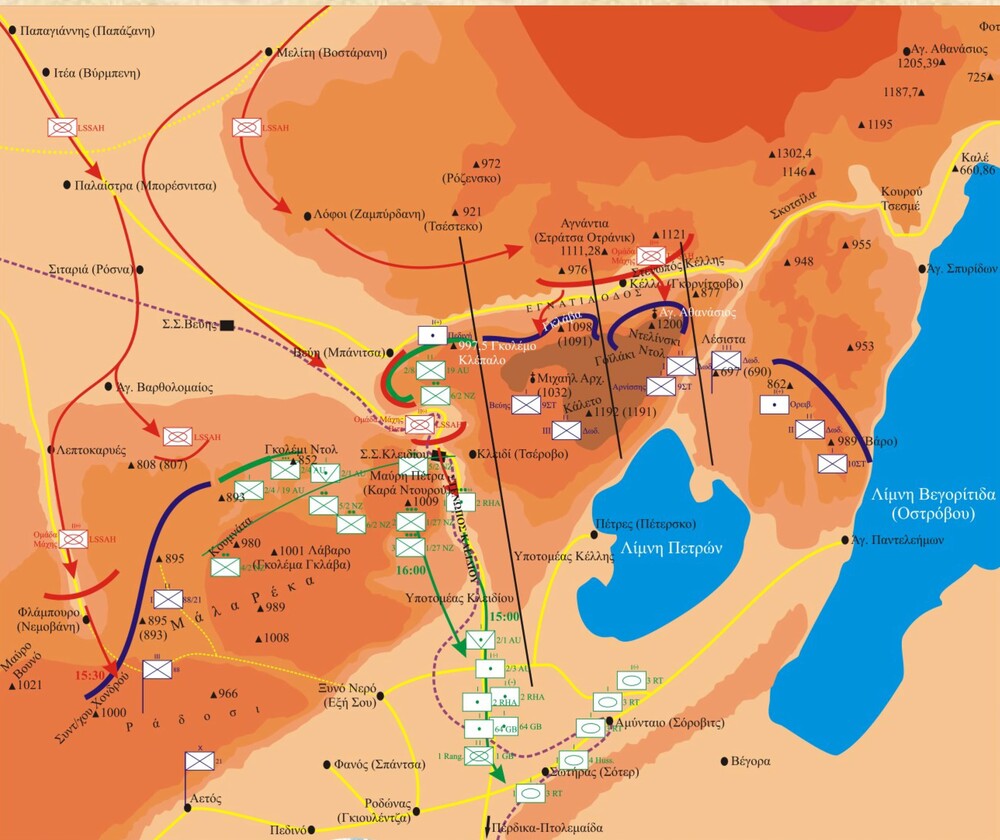
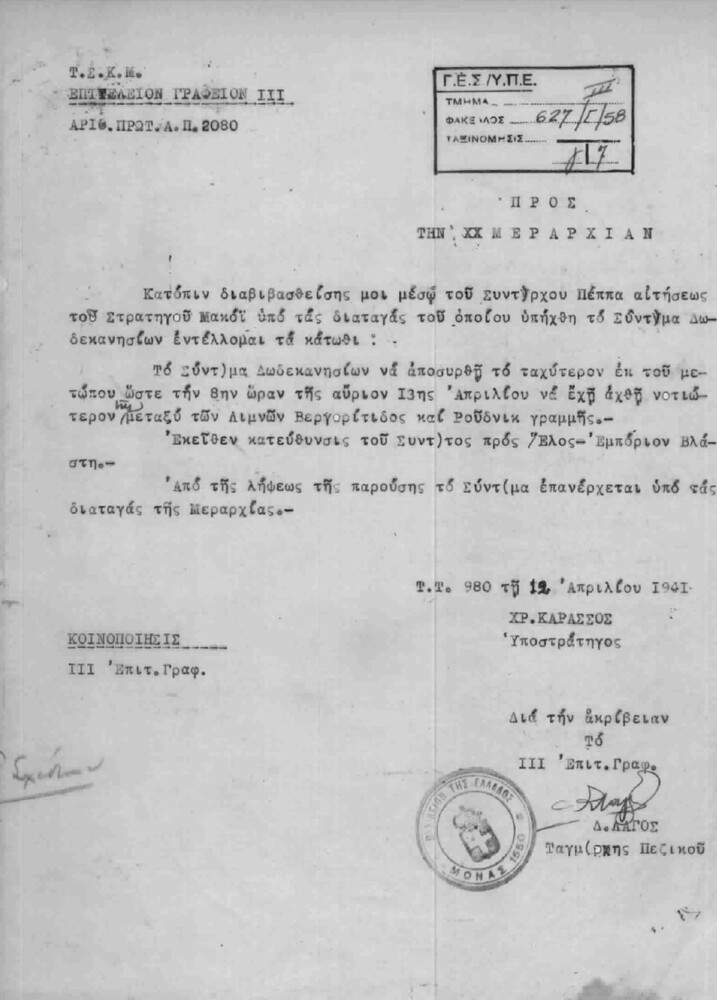
On April 12, during the Battle of the Klidi Pass, the Greek army was ordered to retreat from Kelli to Amyntaio. During the retreat, a squadron was diverted to support the Australian forces fighting at Klidi. This squadron surrendered to the Germans after suffering losses of ten men. The rest of the Greek detachment arrived at Amyntaio, where they came under heavy fire from German tanks and artillery. With the intervention of British tanks, the German tanks were pinned down, allowing the Greek forces to escape without casualties. After the Allied retreat, the Axis forces captured the Klidi Pass and continued their advance into central and southern Greece.
Photo gallery:
Detailed Description:
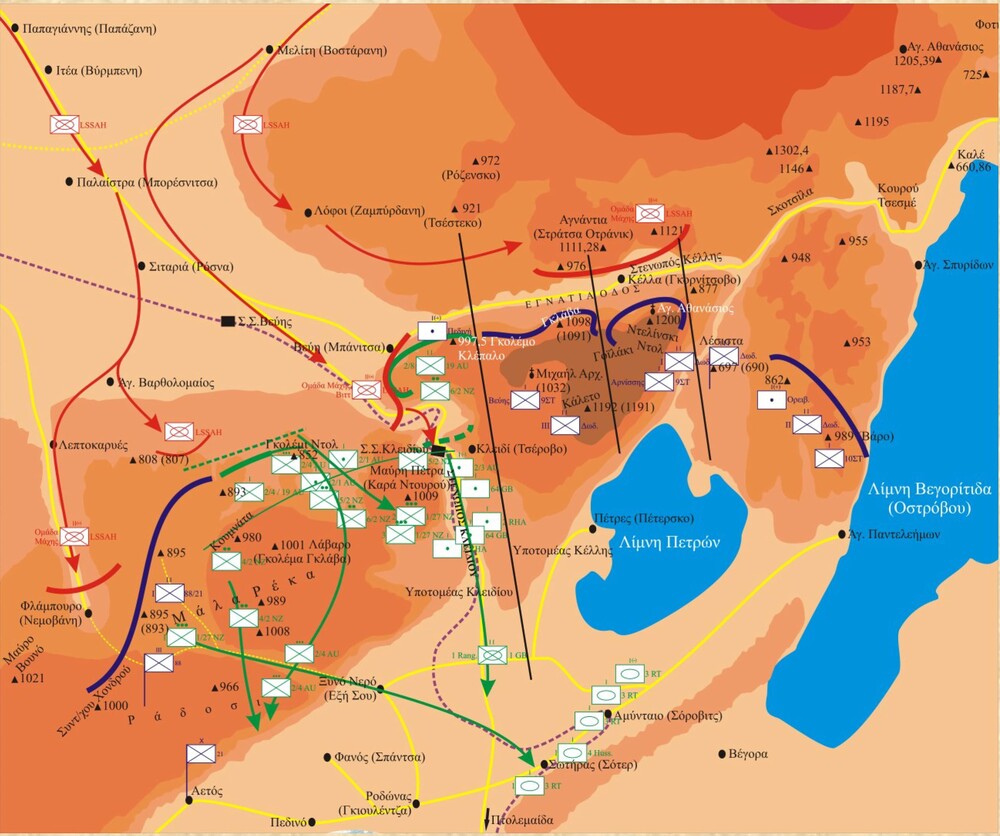
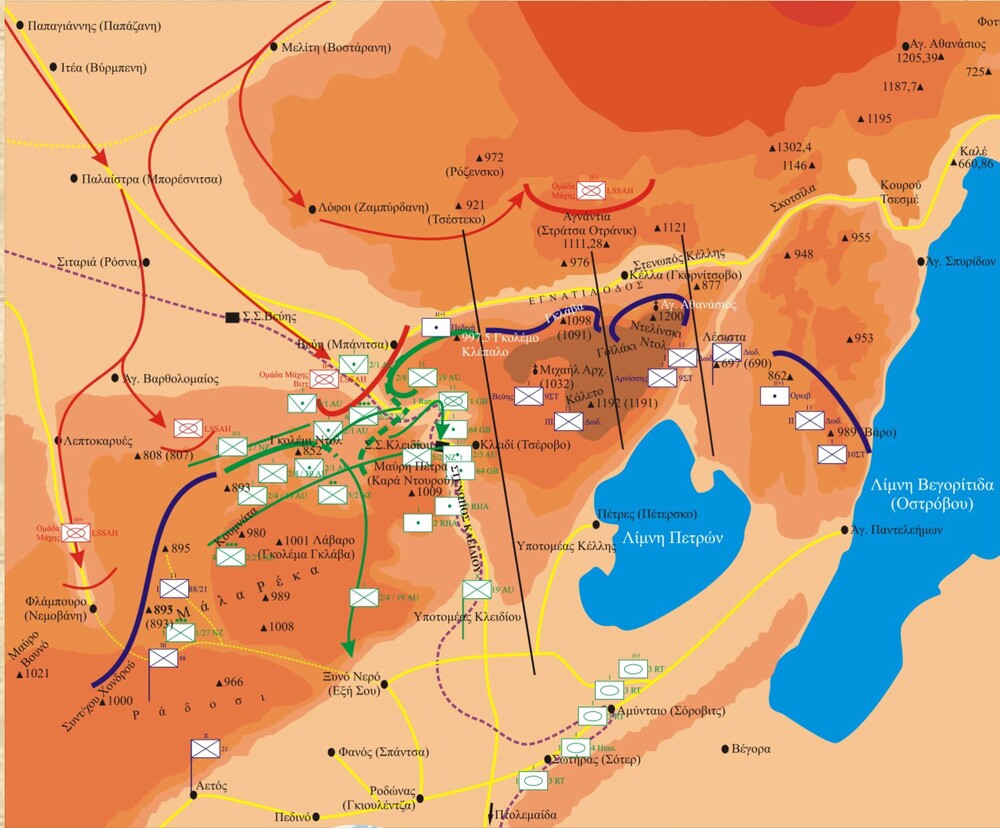
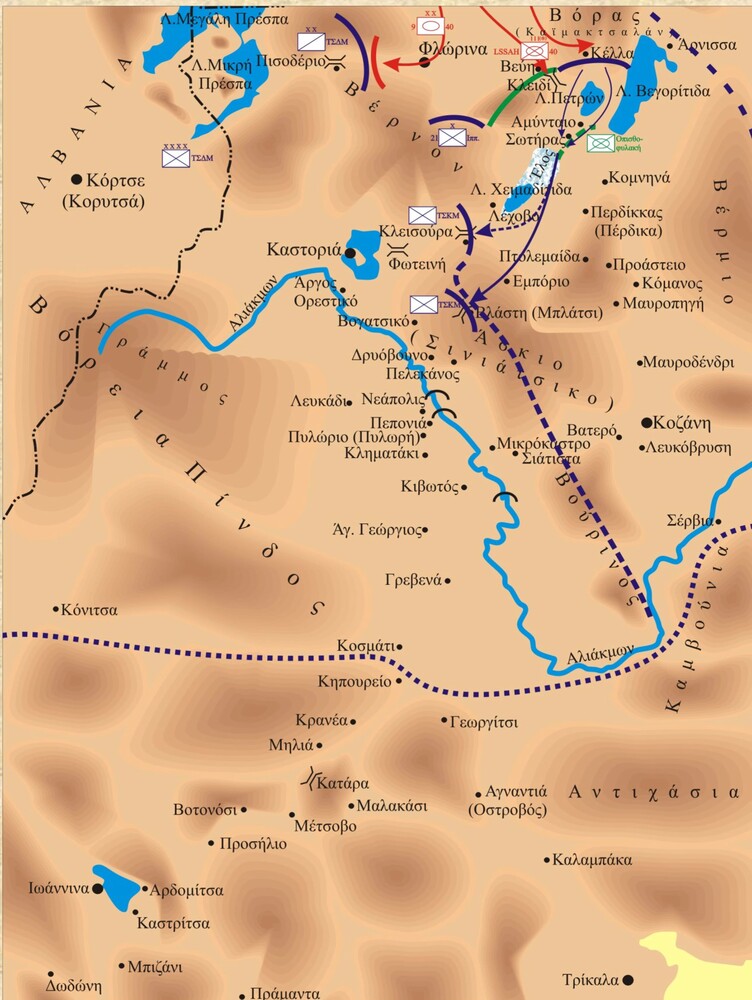
On April 8, the troops of the "W" group - the coalition of Greek, British and Australian troops - set up a defense against the Germans on the line of Kelli - Klidi Pass - Nymfaio area line. At the head of the group was the commander of the 6th Australian Division, Major General Gifard McKay. At the right end of the defense, south of Kelli, was a Greek detachment consisting of troops from the 20th Division, the Dodecanese Regiment and the X Border Sector. At the head of the detachment was the reserve permanent infantry colonel Aristotelis Sergios. In the center, at the Klidi Pass, the defense of the area was undertaken by Australian and British forces. On the left, the maintenance of the Greek territory was entrusted to the 21st Greek Brigade.
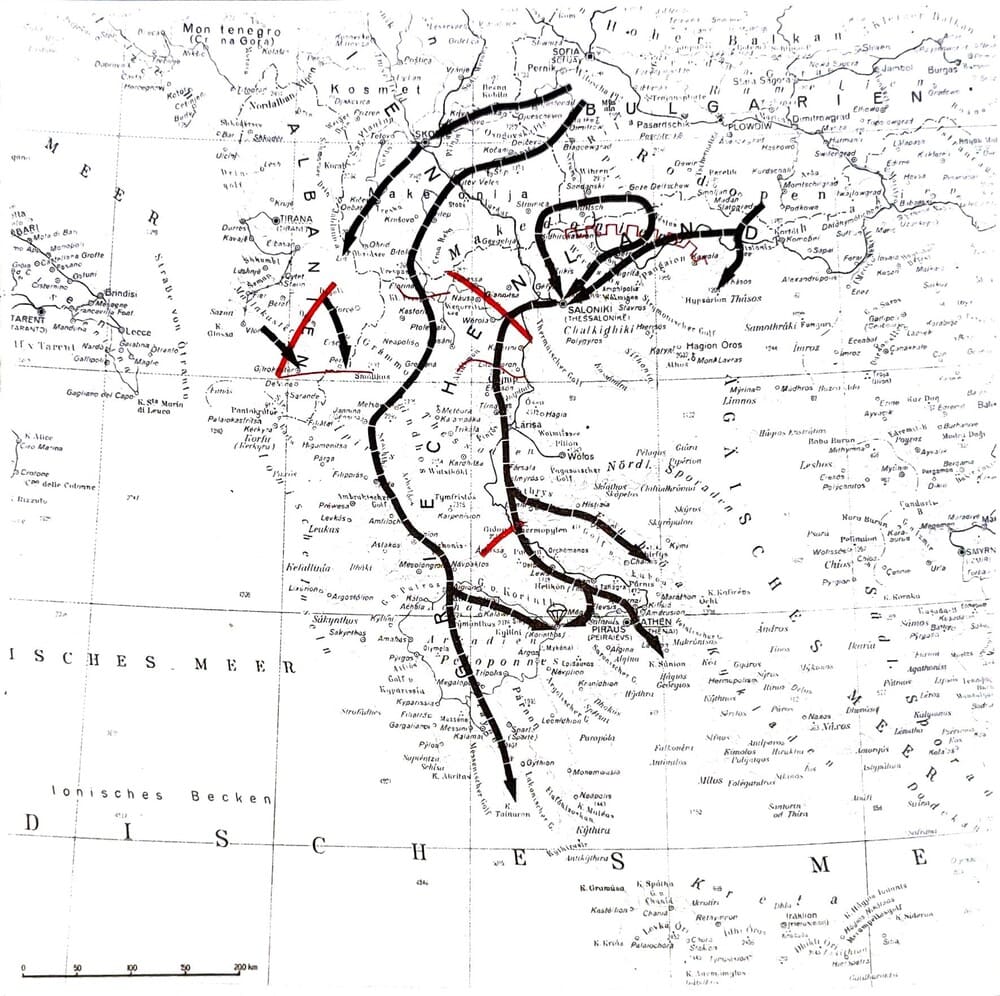
On the night of April 9-10, the constant snow and cold challenged the Allied troops' ability to operate, especially the Australians, who were unfamiliar with such weather conditions. At the same time, the news from Central Macedonia was discouraging: despite heroic resistance at the forts on the Metaxa Line, the Germans advanced to Thessaloniki, and the Eastern Macedonia Army Section surrendered. The situation was no better in the northwest. On April 10, the Germans captured Florina and began preparations for their advance to the Klidi Pass. At night, taking advantage of the darkness and weather conditions, they conducted limited reconnaissance operations and captured eleven Allied soldiers.
On April 11, strong German forces advanced into the Klidi Pass. British and Australian units of "W" Group tried to repel them with artillery and antitank fire, and coordinated attacks with the help of the reconnaissance battalion. At the same time, severe cold, snowfall, and the laying of mines immobilized the tanks of the German XL Armored Corps. Although the Allied forces were unable to stop the German advance, they were able to slow its movement southward.
On April 12, on the front in the Klidi Pass, the Germans continued to advance south at a slow pace, despite the heavy losses suffered by the Allied artillery. Increasing pressure on the Allied battalions caused the British to retreat toward Amyntaio and the Australians toward Sotiras.
Simultaneously with the developments in the Klidi Pass, Major General Gifard McKay ordered the withdrawal of the Greek detachment from the positions occupied south of Kelli and their concentration in Amyntaio. From there, part of them were to be moved by British vehicles to Ptolemaida and then to Vlastis, while the rest were to move from Amyntaio to Klisoura. The withdrawal took place in two convoys: the first, led by Colonel Aristotle Sergios, went east of Lake Petra, and the second, led by Lieutenant Colonel Ioannis Nikolaou, crossed the western side of the lake.
The convoy of Colonel Sergios arrived in Amyntaio according to the program and from there it went to Ptolemaida. On the contrary, the convoy of Lieutenant Colonel Nikolaou encountered problems. A squad of the phalanx deviated from the planned route and went to the village of Klidi to support the Australian battalion fighting there. This action resulted in the deaths of ten soldiers and the eventual encirclement and surrender of the squadron to German forces. The remainder of the convoy managed to reach the west of Amyntaio at about 18:00, but as it approached the area it came under flanking fire from German tanks moving from the southern exit of the Klidi Pass and parallel artillery fire from the northwestern positions of the pass. With the intervention of 25-30 British tanks, the German tanks were intercepted, and the Greek convoy was able to escape towards Amyntaio, avoiding capture.
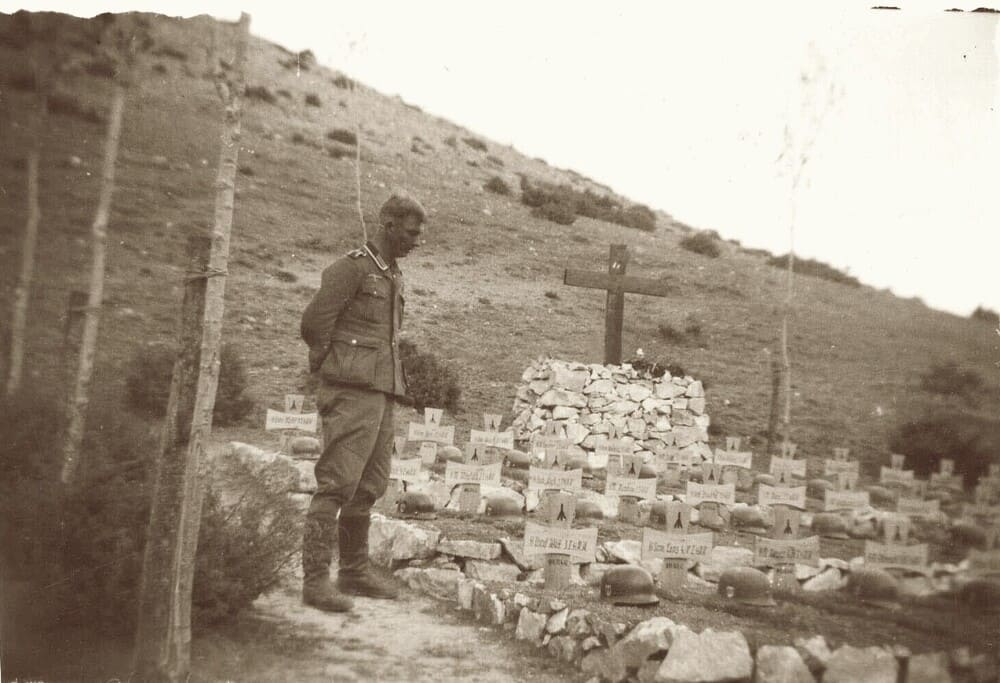
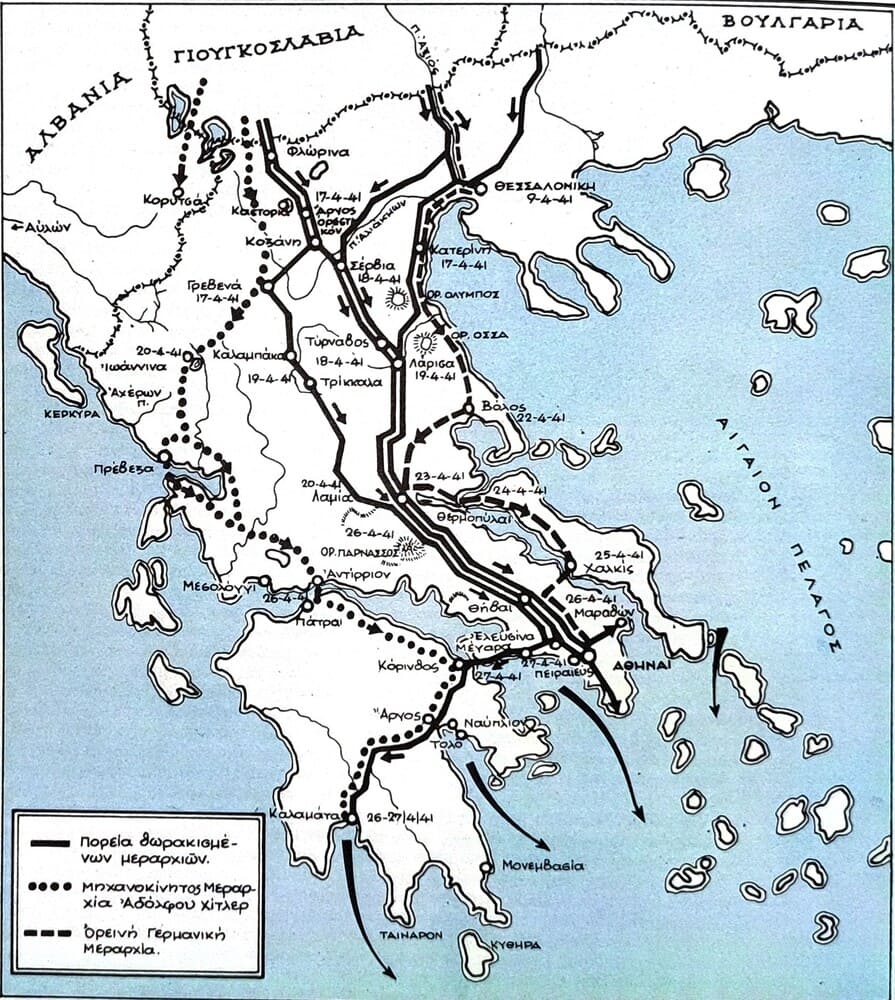
Finally, the German forces occupied the area of the Klidi Pass after three days of continuous fighting, despite the fierce resistance of the "W" group. The resistance of the Allied forces caused significant losses in the German ranks, both in terms of human lives and combat material. Nevertheless, the fall of the pass paved the way for the further advance of the German troops into the territories of Western Macedonia and eventually into Central and Southern Greece.

Indicative Literature:
Η εποποιία του 1940-41. Αρχείον ιστορικών σελίδων, Αθήνα 1969.
Γενικό Επιτελείο Στρατού, Το τέλος μιας Εποποιίας – Απρίλιος 1941, Αθήνα 1959.
Γενικό Επιτελείο Στρατού, Εφοδιασμοί στρατού εις υλικά οπλισμού πυρομ/κων πυρ/κου πεζικού 1940-1941, Αθήνα 1982.
Γενικό Επιτελείο Στρατού, η Υγειονομική Υπηρεσία του στρατού κατά τον πόλεμο 1940-1941, Αθήνα 1983.
Γενικό Επιτελείο Στρατού, Επίτομη Ιστορία του Ελληνοϊταλικού και Ελληνογερμανικού πολέμου 1940-1941. Επιχειρήσεις Στρατού Ξηράς, Αθήνα 1985.
Γενικό Επιτελείο Στρατού, Αγώνες και Νεκροί του Ελληνικού Στρατού κατά το Δεύτερο Παγκόσμιο Πόλεμο 1940-1945, Αθήνα 1990.
Διεύθυνση Ιστορίας Στρατού των ΗΠΑ, Η εκστρατεία των Γερμανών στα Βαλκάνια (Άνοιξη 1941), Αθήνα 1996.
Εδιπίδης Α. (επιμ.), Μεγάλη Εικονογραφημένη Ιστορία του Ελληνοϊταλικού και Ελληνογερμανικού Πολέμου 1940-1941, Επιμέλεια της Στρατιωτικής Ύλης Αλεξ. Εδιπίδου Αντιστράτηγου Ε. Α., Τόμος Β’, Αθήνα 1954.
Καραβίτης Γ., Το Σύνταγμα Δωδεκανησίων, Κως 2014.
Παπακωνσταντίνου Θ.Φ., Η μάχη της Ελλάδος 1940-1941, Αθήνα 1971.
Higham R., Το ημερολόγιο μιας καταστροφής. Η Βρετανική βοήθεια στην Ελλάδα 1940-1941, Αθήνα 2008.
Plowman J., Images of War in the Balkans. The battle for Greece and Crete 1940-1941. Rare photographs from wartime archives, South Yorkshire 2013.
Walker A.S., Middle East and Far East. Australia in the war of 1939-1945, Canberra 1953.