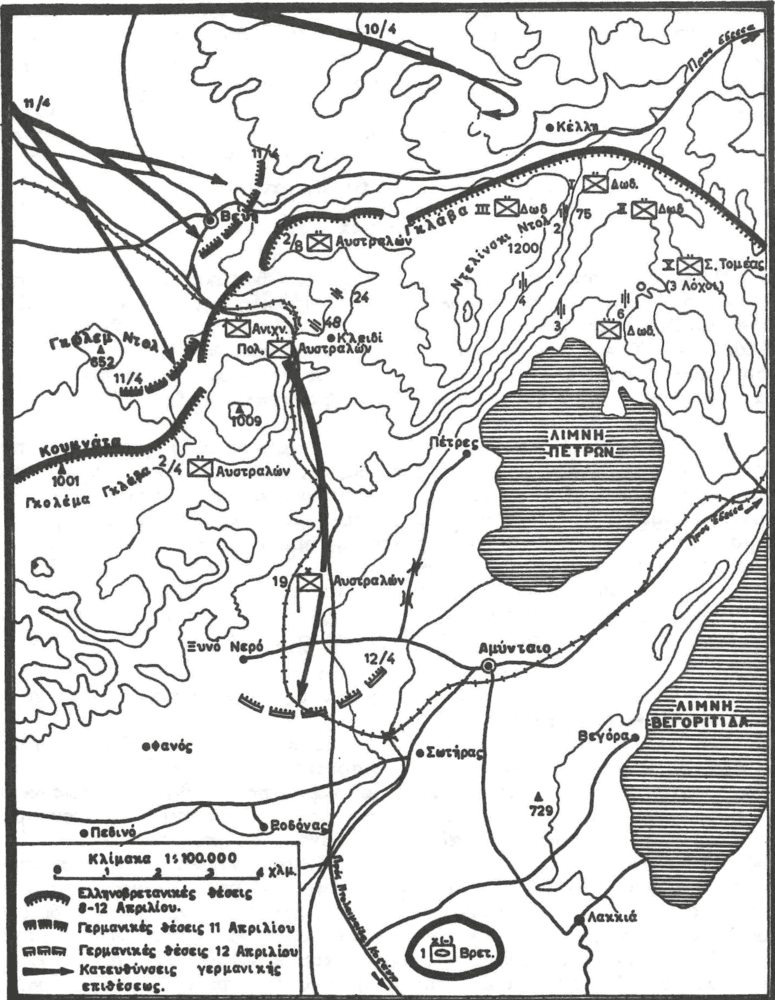
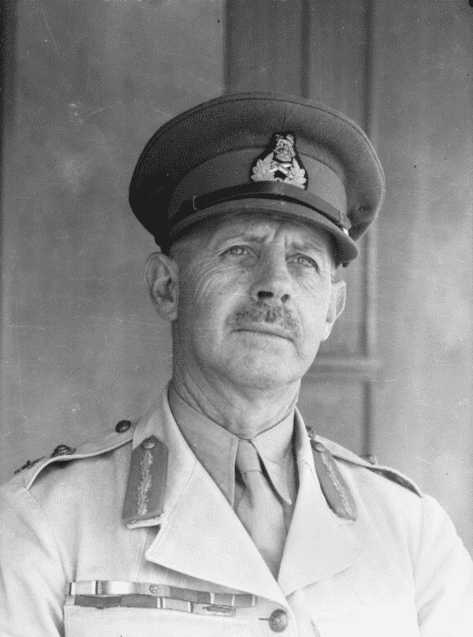
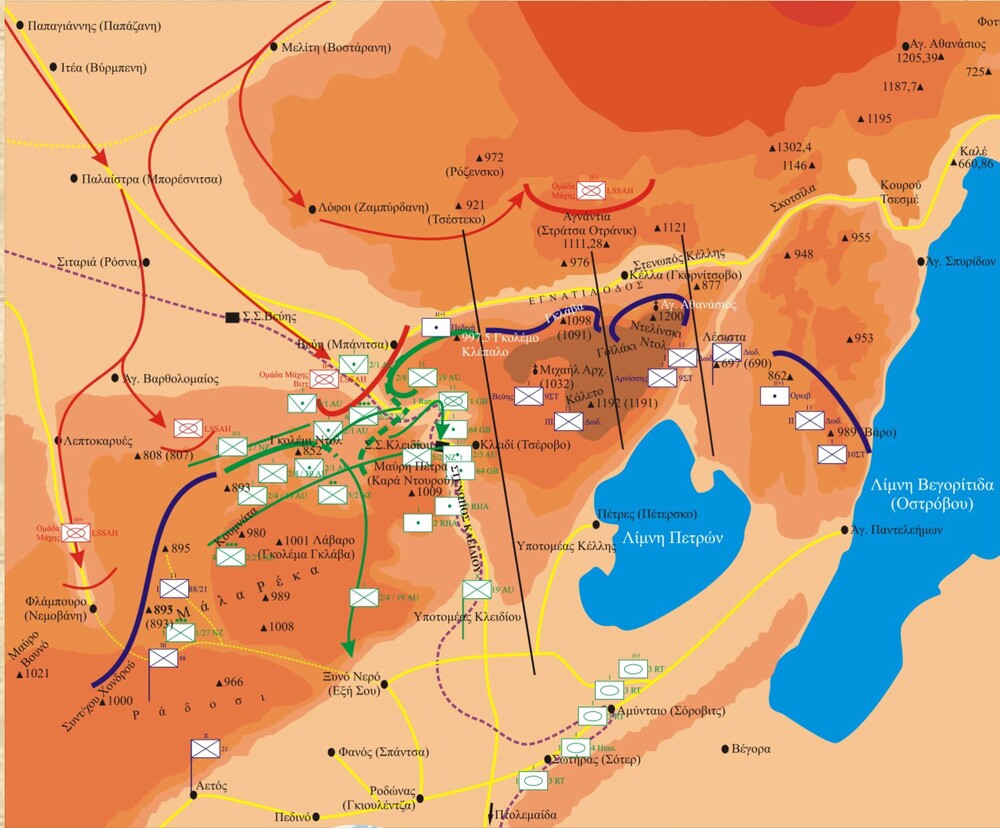
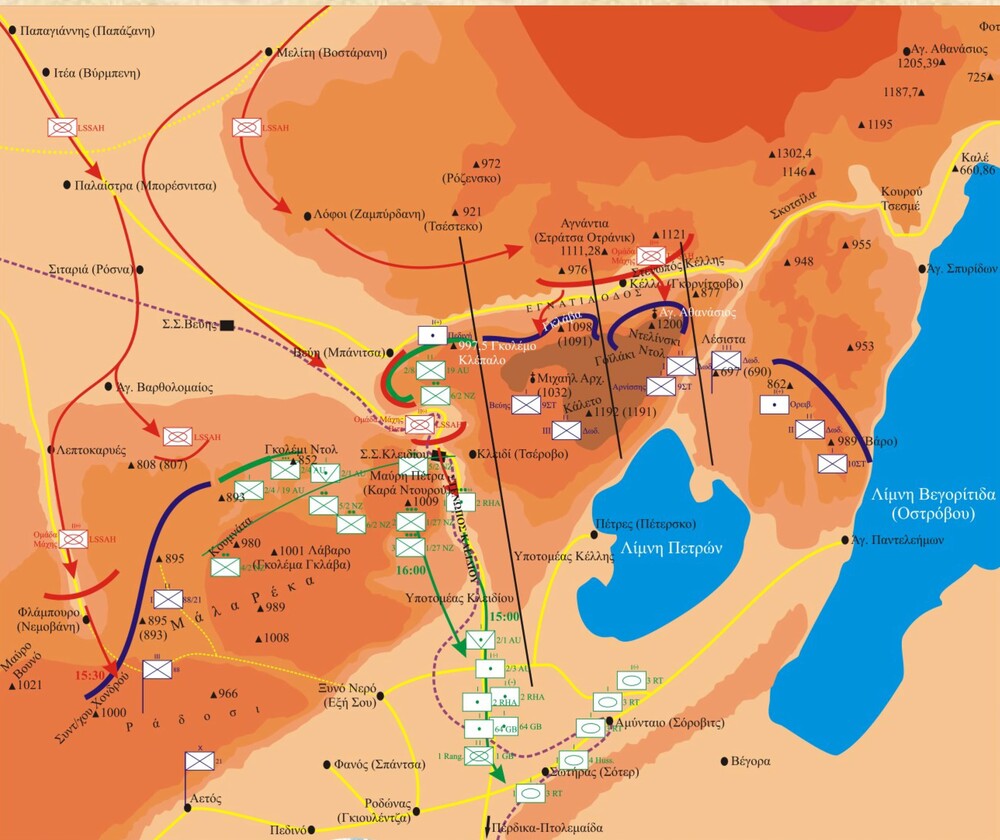
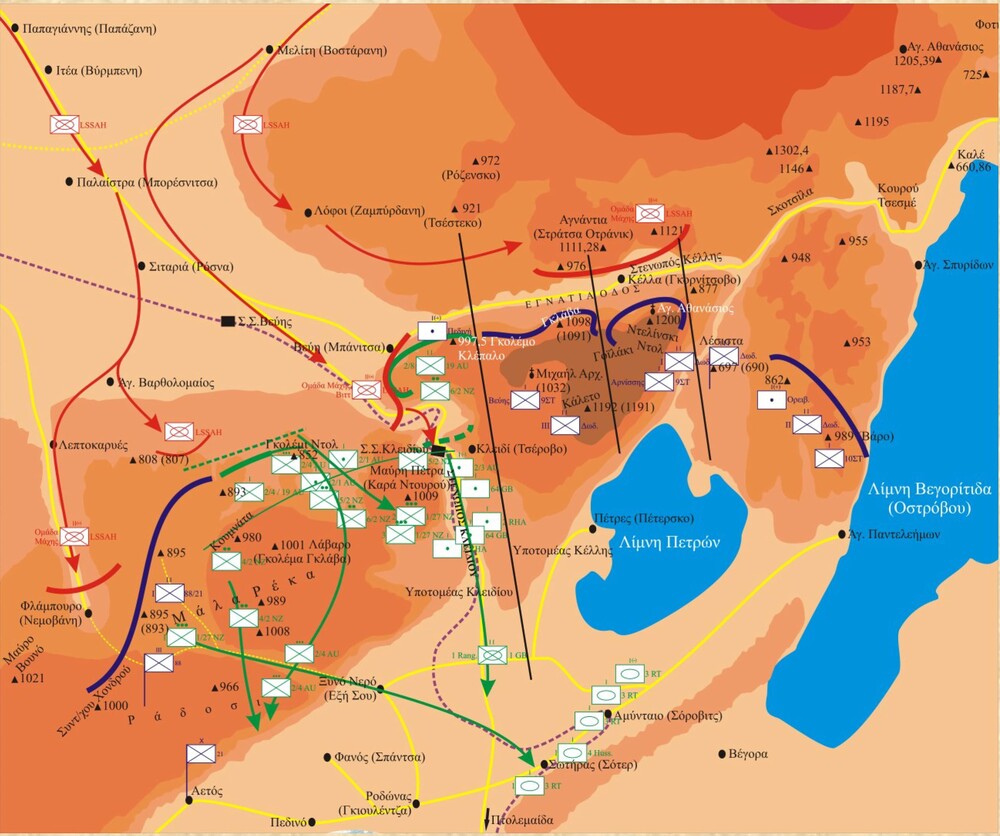
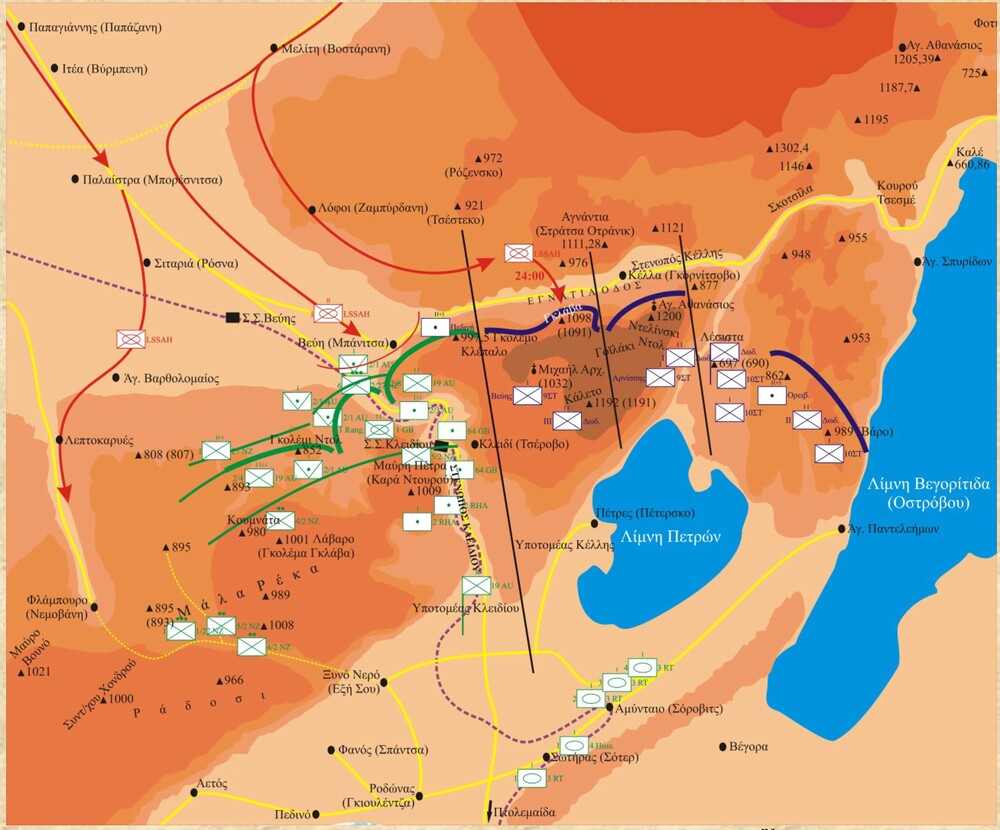
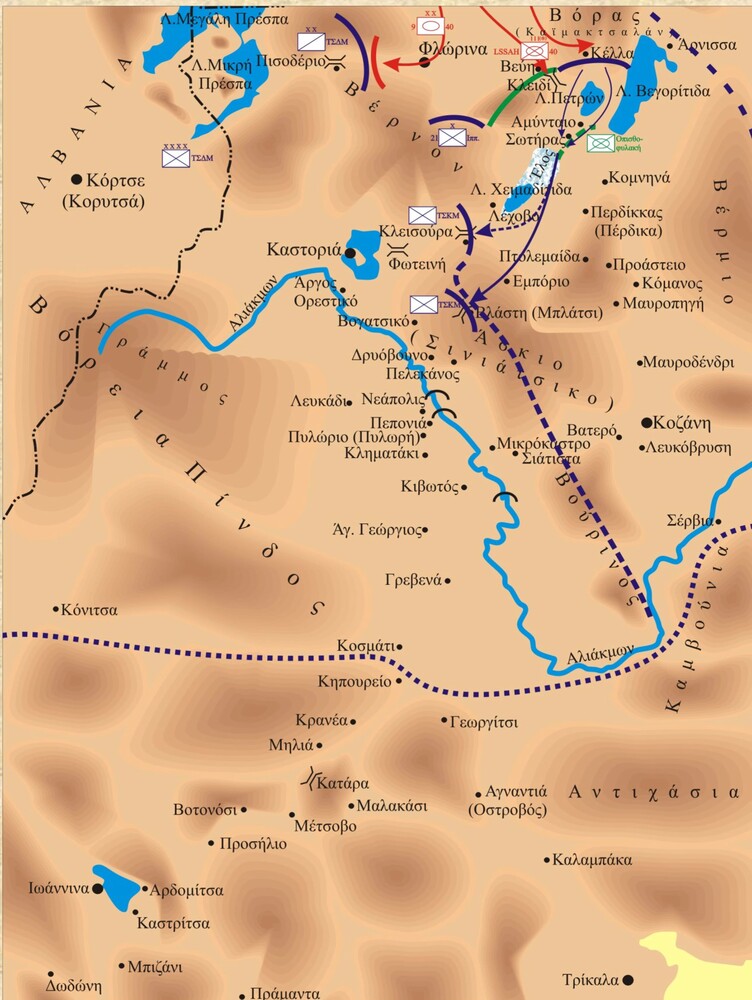
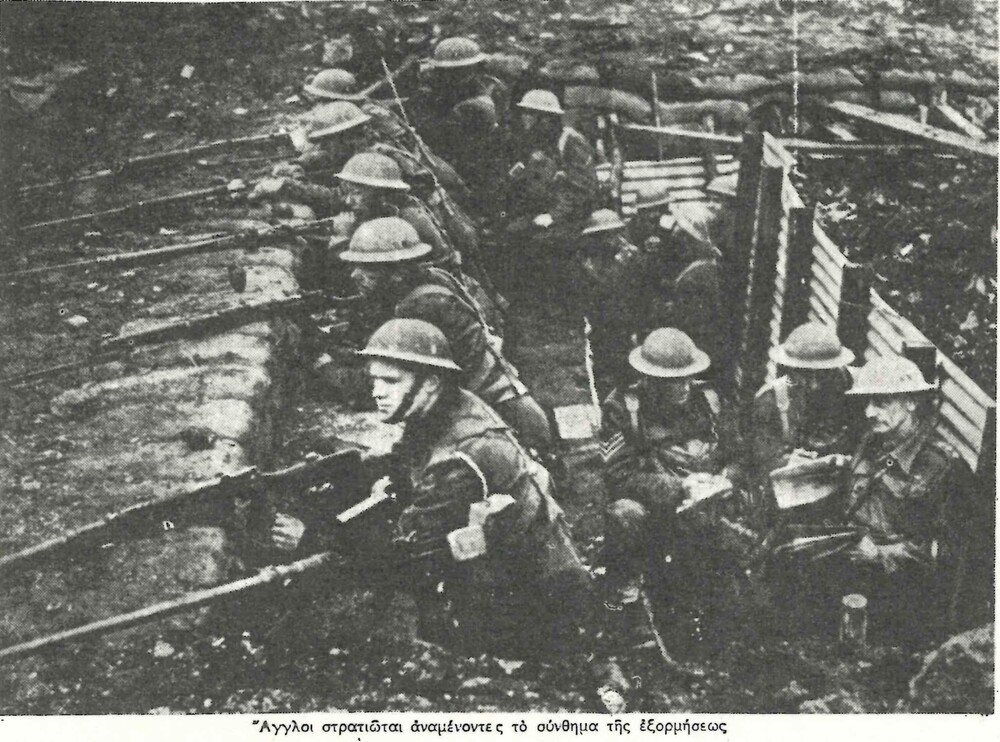
On April 8, the troops of the "W" group - the coalition of Greek, British and Australian troops - set up a defense against the Germans on the line of Kelli - Klidi Pass - Nymfaio area line. At the head of the group was the commander of the 6th Australian Division, Major General Gifard McKay. At the right end of the defense, south of Kelli, was a Greek detachment consisting of troops from the 20th Division, the Dodecanese Regiment and the X Border Sector. At the head of the detachment was the reserve permanent infantry colonel Aristotelis Sergios. In the center, at the Klidi Pass, the defense of the area was undertaken by Australian and British forces. On the left, the maintenance of the Greek territory was entrusted to the 21st Greek Brigade.
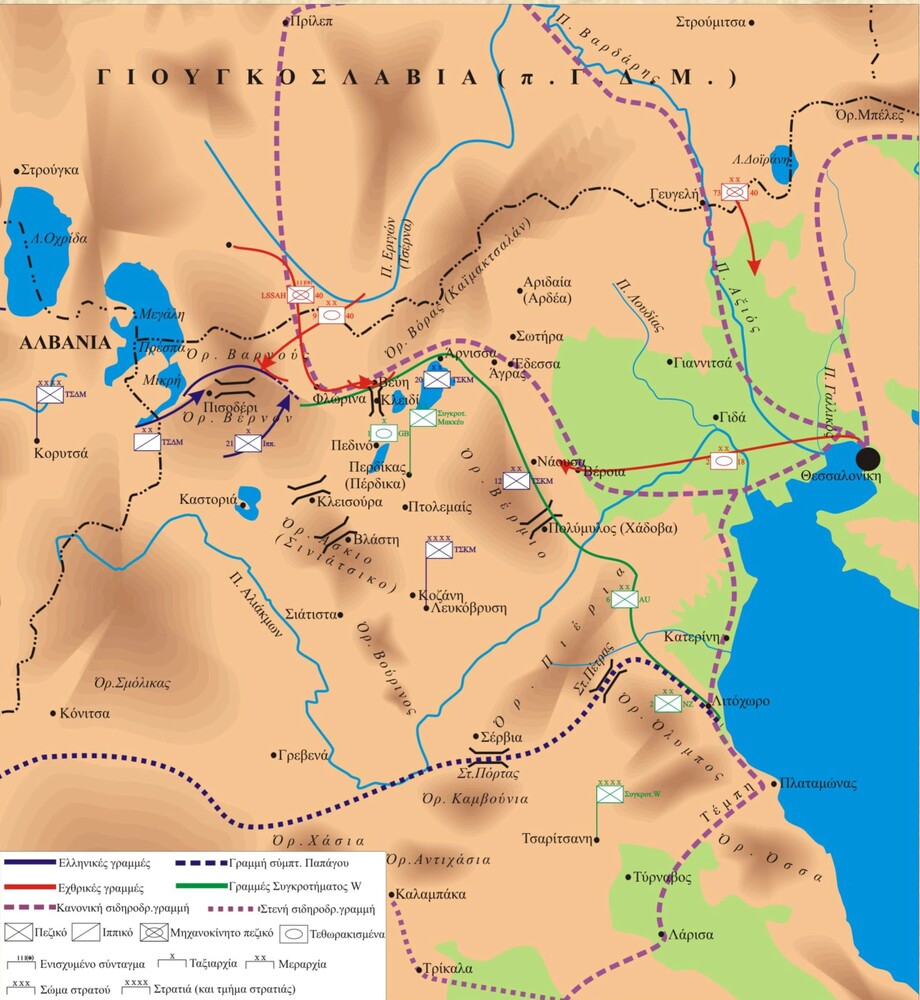
On the night of April 9-10, the constant snow and cold challenged the Allied troops' ability to operate, especially the Australians, who were unfamiliar with such weather conditions. At the same time, the news from Central Macedonia was discouraging: despite heroic resistance at the forts on the Metaxa Line, the Germans advanced to Thessaloniki, and the Eastern Macedonia Army Section surrendered. The situation was no better in the northwest. On April 10, the Germans captured Florina and began preparations for their advance to the Klidi Pass. At night, taking advantage of the darkness and weather conditions, they conducted limited reconnaissance operations and captured eleven Allied soldiers.
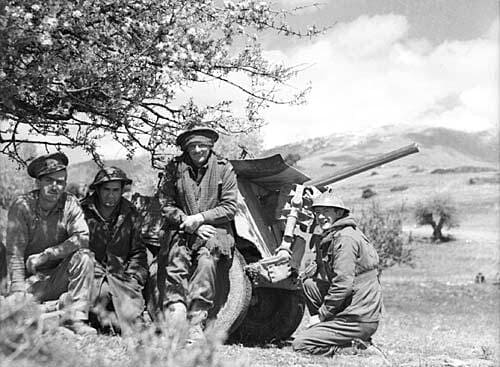
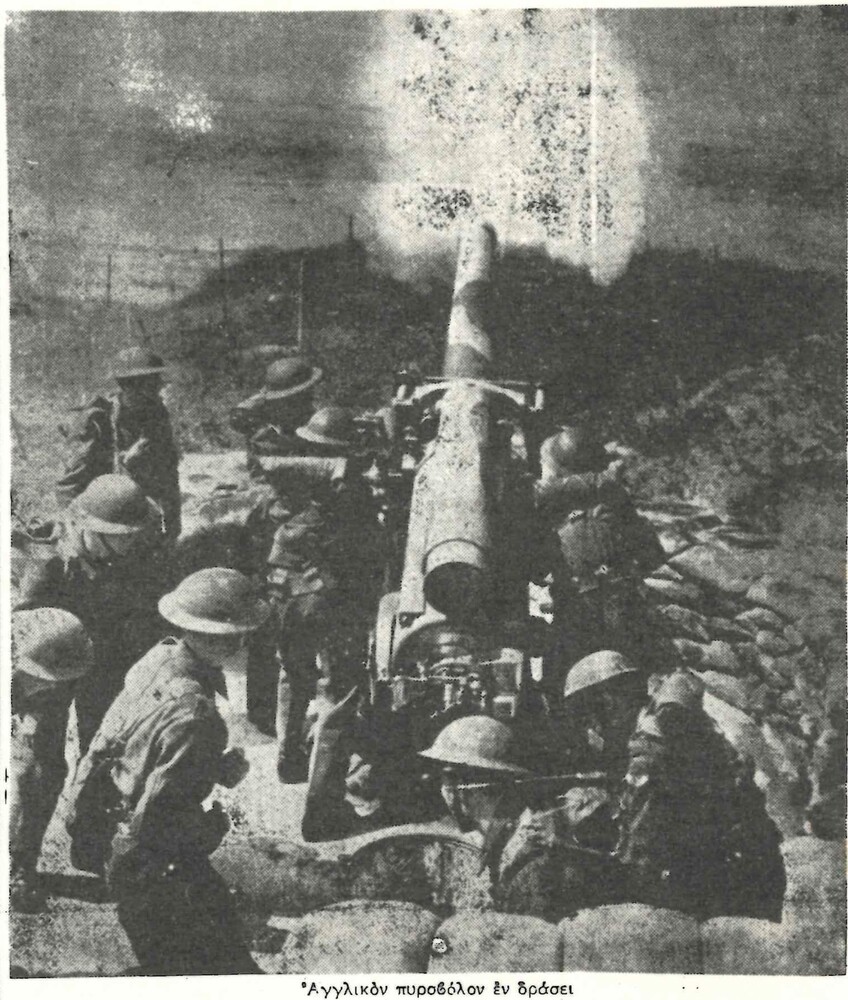
On April 11, strong German forces advanced into the Klidi Pass. British and Australian units of "W" Group tried to repel them with artillery and antitank fire, and coordinated attacks with the help of the reconnaissance battalion. At the same time, severe cold, snowfall, and the laying of mines immobilized the tanks of the German XL Armored Corps. Although the Allied forces were unable to stop the German advance, they were able to slow its movement southward.
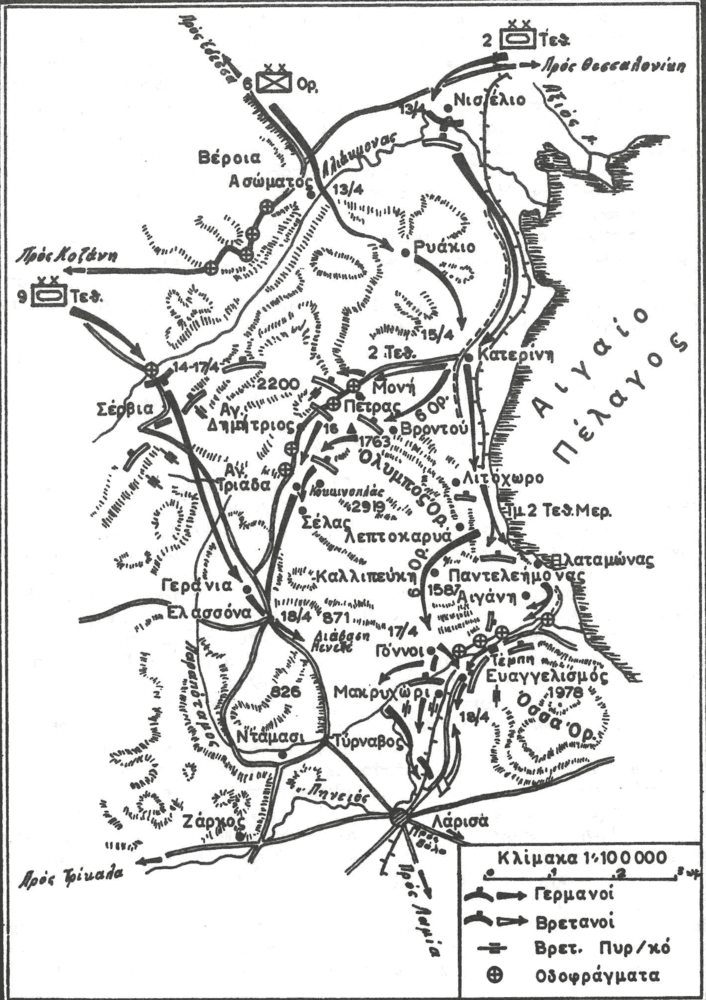
On April 12, the Allied forces of Group "W", unable to repel the powerful German forces, were forced to organize a plan of gradual withdrawal from Greece. British Lieutenant General Sir Henry Maitland Wilson ordered the concentration of forces towards Servia with the aim of a safe withdrawal. The withdrawal plan, organized by Major General Gifard McKay, provided for the slowing of the German advance and the simultaneous gradual withdrawal of the Allied forces towards Servia. However, adverse weather conditions, with severe cold and heavy snowfall, which continued during the night of April 11 to 12, complicated the situation and made resistance against the numerous and heavily armed German army even more difficult.
In the early hours of April 12, German units launched a fierce attack on the Klidi Pass. Due to the difficult terrain and weather conditions, the frontal attack was carried out by SS battalions supported by all available artillery, mortars and machine guns of the German XL Armored Corps. On the other hand, the defense against the strong German units was carried out by the British units in the western part of the Klidi Pass and the 2nd/8th Australian Infantry Battalion in the eastern part.
Despite the heavy losses caused by the artillery fire of the "W" Group on the attackers, the German forces continued to advance slowly. Around 11:00, a German column Despite the heavy losses inflicted on the attackers by "W" Group's artillery fire, the Germans continued to advance slowly. Around 11:00, a German column managed to break through the Australians' left flank on the northwest side of the Klidi Pass. Increasing pressure and casualties forced the British units to begin a piecemeal withdrawal to Amyntaio around noon, avoiding total destruction. At the same time, the 2/8th Australian Battalion, despite its losses, maintained its fighting positions and continued to attack the German flank, temporarily regaining some of the lost ground.
In the afternoon hours, the maintenance of the Allied defense against the German advance in the Klidi Pass came to an end. The absence of the British forces to the west and the retreat of the Greek 20th Division to the east forced the Australian battalion to make a disorderly withdrawal towards the village of Sotiras to avoid the danger of being surrounded by German forces, who had begun to disband the companies on the battalion's left flank. The Australian survivors of the battle of the Klidi Pass, many of whom had abandoned their equipment, were transported by vehicles to Servia of Kozani.
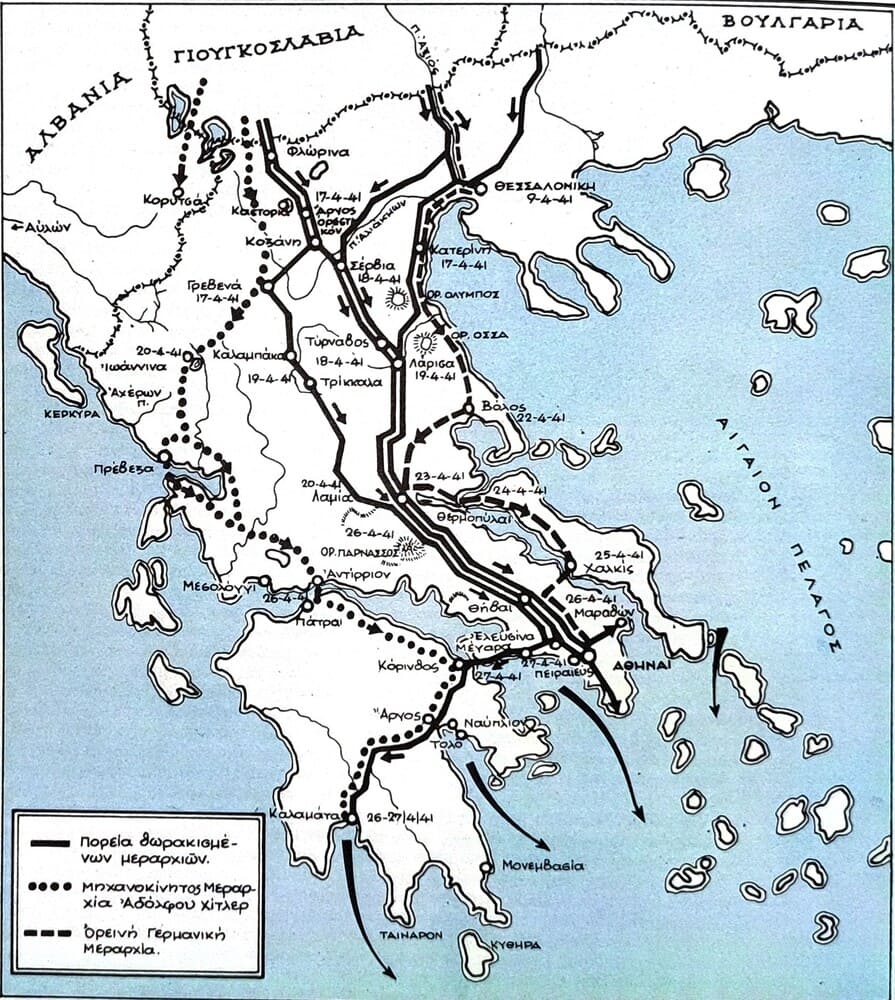
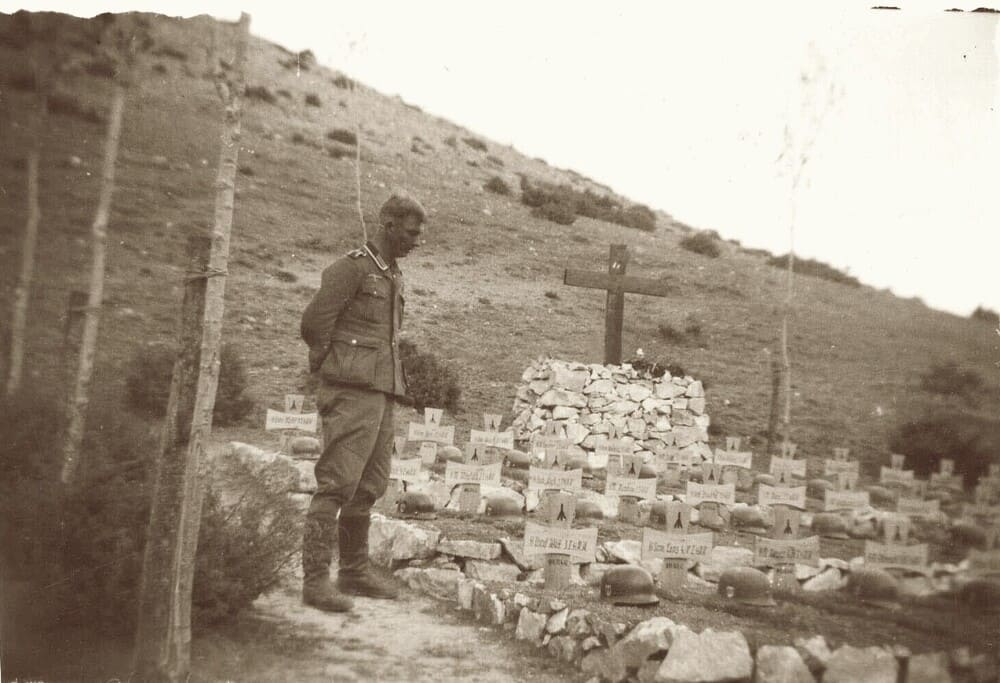
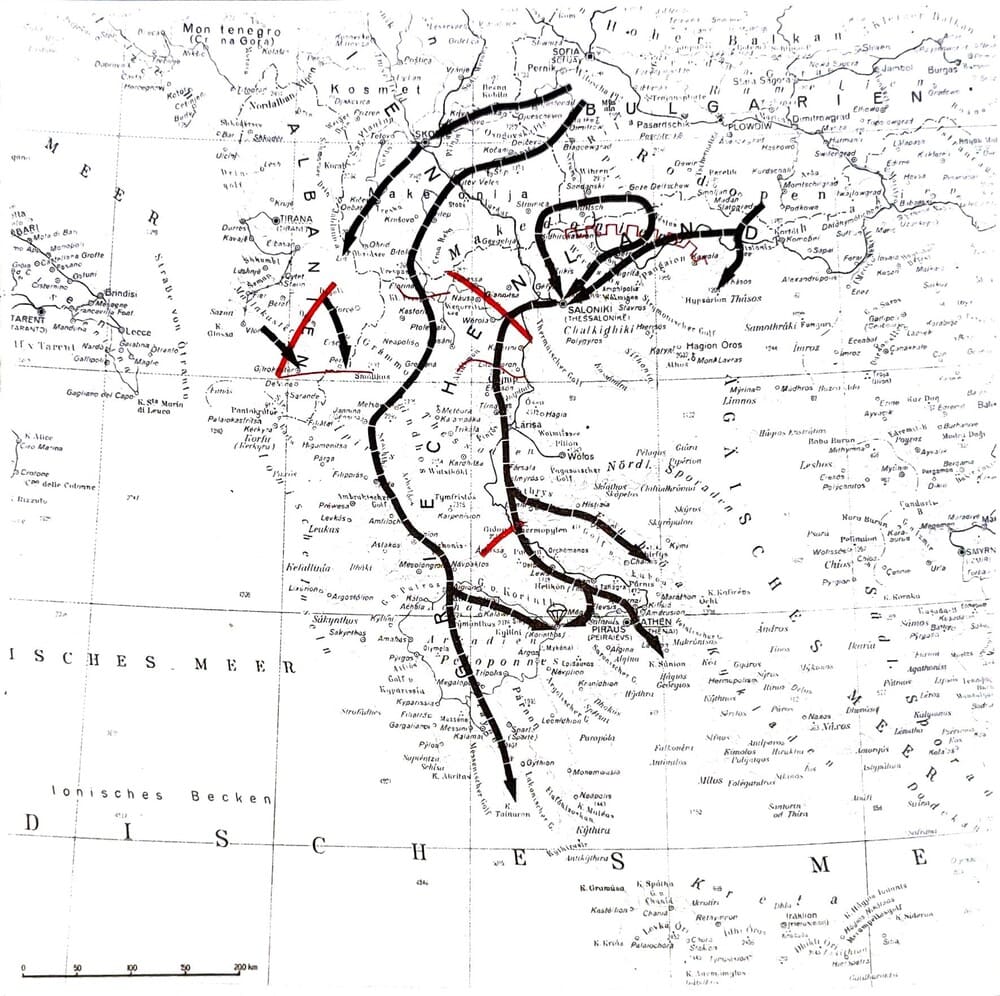
Finally, the German forces occupied the area of the Klidi Pass after three days of continuous fighting, despite the fierce resistance of the "W" group. The resistance of the Allied forces caused significant losses in the German ranks, both in terms of human lives and combat material. Nevertheless, the fall of the pass paved the way for the further advance of the German troops into the territories of Western Macedonia and eventually into Central and Southern Greece.